

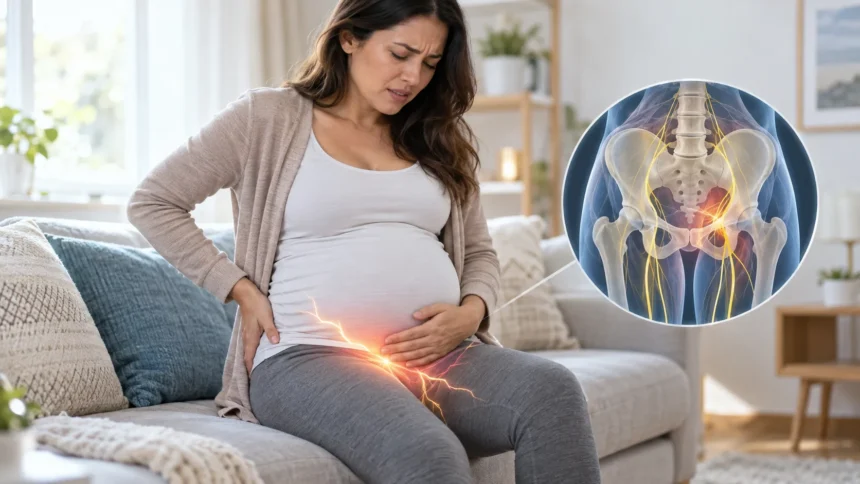
Lightning crotch is an informal term used to describe sudden, sharp, electric-like pain in the vagina, pelvis, cervix, or rectal area during pregnancy. The sensation can appear without warning and may last only a few seconds. Although the name sounds alarming, brief episodes are relatively common later in pregnancy and are often related to pressure on nerves and pelvic structures.
The pain can feel intense enough to make someone stop walking or change position suddenly, but it usually disappears quickly. Lightning crotch is not a medical diagnosis and does not automatically mean labor has started. Understanding what causes the sensation, how it differs from contractions, and which warning signs need medical attention can make these unexpected episodes less confusing.
What Is Lightning Crotch?
Lightning crotch describes a sudden stabbing, shooting, or electric sensation felt low in the pelvis during pregnancy. It may be experienced in the vagina, cervix, rectum, or surrounding pelvic area. The pain typically comes suddenly, lasts briefly, and disappears rather than continuing steadily for long periods.
Many people describe the feeling as a quick shock or jolt deep inside the pelvis. It can happen once or several times throughout the day and may occur while walking, standing, changing position, or simply resting. The unpredictable nature of the sensation is one reason it can feel more concerning than ordinary pregnancy discomfort.
Lightning crotch is most commonly discussed during the later stages of pregnancy, when the growing baby places increasing pressure on the pelvis. However, not every sharp pelvic pain should automatically receive this label. Persistent, severe, or unusual pain needs appropriate medical evaluation because several other conditions can cause pelvic discomfort during pregnancy.
What Does Lightning Crotch Feel Like?
The most characteristic symptom is a sudden, sharp pain that feels almost electrical. Instead of a broad ache, the sensation is usually concentrated low in the pelvis and may shoot through the vagina or cervix. Some people also describe a quick stabbing feeling in the rectal or groin area.
Episodes are generally short and may last only a few seconds before disappearing. The pain can be intense despite its brief duration, occasionally causing someone to stop moving or instinctively change position. Unlike ordinary muscle soreness, lightning crotch often feels like a nerve-related jolt rather than pressure that gradually builds.
The sensation may occur repeatedly as pregnancy progresses, especially when the baby changes position or moves lower into the pelvis. Frequency varies considerably between individuals. Some experience it rarely, while others notice several episodes during certain days without developing any other concerning symptoms.
What Causes Lightning Crotch During Pregnancy?
One possible explanation is pressure on nerves surrounding the cervix and lower pelvis. As the baby grows and changes position, the head or other body parts may press against sensitive structures. Sudden movement can briefly stimulate these nerves and create the sharp electrical sensation associated with lightning crotch.
The baby’s position may become increasingly important later in pregnancy. As the baby settles lower into the pelvis, sometimes called dropping or engagement, additional pressure can develop around the cervix, bladder, and pelvic floor. This may explain why some people notice lightning crotch more frequently during the final weeks before delivery.
Pregnancy also causes changes in joints, ligaments, muscles, and pelvic tissues as the body prepares for childbirth. These changes can alter how pressure is distributed throughout the pelvis. Lightning crotch may therefore result from several factors working together rather than one specific nerve being continuously compressed.
When Does Lightning Crotch Usually Start?
Lightning crotch is most often associated with the third trimester, particularly as the baby grows larger and moves deeper into the pelvis. It may become more noticeable during the final weeks of pregnancy. However, every pregnancy is different, so there is no exact week when the sensation must begin.
Some people may experience similar sharp pelvic sensations earlier, but early or persistent pain deserves additional attention because other causes may need to be considered. Mention new pelvic pain to your maternity care professional if you are uncertain. The stage of pregnancy and accompanying symptoms can help determine whether further evaluation is appropriate.
Experiencing lightning crotch does not reliably predict exactly when labor will begin. Someone may notice the sensation weeks before delivery, while another person may never experience it at all. It is better understood as one possible effect of increasing pelvic pressure rather than a countdown indicating that birth is immediately approaching.
Is Lightning Crotch a Sign of Labor?
Lightning crotch by itself generally does not mean labor has started. The pain tends to be brief, irregular, and unpredictable rather than following a consistent pattern. Labor contractions usually become more regular, stronger, and closer together over time and involve tightening that lasts considerably longer than a quick electrical jolt.
You may experience lightning crotch around the same period when your body is preparing for birth, which can make the distinction confusing. Pelvic pressure, cervical changes, Braxton Hicks contractions, and increased discharge can all appear later in pregnancy. No single symptom should be used alone to decide whether active labor has begun.
Contact your maternity care team if you develop regular painful contractions, fluid leakage that may indicate your waters have broken, vaginal bleeding, or other signs of labor. Guidance may differ depending on your pregnancy history and gestational age. When uncertain, professional advice is safer than assuming every sharp pelvic sensation is ordinary lightning crotch.
Lightning Crotch vs Other Pregnancy Pain
Pregnancy can cause discomfort in many areas, including the pelvis, hips, back, abdomen, legs, and knees. Lightning crotch is usually distinguished by its very brief, electric or stabbing quality low in the pelvis. Musculoskeletal discomfort elsewhere in the body often behaves differently and may worsen with particular movements or prolonged positions.
For example, someone experiencing persistent pain behind the knee should not automatically consider that another form of lightning crotch. Leg pain can have many causes and may require separate evaluation, especially when swelling, warmth, or redness is present. Location and accompanying symptoms are important when deciding what kind of care is needed.
Round ligament pain, pelvic girdle pain, and Braxton Hicks contractions can also be confused with sharp pregnancy discomfort. Round ligament pain is often felt in the lower abdomen or groin, while pelvic girdle pain may persist around the hips or pubic area. Lightning crotch tends to feel more sudden, internal, and nerve-like.
How to Relieve Lightning Crotch
Because lightning crotch episodes are often very brief, the pain may disappear before any treatment is needed. Changing position can sometimes reduce pelvic pressure when episodes occur repeatedly. If you have been standing or walking for a long period, sitting or resting briefly may help decrease discomfort.
Moving more slowly when standing, turning, or getting out of bed may also help if sudden position changes tend to trigger symptoms. Gentle pelvic mobility and comfortable movement can be useful for some people. Avoid aggressive stretching or exercises that increase pelvic pain, contractions, dizziness, or other uncomfortable symptoms.
A maternity support belt may help some pregnant people feel more comfortable by supporting the abdomen and reducing pressure during activity. However, it should fit comfortably and should not feel restrictive. Your midwife, doctor, or physical therapist can help determine whether a support garment or specific movement strategy is appropriate for you.
Can Exercise Help With Lightning Crotch?
Gentle pregnancy-safe activity can support mobility, circulation, and general comfort, although it cannot guarantee that lightning crotch will disappear. Walking, comfortable prenatal movement, and exercises recommended by your maternity care professional may help maintain strength as your body changes. Exercise intensity should remain appropriate for your individual pregnancy.
Pelvic floor and prenatal physical therapists can sometimes help when pelvic discomfort becomes frequent or interferes with daily activities. They can assess posture, movement, pelvic floor function, and other factors that might contribute to discomfort. Treatment should be individualized instead of assuming every pregnant person needs the same strengthening or stretching routine.
Stop exercising and seek guidance if activity causes significant pain, bleeding, dizziness, fluid leakage, regular contractions, breathing difficulty, or other concerning symptoms. Pregnancy exercise should support comfort rather than require pushing through sharp pain. Your healthcare professional can provide specific activity recommendations when medical conditions or pregnancy complications are present.
How to Sleep More Comfortably With Pelvic Pain
Finding a comfortable sleeping position can become difficult later in pregnancy as the abdomen grows and pelvic pressure increases. Pillows placed between the knees or around the abdomen may provide additional support. Changing positions slowly can also help if rolling over tends to trigger sudden pelvic jolts.
A supportive mattress and properly positioned pillows may reduce unnecessary strain through the hips, back, and pelvis. Some people find that side sleeping with the knees comfortably bent feels more manageable. Your maternity care professional can provide individualized advice about sleep positioning based on your stage of pregnancy and specific health needs.
If pelvic pain becomes persistent at night rather than appearing only as brief shocks, mention the change during your prenatal care. Lightning crotch usually comes and goes quickly. Constant pain, significant pressure, contractions, or additional symptoms may require assessment to determine whether something other than ordinary pregnancy-related nerve pressure is occurring.
When Lightning Crotch Could Be Something Else
Sharp pelvic pain is not always lightning crotch. Urinary tract infections, pelvic conditions, musculoskeletal problems, pregnancy complications, or other medical issues can produce pain in similar areas. The duration, severity, timing, and accompanying symptoms help healthcare professionals distinguish common pregnancy discomfort from problems that may need treatment.
Pain that continues instead of disappearing quickly is less typical of lightning crotch. Fever, painful urination, abnormal discharge, significant abdominal tenderness, or feeling generally unwell may suggest another cause. Do not repeatedly manage unusual symptoms at home simply because they occur in the same general area as previous lightning crotch episodes.
New severe pelvic pain should receive medical attention, particularly if it appears suddenly or behaves differently from your usual pregnancy symptoms. Your maternity care team can determine whether examination or testing is necessary. It is always appropriate to ask for guidance when a new symptom feels unusual or concerning.
When to Call Your Doctor or Midwife
Contact your maternity care professional if pelvic pain becomes severe, persistent, increasingly frequent, or difficult to distinguish from contractions. Vaginal bleeding, fluid leakage, fever, or significant abdominal pain are also reasons to seek prompt guidance. These symptoms should not be dismissed as ordinary lightning crotch without appropriate assessment.
You should also seek advice if you notice decreased fetal movement compared with your baby’s usual pattern. Follow the specific instructions provided by your maternity team regarding changes in movement because recommendations can depend on the stage of pregnancy. Do not wait for additional lightning crotch symptoms before reporting a meaningful change.
Urgent medical care may be necessary for severe bleeding, fainting, intense persistent pain, breathing difficulty, chest pain, or other emergency symptoms. Pregnancy symptoms can change quickly, and remote descriptions cannot always identify the cause. When something feels significantly different from your normal experience, prompt assessment is the safer approach.
Does Lightning Crotch Affect the Baby?
Brief episodes of typical lightning crotch are generally understood as sensations experienced by the pregnant person rather than evidence that the baby is being harmed. The feeling may actually occur because the baby’s movement or position places pressure on sensitive pelvic structures. The intensity of the sensation does not necessarily reflect danger.
However, determining that pain is truly lightning crotch matters. Pregnancy-related pain accompanied by bleeding, reduced fetal movement, fluid leakage, fever, or regular contractions can require medical evaluation for reasons unrelated to the lightning crotch sensation itself. Context is therefore more important than simply deciding whether the pain feels sharp.
Continue attending routine prenatal appointments and report changes in symptoms when they occur. Your healthcare professional can assess fetal well-being and answer questions based on your individual pregnancy. Reassurance is most useful when concerning alternative causes have been considered rather than assuming every pelvic jolt is automatically harmless.
How to Manage Repeated Lightning Crotch Episodes
When lightning crotch happens repeatedly, try noticing whether particular activities or positions tend to trigger it. Long periods of walking, standing, certain movements, or the baby’s position may influence the frequency. A simple symptom note can help you describe the pattern more clearly during your next prenatal appointment.
Plan short rest periods when symptoms tend to appear after activity, and avoid suddenly increasing your physical workload during late pregnancy. Comfortable movement is generally preferable to remaining completely inactive unless your healthcare professional advises otherwise. Adjusting activity based on your body’s response can make episodes easier to manage.
Most importantly, do not feel that you need to tolerate worsening symptoms simply because lightning crotch is commonly discussed during pregnancy. Common symptoms can still deserve professional guidance when they interfere with sleep, mobility, or daily life. Your maternity team can help determine whether reassurance, physical therapy, or further assessment is appropriate.
Conclusion
Lightning crotch is a common informal description for sudden, sharp, electrical pain felt low in the pelvis during pregnancy. It is often associated with pressure from the growing baby on nerves and other sensitive structures. Episodes are usually brief and may become more noticeable as the baby moves lower into the pelvis later in pregnancy.
Simple strategies such as changing position, resting briefly, moving gradually, and using appropriate support may help reduce discomfort for some people. Gentle pregnancy-safe activity can also support overall mobility. However, treatment should focus on comfort rather than aggressively stretching or attempting to force the pain away.
Lightning crotch alone does not necessarily mean labor is starting or that something is wrong with the baby. Still, persistent pain, bleeding, leaking fluid, fever, reduced fetal movement, regular contractions, or other concerning symptoms deserve prompt medical attention. Knowing these differences can help you manage common pregnancy discomfort while recognizing situations that require professional care.
FAQs
What does lightning crotch feel like?
Lightning crotch usually feels like a sudden stabbing, shooting, or electrical pain in the vagina, cervix, rectum, or lower pelvis. The sensation is typically intense but lasts only a few seconds.
What causes lightning crotch during pregnancy?
It is thought to be related to pressure on pelvic nerves and structures as the baby grows, moves, or settles lower into the pelvis. Pregnancy-related tissue changes may also contribute.
Does lightning crotch mean labor is near?
Not necessarily. Lightning crotch may occur during the final weeks of pregnancy, but it does not reliably predict when labor will begin. Regular contractions and other labor signs are more informative.
How can I relieve lightning crotch pain?
Changing position, resting, moving more gradually, and using pregnancy support when appropriate may help. Persistent or worsening pain should be discussed with your doctor or midwife rather than managed only at home.
When should I worry about lightning crotch?
Seek medical guidance if pain is persistent or severe, or occurs with bleeding, leaking fluid, fever, reduced fetal movement, or regular contractions. Emergency symptoms require immediate medical attention.