

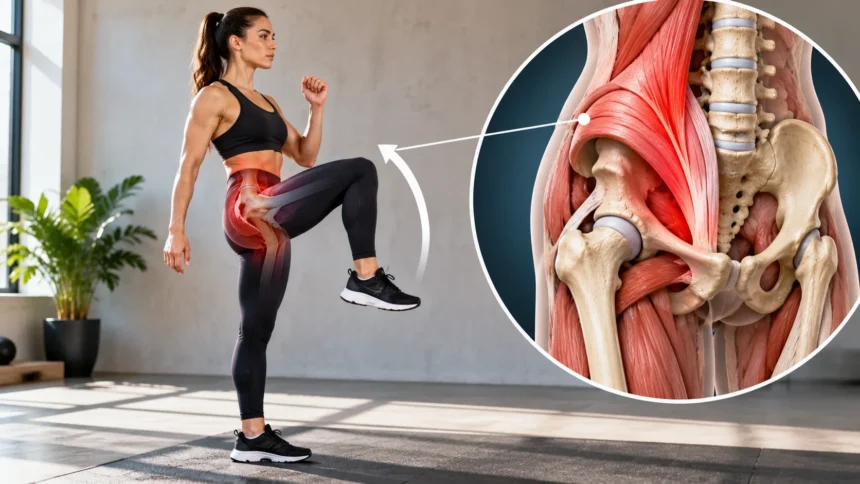
Hip flexion is one of the most important movements your body performs throughout the day. Whether you are walking, climbing stairs, sitting down, or lifting your knee toward your chest, your hip joints rely on coordinated muscle activity to move comfortably. Understanding hip flexion can help you learn how your lower body works, recognize movement limitations, and maintain healthy joint mobility.
The hip is a ball-and-socket joint that allows the thigh to move in several directions. Hip flexion specifically involves decreasing the angle between the thigh and the front of the pelvis or torso. This movement depends on several muscles, including the iliopsoas, rectus femoris, and sartorius, working together to control the position of your leg.
Learning about hip flexion is useful for anyone interested in anatomy, exercise, flexibility, rehabilitation, or everyday movement. This guide explains what hip flexion means, how it works, which muscles are involved, common causes of limited mobility, and practical ways to support healthy hip function.
What Is Hip Flexion?
Hip flexion is the movement that brings your thigh closer to the front of your pelvis or torso. It occurs at the hip joint when you lift your knee toward your chest or bend forward from your hips. This movement is essential for everyday activities because it allows your legs and trunk to change positions smoothly.
The hip joint connects the rounded head of the femur, or thigh bone, with the acetabulum of the pelvis. Together, these structures create a stable joint capable of moving in multiple directions. Hip flexion is one of its primary actions, alongside extension, abduction, adduction, and internal and external rotation.
Normal hip flexion requires coordinated activity between muscles, tendons, ligaments, and joint structures. The movement can occur when the thigh moves toward a relatively stable pelvis or when the trunk bends over the thighs. Understanding this distinction helps explain why hip flexion is involved in both lower-body exercises and ordinary activities such as sitting.
How Does Hip Flexion Work?
Hip flexion occurs when muscles generate force that decreases the angle between the thigh and pelvis. During movements such as lifting your knee, the hip flexor muscles contract to bring the femur forward and upward. The surrounding muscles help control pelvic position, joint stability, and the speed of movement.
The hip joint is designed to combine mobility with stability through its rounded bone surfaces and supporting soft tissues. Cartilage helps the joint surfaces move smoothly, while ligaments and the joint capsule contribute to stability. Muscles surrounding the hip coordinate their activity to produce controlled movements without placing unnecessary stress on nearby structures.
Hip flexion can happen actively or passively depending on how the movement is performed. Active hip flexion occurs when your muscles lift your thigh, while passive flexion happens when an outside force moves the leg. Both forms are useful for assessing joint mobility, muscle function, and movement limitations during physical examinations.
What Muscles Are Involved in Hip Flexion?
Several muscles contribute to hip flexion, but the iliopsoas is commonly considered the primary hip flexor. It consists of the iliacus and psoas major muscles, which work together to lift the thigh toward the torso. Their location allows them to produce significant hip-flexion force during walking, running, and other lower-body movements.
The rectus femoris, sartorius, tensor fasciae latae, and pectineus also assist with hip flexion. Each muscle contributes differently because its attachments and anatomical orientation influence the direction of force it produces. Some of these muscles perform additional functions, including knee extension, hip abduction, and hip rotation.
Hip flexion also depends on surrounding muscles that stabilize the pelvis and trunk. The abdominal muscles and other core stabilizers help control body position during activities involving repeated leg lifting. When these muscle groups work together, hip movement becomes more coordinated and efficient, supporting comfortable performance during everyday tasks and physical exercise.
The Role of the Iliopsoas in Hip Flexion
The iliopsoas is a major muscle group responsible for producing hip flexion. It includes the psoas major, which originates from the lumbar spine, and the iliacus, which begins along the inner surface of the pelvis. Both muscles attach to the lesser trochanter of the femur through a shared tendon.
When the iliopsoas contracts, it helps lift the thigh toward the torso or contributes to bending the trunk relative to the thigh. This action is particularly important when stepping forward, climbing stairs, or moving the leg into a seated position. Its relationship with the pelvis and lumbar spine also makes coordinated trunk stability important during movement.
The iliopsoas can experience stiffness, weakness, or irritation depending on activity demands and individual circumstances. However, discomfort near the front of the hip does not automatically indicate an iliopsoas problem. Other muscles, tendons, joints, and nearby structures can produce similar symptoms, making proper assessment important when discomfort persists.
Other Important Hip Flexor Muscles
The rectus femoris is one of the four quadriceps muscles located at the front of the thigh. Unlike the other quadriceps muscles, it crosses both the hip and knee joints. This anatomical arrangement allows it to assist with hip flexion while also contributing to knee extension during activities such as walking and kicking.
The sartorius is a long, narrow muscle that runs diagonally across the front of the thigh. It assists with hip flexion, abduction, and external rotation while also helping bend the knee. The tensor fasciae latae, located near the outer hip, contributes to hip flexion and abduction while supporting movement control through its connection with the iliotibial tract.
The pectineus is another muscle that contributes to hip flexion and adduction, helping move the thigh forward and toward the body’s midline. These supporting muscles work alongside the iliopsoas rather than functioning independently. Their combined activity allows the hip joint to perform movements that require strength, precision, and stability.
What Is the Normal Range of Motion for Hip Flexion?
Hip flexion range of motion describes how far the thigh can move toward the torso at the hip joint. In adults, approximately 120 degrees of hip flexion is often used as a general clinical reference when the knee is bent. However, actual measurements vary according to individual anatomy, age, examination technique, and physical condition.
When the knee remains straight, the hamstring muscles may limit how far the thigh can move toward the torso. Bending the knee reduces tension in these muscles, often allowing greater hip flexion. This difference explains why bringing a bent knee toward the chest usually feels easier than raising a straight leg to the same height.
Healthcare professionals commonly measure hip range of motion using a goniometer or other assessment methods. The goal is not necessarily to achieve the highest possible measurement but to identify comfortable, functional movement. Differences between individuals are normal, and limited motion becomes more significant when it causes symptoms or interferes with daily activities.
Hip Flexion vs. Hip Extension: Understanding the Difference
Hip flexion and hip extension are opposite movements occurring at the same joint. Flexion decreases the angle between the thigh and the front of the pelvis, while extension increases that angle by moving the thigh backward. Both actions are essential for walking, running, standing, and transitioning between different body positions.
Hip flexion primarily involves muscles such as the iliopsoas and rectus femoris, whereas hip extension relies heavily on the gluteus maximus and hamstrings. During walking, the hip alternates between flexion and extension as the leg moves forward and backward. This coordinated movement helps maintain balance and supports efficient forward progression.
Healthy hip function requires appropriate strength and mobility in both movement directions. Focusing exclusively on hip flexor exercises while neglecting the posterior hip muscles may create an incomplete training routine. Balanced lower-body activity supports coordination between the muscles responsible for lifting the thigh and those responsible for extending the hip.
Why Is Hip Flexion Important for Everyday Activities?
Hip flexion is involved in many ordinary movements that people perform without consciously thinking about joint mechanics. Walking requires the thigh to move forward during the swing phase of each step. Climbing stairs demands additional hip flexion because the knee must rise high enough to place the foot securely on the next step.
Sitting down also involves hip flexion as the torso and thighs move closer together. When standing from a chair, the hip transitions toward extension while the surrounding muscles provide stability and force. These transitions demonstrate how hip movement supports practical activities that involve changing positions throughout the day.
Hip flexion also contributes to balance, coordination, and lower-body movement efficiency. Limited mobility or weakness may make tasks such as stepping over obstacles, entering a vehicle, or putting on shoes more difficult. Maintaining comfortable hip movement can support independence and physical function across different stages of life.
What Causes Limited Hip Flexion?
Limited hip flexion can develop for several reasons, including muscle stiffness, joint restrictions, pain, or changes in movement habits. Tight hamstrings may restrict straight-leg hip flexion, while discomfort around the hip joint can limit movement in other positions. The exact cause depends on which structures are involved and how symptoms appear.
Hip osteoarthritis, previous injuries, and certain joint conditions may also reduce available movement. Changes in joint cartilage, surrounding tissues, or bone structure can make deeper hip flexion uncomfortable. Some individuals have anatomical differences that influence how much hip movement they naturally possess without necessarily indicating a medical problem.
Prolonged inactivity may contribute to reduced flexibility or movement confidence, although sitting alone does not explain every case of hip stiffness. Muscle weakness and protective responses to pain can also affect movement patterns. When restricted hip flexion interferes with everyday tasks, a healthcare professional can help identify the underlying reason.
Common Symptoms of Hip Flexion Problems
Hip flexion problems may cause stiffness, discomfort, weakness, or difficulty lifting the thigh toward the torso. Some people notice symptoms while climbing stairs, walking uphill, or moving from sitting to standing. Others experience discomfort during exercise or when attempting movements that require deeper bending at the hip joint.
Pain associated with hip movement may occur at the front of the hip, within the groin, or around nearby muscles. However, these locations do not identify a specific diagnosis because several conditions can produce similar symptoms. Clicking sensations may also occur, and they are not necessarily concerning unless accompanied by pain or functional limitations.
Changes in walking patterns, reduced range of motion, and difficulty balancing on one leg can sometimes accompany hip problems. Symptoms should be assessed in the context of activity levels and overall health. Sudden severe pain, inability to bear weight, fever with a painful hip, or significant symptoms after an injury require prompt medical evaluation.
How to Improve Hip Flexion Mobility
Improving hip flexion mobility generally involves practicing comfortable movement while addressing any relevant muscle or joint restrictions. Gentle exercises can help you explore available range of motion without forcing the joint into uncomfortable positions. The most suitable approach depends on whether limited movement results from stiffness, weakness, pain, or anatomical factors.
A simple starting exercise is the seated knee lift, which involves sitting upright and slowly raising one knee toward the chest. Keep your movements controlled and avoid leaning backward excessively to compensate for limited hip motion. Repeat the exercise a few times on each side while staying within a comfortable, pain-free range.
Another option is a supported knee-to-chest movement performed while lying on your back. Gently bring one knee toward the torso without pulling aggressively or compressing the hip joint. These exercises may improve movement awareness and comfort, but persistent restrictions or pain may require individualized physical therapy rather than repeated stretching.
Best Exercises to Strengthen Hip Flexion
Hip flexion strengthening exercises focus on improving the ability to lift and control the thigh against resistance. Seated marches are a beginner-friendly option because they allow you to practice hip flexion while maintaining a supported position. Sitting upright, slowly lift one knee, lower it with control, and alternate between your legs.
Standing knee raises provide another practical way to strengthen the hip flexors. Hold a stable surface for balance and lift one knee toward your waist without forcing excessive movement. Keep your torso relatively upright and lower the leg slowly, allowing the hip muscles to control both the lifting and lowering phases.
As strength and movement control improve, exercises can become gradually more challenging through appropriate resistance or longer movement ranges. Resistance bands may be useful when selected carefully and used with proper technique. The goal is to strengthen hip flexion without creating pain, excessive fatigue, or unnecessary strain through the lower back.
How to Stretch Tight Hip Flexors Safely
Hip flexor stretches are commonly used to improve flexibility across the front of the hip. A half-kneeling hip flexor stretch is one option that targets muscles involved in hip flexion while placing the hip into gentle extension. This movement is different from a hip flexion exercise because it lengthens structures that help lift the thigh.
Begin in a comfortable half-kneeling position with one knee supported on a padded surface and the other foot placed forward. Gently tighten your abdominal muscles and move your pelvis into a slight posterior tilt. Shift forward only until you notice a mild stretch across the front of the hip on the kneeling side.
Hold the position for approximately 15 to 30 seconds if comfortable, then return slowly to the starting position. Avoid arching your lower back or forcing your pelvis forward to achieve a deeper stretch. If kneeling is uncomfortable, a standing variation may be more suitable, and painful stretching should be avoided.
Common Mistakes During Hip Flexion Exercises
One common mistake during hip flexion exercises is relying on momentum rather than controlled muscle movement. Swinging the leg upward may reduce the opportunity to practice smooth movement and make it harder to identify compensation patterns. Using slower repetitions can help you maintain awareness of hip positioning and control throughout the exercise.
Another mistake is allowing the lower back to arch excessively during repeated knee raises. Although some trunk movement is normal during functional activities, unnecessary compensation may change how the exercise is performed. Maintaining comfortable pelvic and spinal alignment can help direct the movement toward the hip without forcing the body into a rigid posture.
Ignoring pain or attempting movements beyond your comfortable range can also create difficulties. Deep hip flexion may produce pinching sensations in some individuals, particularly when joint structures become compressed in certain positions. Instead of repeatedly forcing the movement, reduce the range and seek professional assessment if symptoms continue.
Hip Flexion and Lower Back Pain
Hip flexion and lower back movement are closely related because the pelvis connects the spine with the lower limbs. The iliopsoas also has attachments involving the lumbar spine, creating a mechanical relationship between hip movement and trunk positioning. However, this connection does not mean that hip flexor tightness automatically causes lower back pain.
Some people compensate for limited hip mobility by moving more through the pelvis or lumbar spine during daily activities. These movement patterns may influence how certain exercises feel, particularly when lifting the legs or bending forward. Pain is complex, however, and factors such as strength, sensitivity, previous injury, and activity demands can also contribute.
Improving comfortable hip movement and strengthening surrounding muscles may be helpful as part of a broader exercise program. Core exercises, gradual activity, and appropriate movement practice can support lower-body function. Persistent back pain, especially when associated with leg weakness, numbness, or other neurological symptoms, should be assessed by a qualified healthcare professional.
Hip Flexion in Walking, Running, and Sports
Hip flexion plays an important role in walking because it helps move the thigh forward during each step. As one leg pushes against the ground, the opposite hip begins flexing to bring the foot into position for the next stride. Coordinated hip movement helps maintain walking rhythm and supports efficient movement across different surfaces.
Running and many athletic activities require faster or more demanding hip-flexion movements. Sprinting involves rapid thigh recovery, while activities such as kicking, cycling, and stair climbing use the hip flexors in different ways. The amount of force and range of motion required depends on the specific activity and individual movement technique.
Athletes often benefit from training hip strength, coordination, and mobility alongside the surrounding lower-body muscles. However, stronger hip flexors alone do not guarantee improved running speed or athletic performance. Effective movement also depends on gluteal strength, trunk control, overall conditioning, technical skill, and appropriate recovery between demanding training sessions.
When Should You Seek Help for Hip Flexion Problems?
Occasional hip stiffness after prolonged inactivity or unfamiliar exercise may improve with gentle movement and adequate recovery. However, symptoms that persist, worsen, or interfere with ordinary activities deserve closer attention. A healthcare professional can assess hip movement, identify possible contributing factors, and recommend appropriate exercises or further testing when necessary.
Seek prompt medical attention if hip pain develops suddenly after a fall or injury, particularly when you cannot bear weight. Severe pain, significant swelling, fever, or a visibly abnormal joint position may indicate a problem requiring urgent evaluation. New weakness or neurological symptoms should also be assessed rather than managed through stretching alone.
For less urgent concerns, a physical therapist may evaluate hip range of motion, muscle strength, and movement patterns. Treatment recommendations can include appropriate strengthening, mobility exercises, and modifications to aggravating activities. The goal is to improve comfortable function while addressing the actual cause of symptoms rather than assuming every hip problem results from tight muscles.
Conclusion
Hip flexion is an essential movement that allows the thigh to move toward the pelvis or torso. It supports everyday activities such as walking, climbing stairs, sitting, and lifting the knee. Several muscles contribute to this movement, with the iliopsoas playing a particularly important role alongside other hip flexors.
Healthy hip flexion depends on coordinated muscle activity, suitable joint mobility, and appropriate strength. Limited movement can result from stiffness, weakness, pain, or structural differences, making it important to understand the underlying cause. Gentle mobility exercises and progressive strengthening may help improve function when selected according to individual needs.
Maintaining comfortable hip movement involves regular physical activity, balanced lower-body training, and attention to persistent symptoms. Avoid forcing painful movements or assuming that deeper flexibility is always better. Understanding hip flexion anatomy and function can help you make informed decisions about exercise, mobility, and long-term joint health.
Frequently Asked Questions
What is hip flexion in simple terms?
Hip flexion is the movement that brings your thigh closer to your torso. It happens when you lift your knee, sit down, climb stairs, or bend forward at the hip joint.
Which muscle is primarily responsible for hip flexion?
The iliopsoas is commonly considered the primary hip flexor. It consists of the iliacus and psoas major muscles, which work together with other muscles to lift the thigh toward the torso.
What is the normal range of hip flexion?
Normal hip flexion is commonly referenced at approximately 120 degrees with the knee bent. Actual range of motion varies depending on individual anatomy, flexibility, examination technique, and physical condition.
How can I improve my hip flexion?
You can improve hip flexion through comfortable mobility exercises, seated knee lifts, controlled standing marches, and suitable strengthening activities. Persistent pain or movement restrictions may require assessment by a physical therapist.
What causes pain during hip flexion?
Pain during hip flexion can result from muscle strains, tendon irritation, joint conditions, or other nearby structures. Because symptoms have several possible causes, persistent or worsening pain should be evaluated professionally.