

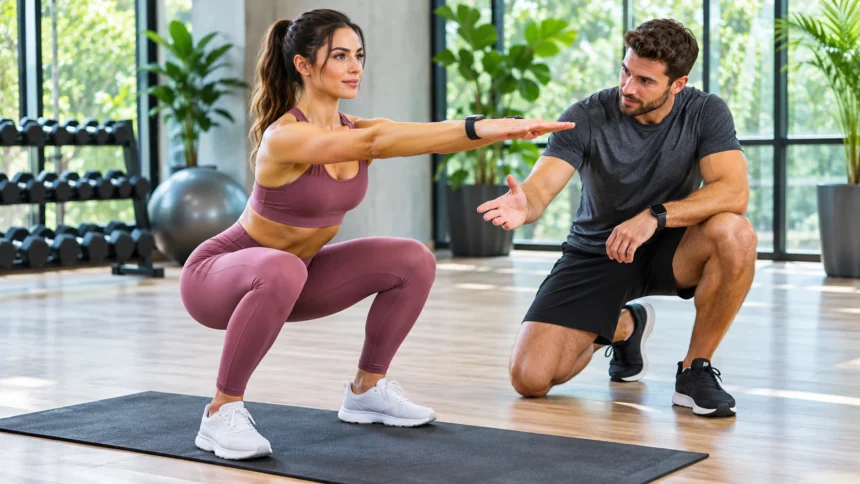
Bodyweight exercise is one of the simplest ways to improve strength, mobility, balance, and overall fitness without depending on expensive gym equipment. Whether you exercise at home, outdoors, or while traveling, your own body provides resistance for effective workouts. However, learning proper technique is essential for making progress while reducing the risk of injuries.
Many people begin bodyweight training with exercises like push-ups, squats, and planks but struggle to maintain correct form. Poor movement habits can make exercises uncomfortable and reduce their effectiveness. Understanding how to control your movements, choose suitable exercises, and progress gradually can help you build a sustainable fitness routine.
What Is Bodyweight Exercise?
Bodyweight exercise is a form of strength training that uses your body’s weight as resistance instead of external equipment. Common movements include squats, lunges, push-ups, planks, and glute bridges. These exercises challenge different muscle groups while helping improve coordination, stability, and physical control during everyday activities.
Unlike traditional weightlifting, bodyweight training requires little or no specialized equipment. You can perform many exercises in a bedroom, living room, garden, or public park. This convenience makes bodyweight workouts accessible for beginners, busy professionals, and people who prefer exercising without visiting a gym.
Bodyweight resistance training can be adjusted to suit different fitness levels and physical abilities. Beginners may start with supported squats or wall push-ups, while experienced individuals can explore more challenging variations. The goal is to select movements that provide an appropriate challenge without sacrificing technique, comfort, or safety.
Benefits of Bodyweight Exercises for Overall Fitness
One major advantage of bodyweight exercises is their ability to improve functional strength. Movements such as squatting, pushing, and lunging resemble actions performed during daily life. Strengthening the muscles involved in these movements can make activities like climbing stairs, carrying objects, and getting up from chairs feel easier.
Bodyweight workouts also support muscular endurance, balance, coordination, and joint stability. Exercises involving controlled movement encourage different muscle groups to work together efficiently. When combined with regular walking or other aerobic activities, bodyweight strength training can become part of a well-rounded fitness routine.
Another important benefit is flexibility in workout scheduling and location. You can complete a short home workout without purchasing machines or arranging transportation to a fitness center. This accessibility can make consistent physical activity easier, especially for individuals managing school, work, family responsibilities, or changing daily routines.
How to Start Bodyweight Training as a Beginner
Starting bodyweight training does not require advanced fitness skills or complicated workout routines. Begin by learning a few basic movements that target major muscle groups. Chair squats, wall push-ups, glute bridges, and gentle core exercises are useful options because they can be modified according to comfort and ability.
Choose a manageable number of repetitions rather than trying to complete an exhausting workout. For example, beginners might practice five to ten controlled repetitions of an exercise, depending on their ability. Take enough rest between sets to maintain good technique, and adjust the difficulty whenever movement becomes uncomfortable.
Consistency matters more than immediately attempting difficult exercises or lengthy sessions. Begin with a few comfortable training sessions each week, allowing adequate recovery between challenging workouts. As your strength and confidence improve, gradually introduce new movements, additional repetitions, or more demanding exercise variations.
Why Proper Exercise Form Matters
Correct exercise form helps distribute physical effort across the intended muscles and joints. During bodyweight movements, maintaining alignment and controlling your range of motion can improve exercise quality. Good technique also makes it easier to recognize when an exercise is too difficult for your current strength or mobility.
Rushing through repetitions often reduces muscle engagement and makes movements harder to control. For example, quickly lowering into a squat may cause balance problems or uncomfortable joint positioning. Performing each repetition deliberately allows you to monitor posture, breathing, and muscle control throughout the exercise.
Proper technique does not mean every person’s movement must look identical. Differences in mobility, body proportions, experience, and physical ability can affect comfortable positioning. Focus on stable, controlled movements rather than forcing an exact posture, and seek guidance from a qualified professional when pain or movement limitations occur.
How to Perform Bodyweight Squats Correctly
Bodyweight squats strengthen the thighs, glutes, and supporting muscles around the hips and core. Begin by standing with your feet approximately shoulder-width apart or in another comfortable position. Keep your chest relaxed, maintain balance across your feet, and prepare to lower your hips with control.
Bend your knees and hips together as though sitting back into a chair. Lower yourself only as far as you can comfortably maintain balance and control. Allow your knees to follow the general direction of your toes, then push through your feet to return to standing.
Beginners can practice chair squats to build confidence and improve movement awareness. Position a sturdy chair behind you and lower yourself toward the seat before standing again. Avoid forcing deep squats if your mobility is limited, and gradually explore a greater range of motion as strength improves.
How to Do Push-Ups With Proper Technique
Push-ups are a popular upper-body bodyweight exercise targeting the chest, shoulders, triceps, and core muscles. Begin with your hands slightly wider than shoulder-width apart and your body in a comfortable plank position. Keep your shoulders controlled and maintain a relatively straight line through your trunk.
Bend your elbows gradually to lower your chest toward the floor while maintaining steady breathing. Your elbows can move at a comfortable angle rather than pointing directly outward. Press through your palms to return to the starting position without allowing your lower back to sag excessively.
If floor push-ups feel challenging, start with wall push-ups or incline push-ups using a stable surface. These modifications reduce the resistance while allowing you to practice similar movement patterns. Increase the challenge gradually as your upper-body strength develops, prioritizing smooth repetitions over completing a particular number.
How to Perform Lunges Safely
Lunges are effective lower-body exercises that challenge the quadriceps, glutes, and muscles responsible for balance. Begin by standing upright with your feet comfortably spaced apart. Step backward into a reverse lunge, keeping your upper body controlled and your front foot stable throughout the movement.
Bend both knees to lower your body toward the floor without forcing excessive depth. Keep your front knee moving comfortably in line with your foot while maintaining an upright, balanced position. Push through your front foot to return to standing, then repeat on the opposite side.
Reverse lunges are often easier for beginners to control than forward lunges. Holding a sturdy support can also improve balance while learning the movement. If you experience knee discomfort, shorten your range of motion or try another lower-body exercise that feels more comfortable.
How to Master the Plank Exercise
The plank is a core-strengthening exercise that challenges the abdominal muscles, shoulders, hips, and supporting stabilizers. Begin on your forearms and toes, positioning your elbows approximately beneath your shoulders. Maintain a comfortable, straight alignment through your trunk without excessively raising or lowering your hips.
Engage your abdominal muscles gently while continuing to breathe normally. Instead of holding your breath, take slow, controlled breaths throughout the exercise. Stop the hold when you can no longer maintain a stable position, and rest before attempting another comfortable repetition.
Beginners may find knee-supported planks or elevated planks more manageable than traditional floor planks. These variations reduce the challenge while developing core stability and muscular endurance. Increase the duration gradually when your technique remains steady, remembering that longer holds are not automatically more beneficial.
How to Strengthen Your Glutes With Bridges
Glute bridges target the muscles around your hips and help develop strength used during walking, standing, and climbing stairs. Lie on your back with your knees bent and feet resting comfortably on the floor. Keep your arms relaxed beside your body and prepare to lift your hips slowly.
Press through your feet and raise your hips until your shoulders, hips, and knees form a comfortable alignment. Gently engage your glute muscles without pushing your lower back into an exaggerated arch. Pause briefly at the top before lowering your hips with control.
If a full bridge feels uncomfortable, practice smaller hip lifts until your strength improves. You can also adjust your foot placement to find a more natural position. Focus on controlled movement and even pressure through both feet rather than lifting as high as possible.
How to Improve Core Strength Without Equipment
Core strength involves more than developing abdominal muscles or holding long planks. The core includes muscles around the abdomen, lower back, pelvis, and hips that support movement and stability. Exercises such as bird dogs, dead bugs, and modified side planks can help strengthen these areas.
The bird dog exercise begins on your hands and knees with your spine in a comfortable position. Slowly extend one arm and the opposite leg while keeping your trunk steady. Return to the starting position and switch sides, focusing on balance instead of reaching as far as possible.
Dead bugs provide another accessible option for improving core coordination. Lie on your back with your arms raised and knees bent, then gradually lower opposite limbs while maintaining comfortable trunk control. Reduce the movement range if your back becomes uncomfortable or you struggle to maintain steady breathing.
Common Bodyweight Exercise Mistakes to Avoid
One common mistake is performing exercises too quickly without paying attention to technique. Fast repetitions can make it difficult to maintain balance, alignment, and muscular control. Slowing down allows you to recognize movement errors and complete each repetition with greater awareness and consistency.
Another mistake is choosing advanced exercises before mastering simpler variations. Attempting challenging push-ups, deep single-leg squats, or demanding plank variations too early may create unnecessary discomfort. Building foundational strength first provides a more manageable path toward improving physical ability and confidence.
Ignoring recovery and persistent pain can also interfere with a healthy exercise routine. Muscle fatigue during exercise can be normal, but sharp pain or worsening joint discomfort should not be ignored. Stop or modify uncomfortable movements, allow adequate recovery, and consult a healthcare professional if symptoms persist.
How to Warm Up Before Bodyweight Workouts
A proper warm-up prepares your body for movement by gradually increasing circulation and activating important muscle groups. Begin with several minutes of comfortable activity, such as walking in place or gentle marching. You can then introduce simple movements that resemble the exercises planned for your workout.
Dynamic warm-up exercises may include arm circles, gentle hip movements, supported squats, and controlled leg swings. These activities encourage comfortable joint movement while helping you transition into more demanding exercises. Avoid forcing stretches or performing movements that cause pain, especially when your muscles still feel stiff.
Your warm-up should match the type and intensity of your planned workout. Before performing push-ups, practice easier pushing movements and shoulder mobility exercises. Before lower-body training, gentle squats and stepping movements can help prepare your legs, hips, and surrounding muscles for activity.
How to Build a Balanced Full-Body Workout
A balanced bodyweight workout includes movements that strengthen different muscle groups instead of focusing exclusively on one area. Squats and lunges challenge the lower body, while push-ups target major upper-body muscles. Planks, bridges, and bird dogs contribute to core control, hip strength, and stability.
You can organize these exercises into a simple routine based on your experience and available time. For example, perform one comfortable set of squats, modified push-ups, glute bridges, and bird dogs. Rest whenever needed, and consider repeating the sequence if your energy and technique remain good.
Remember that many basic bodyweight routines provide limited pulling exercises for the upper back. Safe resistance-band exercises or suitable gym equipment can help address this gap when available. Walking, cycling, or other enjoyable aerobic activities can also complement strength training and support overall cardiovascular fitness.
How Often Should You Do Bodyweight Exercises?
The ideal training frequency depends on your experience, recovery, physical condition, and personal goals. Beginners can start with two or three strength-training sessions each week, with recovery time between harder sessions. This approach provides opportunities to practice movements without making exercise feel overwhelming or difficult to maintain.
You do not need to train every muscle intensely each day to make progress. Muscles benefit from recovery between demanding strength sessions, particularly when exercises become more challenging. On non-strength-training days, comfortable walking, stretching, or other enjoyable physical activities may help maintain an active routine.
Pay attention to how your body responds rather than following a rigid schedule regardless of fatigue. Difficulty recovering, persistent soreness, and declining technique may indicate a need to reduce intensity or take additional rest. A sustainable routine should fit your lifestyle while supporting comfort, confidence, and gradual improvement.
How to Progress With Bodyweight Strength Training
Progressive overload means gradually increasing the challenge placed on your muscles as your abilities improve. In bodyweight training, this may involve adding controlled repetitions, adjusting leverage, or progressing toward more challenging exercise variations. The objective is steady development rather than making every workout significantly harder.
For example, someone comfortable with wall push-ups may progress to incline push-ups before trying floor push-ups. Similarly, a beginner can move from chair-assisted squats to unsupported squats as balance and strength improve. These transitions should happen when your technique remains stable and the current variation feels manageable.
Other ways to progress include improving movement control, exploring a comfortable range of motion, and practicing more demanding balance tasks. However, increasing difficulty is not necessary during every training session. Maintaining existing strength and enjoying regular movement are also valuable outcomes of a consistent exercise routine.
Bodyweight Exercises for Flexibility and Mobility
Bodyweight training can help develop mobility by encouraging muscles and joints to move through comfortable ranges of motion. Controlled squats, lunges, and hip movements can support functional movement when performed appropriately. These exercises combine muscular effort with coordination rather than treating flexibility and strength as completely separate abilities.
Movements such as gentle deep-squat holds, supported lunges, and spinal mobility exercises may be useful for some individuals. However, not everyone needs the same range of motion or flexibility level. Choose exercises that suit your current mobility and avoid forcing uncomfortable positions to imitate someone else’s technique.
Combining bodyweight strength exercises with gentle stretching can help create a balanced movement routine. Stretching may be particularly comfortable after training, when your body has already been active. Consistent, controlled practice is generally more useful than attempting dramatic improvements in flexibility during a single session.
How to Stay Motivated With Home Workouts
Maintaining a bodyweight exercise routine becomes easier when your workouts are realistic and enjoyable. Instead of creating an overly complicated training schedule, begin with a few exercises you understand and feel comfortable performing. Choosing a consistent time can also make exercise easier to incorporate into daily life.
Tracking progress can provide motivation without making fitness dependent on appearance or constant performance improvements. You might record completed sessions, improved balance, easier movements, or increased confidence with exercise technique. Recognizing these changes can help you appreciate the practical benefits of regular strength training.
Variety can also keep home workouts interesting and prevent unnecessary boredom. Alternate between different movement patterns, explore suitable exercise variations, or occasionally train outdoors when conditions allow. Remember that a shorter, comfortable session can still contribute to a healthy routine, even when your schedule changes unexpectedly.
Who Should Modify Bodyweight Exercises?
Bodyweight exercises can be adapted for many people, but some individuals benefit from additional modifications or professional guidance. Beginners, older adults, and people returning to activity after an injury may require gentler movements. Choosing an appropriate starting point helps make exercise more comfortable and manageable.
People with existing joint pain, balance difficulties, or medical conditions should consider their individual limitations before beginning a new routine. Some movements may need to be adjusted or replaced with alternatives. A healthcare professional or qualified physical therapist can help identify suitable exercises when additional support is necessary.
Exercise should not require pushing through significant pain, dizziness, or unusual physical symptoms. Stop the activity when concerning symptoms occur and seek appropriate medical advice. Learning to recognize your body’s signals is an important part of developing a safe, effective, and sustainable approach to physical fitness.
Conclusion
Bodyweight exercise provides an accessible way to develop strength, stability, coordination, and functional fitness without expensive equipment. Simple movements such as squats, push-ups, lunges, and planks can support a balanced routine when performed correctly. Learning proper technique helps make each workout more comfortable, controlled, and productive.
The most effective approach begins with manageable exercises and gradually increases difficulty as strength and confidence improve. Warm-ups, adequate recovery, and appropriate exercise modifications all contribute to a sustainable training routine. Consistency and movement quality matter more than rushing through repetitions or attempting advanced variations prematurely.
Whether you exercise at home, outdoors, or while traveling, bodyweight training can fit many schedules and fitness levels. Focus on movements that feel suitable for your current abilities and recognize improvements beyond exercise performance alone. With patience and regular practice, bodyweight workouts can become a valuable part of an active lifestyle.
Frequently Asked Questions
Is bodyweight exercise effective for building muscle?
Yes, bodyweight exercises can improve muscle strength and support muscle development, especially for beginners. Progressively challenging your muscles through suitable variations, controlled repetitions, and adequate recovery helps encourage continued improvement.
Can beginners do bodyweight exercises every day?
Beginners can enjoy gentle physical activity daily, but challenging strength sessions require appropriate recovery. Starting with two or three weekly strength workouts is often manageable, while comfortable walking and mobility exercises can fill other days.
What are the best bodyweight exercises for beginners?
Chair squats, wall push-ups, glute bridges, bird dogs, and modified planks are useful starting points. These exercises can be adjusted for different strength levels while helping develop basic movement skills, balance, and coordination.
How long should a bodyweight workout last?
Workout duration depends on your fitness level, available time, and chosen exercises. Beginners may find 15–30 minutes manageable, including warm-up and recovery, but shorter sessions can also provide meaningful opportunities for movement.
Do bodyweight exercises require any equipment?
Most basic bodyweight exercises require no specialized equipment because your body provides the resistance. A comfortable exercise mat or sturdy chair may improve convenience, while optional resistance equipment can expand your workout choices.