

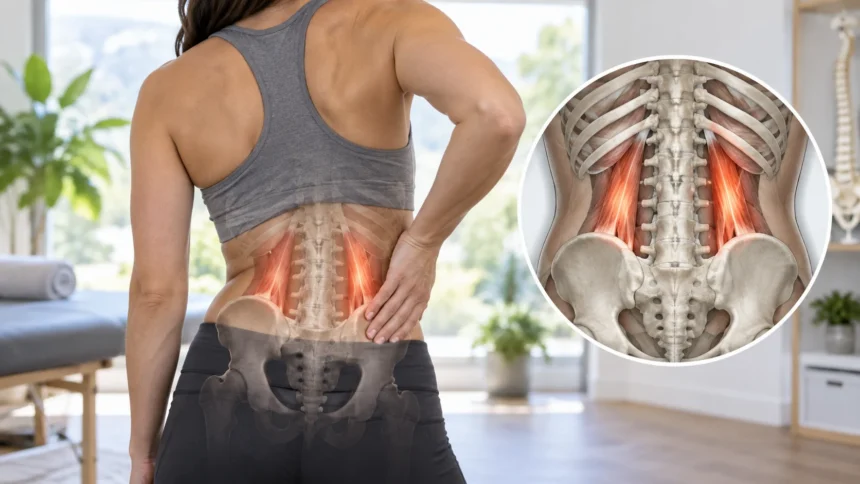
The QL muscle, short for quadratus lumborum, is a deep muscle located on each side of the lower back. Although it is not as well known as the abdominal or gluteal muscles, it plays an important role in spinal stability, posture, breathing mechanics, and movement of the pelvis. Tightness or irritation in this area can sometimes contribute to one-sided low-back discomfort.
Understanding QL anatomy can make it easier to see why everyday activities such as walking, carrying bags, standing unevenly, lifting, or sitting for long periods may affect the muscle. The QL does not work alone, however. It functions alongside the core, hips, spine, diaphragm, and surrounding muscles, so discomfort in the area should not automatically be blamed on one structure.
What Is the QL Muscle?
The quadratus lumborum is a paired muscle found deep in the posterior abdominal wall, with one muscle on each side of the lumbar spine. Its name reflects its roughly quadrilateral shape. Because it sits beneath larger back muscles, many people are unaware of the QL until they experience stiffness or discomfort around the lower back.
The QL connects the pelvis, lumbar vertebrae, and lower rib area. This positioning allows it to influence both the spine and pelvis during movement. It also means the muscle participates in several tasks rather than serving a single isolated function, making it part of a broader system responsible for stability and controlled movement.
Although people often describe QL pain as a distinct diagnosis, lower-back discomfort can come from many different tissues. Muscles, joints, discs, nerves, kidneys, and other structures can produce symptoms in nearby regions. Persistent or unexplained pain should therefore be evaluated appropriately instead of assuming the quadratus lumborum is always responsible.
Where Is the Quadratus Lumborum Located?
The quadratus lumborum sits deep in the lower back on both sides of the lumbar spine. It extends upward from the pelvis toward the twelfth rib and attaches along parts of the lumbar vertebrae. Its deep location places it close to important structures involved in trunk stability and breathing.
You can roughly imagine the QL occupying the area between the top of the pelvis and the lowest rib toward the back of the torso. However, trying to identify the muscle by pressing into the region is not always reliable. Other muscles and tissues overlap, and discomfort can be referred from structures located elsewhere.
The QL’s position explains why symptoms associated with the area can sometimes be felt around the side of the waist, lower back, or top of the pelvis. One-sided tightness may become noticeable during bending or standing. Still, location alone cannot confirm that the QL is the source of pain.
What Does the QL Muscle Do?
One important QL function is helping stabilize the lumbar spine and pelvis during movement. When both sides work together, the muscles can assist with extending and controlling the lower back. When one side contracts more strongly, it can help bend the trunk toward that same side.
The QL also helps control the pelvis during walking and standing on one leg. For example, it contributes to keeping the pelvis stable as the opposite foot leaves the ground. This function works together with the hip muscles and core rather than happening through the quadratus lumborum alone.
Another role involves the twelfth rib. The QL can help stabilize this rib during breathing, particularly when the diaphragm is working against it. This relationship explains why the muscle is sometimes discussed alongside breathing mechanics, although normal breathing relies on several muscles and structures working together.
Why Can the QL Become Tight or Sore?
Prolonged sitting can contribute to a sensation of tightness in the lower back, especially when you remain in one position for hours. The QL may work differently depending on posture, chair setup, and how much movement occurs throughout the day. Lack of movement can make the region feel stiff even without a specific injury.
Repeatedly carrying loads on one side can also create uneven demands around the pelvis and trunk. A heavy shoulder bag, carrying a child on one hip, or consistently leaning toward one side may contribute to muscular fatigue. The body can usually tolerate occasional asymmetry, but repetitive loading may become uncomfortable over time.
Exercise can also make the QL sore when it is exposed to unfamiliar loading. Heavy lifting, side bending, hiking, running, or movements requiring trunk stabilization can increase demand on the muscle. Mild post-exercise soreness may settle normally, while sharp or persistent pain deserves more careful assessment.
What Does QL Muscle Pain Feel Like?
Discomfort associated with the quadratus lumborum is often described as a deep ache or tight sensation on one side of the lower back. Some people notice tenderness between the lower ribs and the top of the pelvis. Symptoms may become more obvious during standing, side bending, walking, or changing positions.
The discomfort can sometimes feel worse after prolonged sitting or standing, particularly if weight is consistently shifted toward one side. Certain movements may create a pulling sensation, while rest may reduce symptoms temporarily. However, these patterns are not specific enough to prove the QL is definitely causing the pain.
Pain that travels down the leg with numbness, tingling, or weakness may suggest nerve involvement rather than simple muscle tightness. Fever, urinary symptoms, significant abdominal pain, or unexplained systemic symptoms also require different consideration. These warning signs should not be treated as ordinary QL soreness without medical evaluation.
QL Pain vs Other Types of Lower-Body Pain
Lower-back and pelvic symptoms can overlap, but they do not always come from the same structure. QL-related discomfort generally centers around the lower back, flank, or top of the pelvis. Hip joint conditions, nerve irritation, pelvic floor problems, and abdominal or urinary conditions can create pain that feels nearby but requires different treatment.
Pregnancy can also cause several distinct types of discomfort that should not automatically be attributed to the back muscles. For example, people researching pelvic pain in pregnancy may encounter lightning crotch, which is typically described as brief, sharp pelvic or vaginal pain. That symptom has a different pattern from ordinary muscular QL soreness.
Correctly identifying the source matters because stretching or strengthening the wrong area may not help. Persistent pain, pregnancy-related symptoms, neurological changes, or unexplained pelvic discomfort should be assessed based on the complete clinical picture. A nearby location does not mean two symptoms share the same cause.
Can Stretching Help a Tight QL?
Gentle stretching may help when the sensation is related to muscular stiffness or prolonged positioning. A side-bending stretch can lengthen tissues along the side of the trunk, while child’s pose variations may feel comfortable for some people. The stretch should create mild tension rather than sharp or radiating pain.
Avoid forcing the body into an extreme side bend simply because you want to feel a stronger stretch. More intensity does not automatically mean better results. Slow breathing and a comfortable range generally make stretching easier to control and reduce the chance of irritating already sensitive tissues.
Stretching should also be combined with movement throughout the day. If the QL feels tight because you sit for hours without changing position, a short stretch alone may provide only temporary relief. Frequent walking, standing breaks, and varied positions may address the underlying movement pattern more effectively.
How to Strengthen the QL and Surrounding Muscles
Strengthening the trunk can improve how the QL shares work with surrounding muscles. Side planks, loaded carries, and controlled anti-rotation exercises may challenge lateral trunk stability depending on your fitness level. Beginners should focus on maintaining a comfortable spine position rather than using heavy resistance immediately.
Hip and glute strength also matters because the pelvis needs support from several muscles during walking and single-leg activities. Exercises such as bridges, step-ups, squats, and appropriately selected side-hip movements can contribute to lower-body stability. A balanced program is usually more useful than trying to isolate the QL completely.
Progress exercises gradually so your body has time to adapt. Increasing load, duration, or repetitions too quickly can create unnecessary soreness or compensation. If an exercise consistently increases back pain, reduce the difficulty and check your technique rather than assuming discomfort is required for strengthening.
How Posture Affects the QL Muscle
Posture is not one perfect position that must be held throughout the day. The body generally benefits from changing positions regularly rather than remaining completely still. Even a technically good sitting position can become uncomfortable if you maintain it for several hours without moving.
Habitually leaning to one side may place uneven demands on the QL and surrounding trunk muscles. This can happen while sitting at a desk, driving, standing with weight on one leg, or carrying a bag. Becoming aware of these habits can help you introduce more variation without obsessing over perfect alignment.
A practical workstation should allow your feet, arms, and screen to remain in comfortable positions. More importantly, take regular movement breaks and alternate between sitting and standing when possible. These habits can reduce sustained muscular loading throughout the lower back and may be more helpful than rigid posture correction.
When Should You See a Healthcare Professional?
Seek professional evaluation when lower-back pain is severe, worsening, or persistent despite reasonable activity modification. Pain following a significant fall, collision, or lifting injury also deserves attention. A clinician can assess movement, strength, neurological signs, and other symptoms to determine whether the QL or another structure may be involved.
Numbness, tingling, significant weakness, or pain traveling far down the leg should not simply be treated as muscle tightness. These symptoms may indicate nerve irritation and can require a different management approach. Loss of bowel or bladder control or major weakness requires urgent medical attention.
You should also seek care for lower-back pain accompanied by fever, unexplained weight loss, significant abdominal symptoms, or urinary problems. These features can suggest causes outside the musculoskeletal system. Persistent nighttime pain or symptoms that feel noticeably different from previous back soreness should also be discussed with a healthcare professional.
Key Facts to Remember About the QL Muscle
The quadratus lumborum is important, but it should not be treated as the hidden cause behind every episode of low-back pain. It contributes to trunk movement, pelvic stability, and rib control while working with many surrounding structures. Understanding this broader role helps prevent oversimplified explanations for complex pain.
Muscle tightness does not always mean a muscle needs aggressive stretching. Sometimes fatigue, prolonged positioning, insufficient strength, or repeated asymmetrical loading may contribute to the sensation. A balanced approach usually includes varied movement, comfortable mobility, progressive strengthening, and attention to daily activity patterns.
Most importantly, symptoms should guide your response. Mild muscular soreness after activity may improve naturally, while neurological symptoms, significant injury, or unexplained persistent pain require more careful evaluation. Knowing the anatomy is useful, but an accurate diagnosis depends on more than identifying where discomfort happens to be located.
Conclusion
The QL muscle, or quadratus lumborum, is a deep lower-back muscle connecting the pelvis, lumbar spine, and twelfth rib. It helps stabilize the trunk and pelvis, contributes to side bending and spinal movement, and supports the lower rib during breathing. Its location makes it an important part of everyday movement.
QL discomfort may be associated with prolonged positions, unfamiliar exercise, uneven loading, or other musculoskeletal factors. Gentle stretching, regular movement, and progressive trunk and hip strengthening may help when symptoms are truly muscular. However, there is no single exercise or stretch that is appropriate for every type of lower-back pain.
Understanding QL anatomy can help you make sense of movement and muscular function without assuming every ache comes from this one structure. Seek medical evaluation for persistent pain, neurological symptoms, significant injury, or other concerning signs. A well-rounded approach to mobility and strength is generally more useful than focusing on the quadratus lumborum in isolation.
FAQs
What does QL stand for?
QL stands for quadratus lumborum, a deep muscle located on each side of the lower back. It connects areas of the pelvis, lumbar spine, and lowest rib.
What is the main function of the QL muscle?
The QL helps stabilize the lumbar spine and pelvis, assists with side bending, and contributes to controlling the twelfth rib during breathing. It also supports pelvic control during walking.
What does a tight QL feel like?
A tight or irritated QL may feel like a deep ache, stiffness, or pulling sensation around one side of the lower back or upper pelvis. Similar symptoms can have other causes.
How do you stretch the quadratus lumborum?
Gentle side-bending or supported mobility positions may stretch the area. Use a comfortable range, breathe normally, and avoid forcing the movement if it causes sharp, radiating, or worsening pain.
Can a weak QL cause lower-back problems?
Reduced trunk strength may contribute to poor load tolerance, but low-back pain is rarely explained by one muscle alone. Balanced strengthening of the trunk, hips, and surrounding muscles is usually more appropriate.