

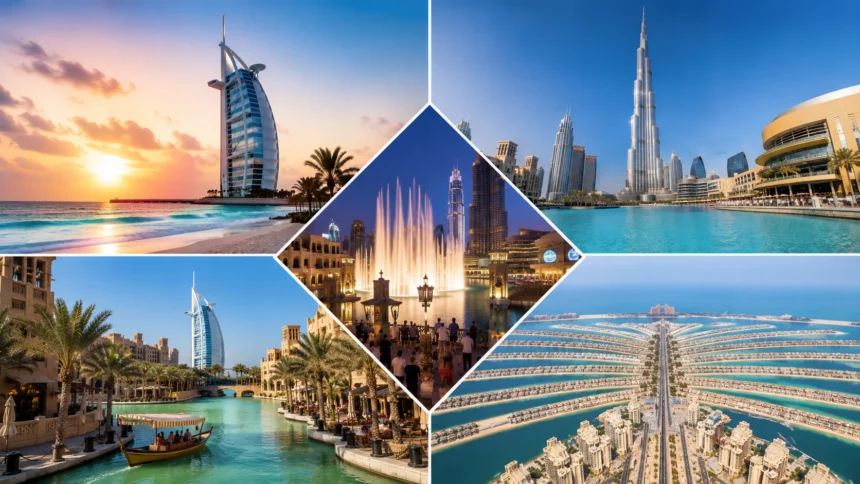
Dubai is a city where futuristic architecture, traditional Arabian culture, beautiful coastlines and desert landscapes come together in one destination. Whether you are planning your first Dubai vacation or returning for another trip, the city offers experiences for almost every kind of traveler. From record-breaking landmarks to atmospheric old neighborhoods, choosing where to begin can be the hardest part of planning.
The best places to visit in Dubai are not limited to skyscrapers and luxury shopping malls. Some attractions reveal the city’s ambitious modern identity, while others introduce visitors to the history, traditions and natural environment of the emirate. A balanced Dubai itinerary should ideally include both sides so that your trip feels more meaningful than simply moving between famous photo spots.
First-time visitors often want to know which Dubai tourist attractions are genuinely worth prioritizing when time is limited. Burj Khalifa, the Museum of the Future and Palm Jumeirah deliver the spectacular experiences Dubai is famous for, while Old Dubai offers a completely different atmosphere. A journey into the desert then provides a refreshing contrast to the city’s urban energy.
This guide explores five of the top places to visit in Dubai, explaining what makes each destination special, what you can experience there and who will enjoy it most. Instead of simply listing attractions, it will help you understand how each place fits into a memorable Dubai holiday and how you can organize your sightseeing more effectively.
Why Dubai Deserves a Place on Your Travel List
Dubai has developed into a destination where travelers can experience many different styles of vacation without traveling huge distances. One morning can be spent exploring historic lanes beside Dubai Creek, while the afternoon can involve a futuristic museum or panoramic observation deck. By evening, visitors can be watching the sunset among desert dunes or dining beside a glittering skyline.
The city’s architecture is one of its biggest attractions. Burj Khalifa dominates Downtown Dubai, the Museum of the Future creates one of the city’s most recognizable modern silhouettes, and Palm Jumeirah demonstrates the scale of Dubai’s coastal development. These landmarks make sightseeing interesting even for travelers who normally do not spend much time exploring architecture.
Dubai is also surprisingly varied for families, couples and solo travelers. Beaches, shopping, waterparks, museums, traditional markets, desert experiences and waterfront neighborhoods provide alternatives to expensive luxury activities. Travelers can build an itinerary around photography, culture, food, adventure, relaxation or family entertainment depending on what interests them most.
Another advantage is that many major Dubai attractions can be combined geographically. Downtown landmarks can be explored together, Palm Jumeirah can form part of a coastal sightseeing day, and Al Fahidi pairs naturally with Dubai Creek and the traditional souks. Planning around neighborhoods rather than individual attractions can save considerable travel time during a short stay.
1. Burj Khalifa and Downtown Dubai The Essential First Stop
No list of the best places to visit in Dubai feels complete without Burj Khalifa. Rising to 828 meters, it remains the world’s tallest building and the defining landmark of Dubai’s skyline. Even travelers who choose not to visit its observation decks will likely encounter the tower repeatedly while exploring the city.
Visitors who want the full experience can head to the observation areas for expansive views across Dubai. The elevated perspective reveals just how dramatically the city transitions from dense modern development to desert and coastline. Sunset is especially popular because visitors can watch the landscape change from daylight into the illuminated cityscape, although peak periods are naturally busier.
Burj Khalifa sits within Downtown Dubai, making the surrounding area almost as important as the tower itself. The neighborhood combines major shopping, entertainment, restaurants, hotels and pedestrian areas, allowing travelers to spend several hours nearby without constantly using transportation. Dubai Mall is also located in the district, making it easy to combine sightseeing with shopping or indoor activities.
For first-time travelers, Downtown Dubai works particularly well near the beginning of the trip because it delivers the dramatic skyline many people imagine before arriving. Visit during late afternoon if you want to experience both daytime and nighttime views, then remain in the district for dinner. This creates a relaxed introduction without trying to squeeze several distant attractions into one day.
What Makes Burj Khalifa Worth Visiting?
The biggest reason to visit Burj Khalifa is perspective. Seeing Dubai from street level is impressive, but viewing the city from high above creates an entirely different understanding of its scale. Observation decks on levels 124 and 125 form part of the popular At The Top experience. The view can be particularly memorable for anyone visiting Dubai for the first time.
The surrounding architecture also contributes significantly to the experience. Modern towers, wide roads and carefully designed public spaces make Downtown Dubai one of the city’s most recognizable areas. Photographers can capture very different scenes depending on whether they visit in bright daylight, during golden hour or after the surrounding towers illuminate at night.
Families can easily combine Burj Khalifa with nearby indoor attractions, while couples may prefer a slower evening centered around views and dining. Solo travelers benefit from the area’s easy walkability compared with some more spread-out parts of Dubai. The district therefore works for a much broader range of visitors than people sometimes assume.
Booking popular experiences ahead can reduce disappointment, particularly when you want a specific time such as sunset. Exact admission prices and available packages can change, so checking current information before visiting is sensible. Even without purchasing an observation-deck ticket, however, seeing Burj Khalifa from Downtown remains one of Dubai’s classic travel experiences.
2. Museum of the Future See Dubai’s Vision of Tomorrow
The Museum of the Future is one of the strongest examples of Dubai’s focus on innovation. Located along Sheikh Zayed Road, the striking elliptical building covered in Arabic calligraphy has become a major landmark in its own right. Dubai’s official tourism guide continues to feature it among the city’s notable museums and attractions.
Unlike a conventional museum focused mainly on objects from the past, the experience explores ideas about what life might look like in coming decades. Themes can include technology, space, sustainability, healthcare and human development. This future-focused approach makes it particularly interesting for visitors who enjoy science, design, innovation or interactive experiences rather than traditional museum displays.
The exterior deserves time as well. Its distinctive shape creates excellent photography opportunities from several angles around the surrounding district. The combination of futuristic architecture with nearby skyscrapers captures the visual contrast that has made modern Dubai famous, so even visitors with limited time often stop nearby simply to see the structure.
For travelers interested in unique things to do in Dubai, the Museum of the Future offers something different from beaches, malls and observation decks. Consider scheduling it during the hotter part of the day when an indoor attraction feels particularly comfortable. Advance planning can also be useful because entry demand may be high during busy travel periods.
Why the Museum of the Future Stands Out
The museum stands out because it asks visitors to think rather than simply observe. Exhibitions are designed around possibilities for tomorrow, turning broad subjects such as technology and environmental challenges into more immersive experiences. That makes the visit appealing to curious adults while also giving younger travelers opportunities to engage with ideas beyond conventional sightseeing.
Its architecture is equally important to its popularity. The building rises approximately 77 meters and has become one of the most recognizable structures along Sheikh Zayed Road. The flowing Arabic calligraphy integrated into the exterior ensures that the building itself communicates a strong cultural and visual identity.
Travelers should allow enough time to enjoy the experience instead of treating it purely as a quick photography stop. Moving slowly through interactive environments usually provides more value than rushing between displays to fit another attraction into the same hour. Combining it with nearby central Dubai destinations can still create an efficient sightseeing day.
The museum also represents an important side of Dubai that can be overlooked when travel itineraries focus entirely on luxury. Dubai frequently presents itself as a place experimenting with future lifestyles, architecture and technology, and this attraction expresses that ambition clearly. For that reason, it earns its position among the top Dubai tourist places for modern travelers.
3. Palm Jumeirah – Dubai’s Iconic Island Experience
Palm Jumeirah is one of the most recognizable destinations in Dubai, particularly when seen from above. The palm-shaped artificial island was created from reclaimed land and has developed into a major district filled with hotels, restaurants, residences and entertainment attractions. It represents the bold engineering and large-scale development associated with modern Dubai.
One of the most famous landmarks on the island is Atlantis, The Palm, positioned on the outer crescent. The resort has become closely associated with Dubai’s tourism image and sits near major entertainment experiences. Even travelers who are not staying on Palm Jumeirah can visit different areas of the island for sightseeing, dining and waterfront views.
One of the best ways to understand the unusual shape of Palm Jumeirah is to view it from an elevated perspective. The View at The Palm provides panoramic views from approximately 240 meters above ground, giving visitors a clearer impression of the island’s distinctive design and the Arabian Gulf beyond it.
Palm Jumeirah is particularly suitable for travelers who want a slower sightseeing day. Instead of moving rapidly from landmark to landmark, you can combine a viewpoint, coastal walk, restaurant and relaxing afternoon in the same area. Couples, families and photography enthusiasts can all find something worthwhile without following exactly the same itinerary.
Best Things to Do on Palm Jumeirah
Start by deciding whether you want your Palm Jumeirah visit to focus on views, entertainment or relaxation. Travelers primarily interested in photography may prioritize The View at The Palm, while families may prefer the island’s leisure attractions. Visitors who simply want to enjoy the surroundings can explore waterfront areas and stop for a meal overlooking the coast.
The Palm Jumeirah Boardwalk stretches along part of the island’s outer coastline behind Atlantis, offering another way to experience its waterfront environment. Walking here creates a very different feeling from exploring Downtown Dubai because the skyline becomes a backdrop rather than the entire focus of the experience.
Dining is another important part of visiting Palm Jumeirah. The island includes everything from casual restaurants to elaborate hotel dining experiences, making it easy to build an afternoon or evening around food. Sunset reservations can be especially appealing because the changing light creates attractive views across the water and surrounding skyline.
Allow enough travel time when adding Palm Jumeirah to your Dubai itinerary because the island covers a larger area than it appears from photographs. Rather than combining it with attractions on the opposite side of Dubai, pair it with nearby coastal districts when possible. A relaxed schedule usually makes Palm Jumeirah considerably more enjoyable.
4. Dubai Desert Conservation Reserve – Experience Another Side of Dubai
Dubai’s futuristic skyline can make it easy to forget that the emirate sits within a dramatic desert environment. Visiting the Dubai Desert Conservation Reserve introduces travelers to that landscape while creating a completely different atmosphere from central Dubai. The protected area focuses on preserving the desert’s natural and cultural heritage.
Desert experiences can include wildlife observation, scenic drives, camel experiences and other activities depending on the tour or program selected. Arabian oryx are among the native wildlife associated with the reserve. Travelers looking for more than city sightseeing often consider a desert excursion one of the most memorable parts of a Dubai holiday.
Timing changes the mood considerably. Morning trips can offer cooler conditions and beautiful light across the dunes, while evening experiences may include sunset views and dinner-style activities. Travelers who enjoy photography frequently appreciate the period shortly before sunset, when the dunes develop deeper shadows and warmer tones.
Choose your desert experience according to the atmosphere you want rather than automatically selecting the busiest package. Some visitors prefer adventurous activities, while others want wildlife, nature and quieter cultural experiences. Researching the format beforehand helps you find something that matches your expectations and travel style.
Why the Dubai Desert Belongs on Your Itinerary
The desert provides contrast, which is exactly why it deserves space in a short Dubai itinerary. After spending several days surrounded by high-rise buildings, shopping malls and busy roads, the open landscape can feel surprisingly peaceful. Experiencing both environments creates a fuller impression of the emirate than staying entirely within developed areas.
It also offers opportunities to learn about landscapes and traditions connected to the region. Camel riding, falconry-related experiences and desert camps are commonly associated with tourism in Dubai, although quality and authenticity differ between operators. Choosing responsible experiences can make the excursion more meaningful than treating the desert simply as a background for photographs.
Families may particularly enjoy wildlife-focused visits, while couples often prefer sunset experiences. Adventure travelers can look for more active options, but anyone uncomfortable with intense dune driving can choose calmer alternatives. Desert tourism in Dubai is varied enough that visitors do not need to participate in every activity traditionally associated with a safari.
Bring practical essentials such as sun protection, comfortable footwear and an extra layer when temperatures may fall after sunset. Your operator should provide specific guidance based on the activity and season. Small preparations can significantly improve comfort when spending several hours away from Dubai’s air-conditioned indoor spaces.
5. Al Fahidi Historical Neighbourhood and Dubai Creek – Discover Old Dubai
For a completely different view of the city, visit Al Fahidi Historical Neighbourhood. The restored old district is known for narrow lanes, traditional wind-tower architecture, cultural spaces, galleries and museums. Its quieter scale feels far removed from the skyscrapers and multilane highways associated with newer parts of Dubai.
Walking through Al Fahidi helps travelers understand that Dubai’s identity developed long before its modern skyline. Sand-colored buildings, shaded courtyards and traditional architectural details create an environment where wandering slowly is part of the experience. The area works particularly well for visitors interested in history, photography, architecture and local culture.
Nearby Dubai Creek adds another layer to the visit. The historic waterway played an important role in the development of trading communities, and traditional abra boats continue to provide a memorable way to cross between areas on either side. Visit Dubai specifically recommends combining Al Fahidi and the Creek as part of a heritage walk.
This part of Dubai also connects naturally with traditional souks, giving visitors opportunities to explore markets after the historic neighborhood. Rather than rushing through Old Dubai in an hour, dedicate at least part of a morning or afternoon to walking, crossing the creek and observing everyday activity. The slower pace makes the experience significantly richer.
Why Old Dubai Is Essential for First-Time Visitors
Many travel photographs focus so heavily on futuristic Dubai that visitors can arrive expecting little beyond skyscrapers, luxury hotels and enormous shopping centers. Al Fahidi changes that perception almost immediately. Its traditional architecture and compact pedestrian lanes reveal a more intimate side of the city and create useful context for understanding how dramatically Dubai has changed.
Old Dubai also offers one of the easiest opportunities to experience different sights without purchasing tickets for every stop. Walking through neighborhoods, crossing the Creek and exploring souk areas can provide hours of sightseeing at a relatively modest cost. Budget-conscious travelers therefore have plenty to enjoy alongside visitors pursuing premium experiences elsewhere in the city.
Photographers will find countless smaller details here, including wooden doors, courtyards, wind towers, textiles, market displays and traditional boats. These scenes create a completely different visual story from photographs of Burj Khalifa or Palm Jumeirah. Including both styles in your trip captures Dubai’s contrasts much more effectively.
Try visiting in the morning or later afternoon when walking temperatures may be more comfortable depending on the season. Comfortable shoes are important because the best way to explore the area is largely on foot. Leaving part of your schedule unplanned also allows time to stop at cafés, galleries or shops that catch your attention.
How to Plan the Perfect Dubai Sightseeing Itinerary
Trying to visit too many Dubai attractions in a single day can quickly become tiring because the city covers a large area. Instead, group nearby destinations together. Downtown Dubai deserves its own half-day or evening, while Palm Jumeirah can be combined with coastal neighborhoods and Old Dubai can be explored alongside the Creek and nearby souks.
A four- or five-day trip gives first-time visitors a comfortable introduction without requiring constant rushing. One day can focus on Downtown Dubai, another on Palm Jumeirah and the coast, and another on Old Dubai. The Museum of the Future fits naturally into a central-city day, while a separate morning or afternoon can be reserved for a desert experience.
Travel time should be treated as part of your planning rather than an afterthought. Dubai Metro is useful for many major districts, while taxis and ride services can simplify journeys that are less convenient by public transport. Always check the route between attractions before booking timed tickets too close together.
Keep some flexibility in the itinerary as well. Weather, crowds and personal energy levels can change how much sightseeing feels enjoyable on a particular day. A good Dubai trip balances scheduled must-see attractions with enough free time for restaurants, beaches, shopping and spontaneous discoveries.
Best Time to Visit Dubai for Sightseeing
The cooler part of the year is generally the most comfortable period for outdoor sightseeing in Dubai. During these months, walking around neighborhoods, beaches, waterfront promenades and desert areas becomes easier. It is also a popular travel period, so accommodation and major attractions may experience greater demand.
Summer can still work for travelers who plan around Dubai’s extensive indoor attractions. Museums, shopping centers, restaurants and entertainment venues make it possible to spend much of the hottest part of the day indoors. Outdoor sightseeing is usually more comfortable during mornings and evenings rather than around midday.
Your ideal month also depends on the type of trip you want. Travelers focused on outdoor exploration may value cooler temperatures more highly, while visitors mainly interested in shopping, resorts and indoor entertainment have greater flexibility. Families should also consider school holidays and seasonal promotions when comparing travel dates.
Whatever season you choose, check weather conditions shortly before traveling and plan your daily schedule accordingly. Dubai rewards travelers who adapt their itinerary to the time of day instead of following an inflexible sightseeing list. Comfortable timing can make exactly the same attraction feel considerably more enjoyable.
Tips for Visiting Dubai for the First Time
Start by prioritizing experiences rather than trying to collect as many attractions as possible. If your trip lasts only three or four days, select the destinations you genuinely care about and give yourself time to enjoy them. Burj Khalifa, Palm Jumeirah, Old Dubai and the desert already provide four very different impressions of the city.
Advance booking is useful for popular ticketed attractions, especially when you want a particular time slot. However, avoid scheduling your entire day minute by minute because delays can occur while moving around the city. Leaving comfortable gaps between bookings keeps a holiday from feeling like a race against the clock.
Dress for Dubai’s climate while remaining mindful that cultural expectations can vary by location. Lightweight clothing works well outdoors, while indoor venues can feel cooler because of air conditioning. More modest clothing is appropriate when entering certain religious or culturally sensitive spaces, so carrying an additional layer can be practical.
Finally, drink plenty of water and take the heat seriously, particularly during warmer months. Dubai’s modern infrastructure can make travel feel effortless, but outdoor temperatures can still be demanding. Alternating outdoor attractions with indoor stops is often the smartest way to maintain your energy throughout the day.
Which of the Top 5 Dubai Attractions Should You Prioritize?
If you only have one day, prioritize Burj Khalifa and Downtown Dubai because they provide the most immediately recognizable Dubai experience. Add the Museum of the Future if time allows and you enjoy technology or architecture. Keeping these attractions within the central city reduces the amount of your limited visit spent traveling.
With two or three days, add Palm Jumeirah and Old Dubai. The combination gives you modern architecture, coastal scenery and cultural heritage rather than repeating similar experiences. Spending one evening around Palm Jumeirah and one morning around Al Fahidi creates strong contrast without requiring complicated planning.
Travelers staying four days or longer should strongly consider adding a desert experience. The landscape is so different from urban Dubai that it can become one of the defining memories of the trip. You will also have enough time to explore additional areas such as Dubai Marina, JBR or other attractions according to your interests.
There is no single perfect Dubai itinerary because travelers value different experiences. The most rewarding plan combines a few iconic sights with enough time to actually experience the city rather than constantly moving between photo stops. Choose variety, group attractions geographically and leave room for unexpected discoveries.
Final Thoughts on the Best Places to Visit in Dubai
The top 5 best places to visit in Dubai showcase just how varied the destination can be. Burj Khalifa delivers the unforgettable skyline, the Museum of the Future highlights innovation, Palm Jumeirah shows Dubai’s ambitious coastal development, the desert reveals its natural landscape, and Al Fahidi introduces the city’s historical character.
First-time visitors should resist the temptation to experience Dubai exclusively through malls and skyscrapers. Those attractions are important parts of the destination, but combining them with heritage neighborhoods and desert landscapes produces a much deeper travel experience. Dubai becomes more interesting when its contrasts are allowed to shape your itinerary.
Plan carefully but leave yourself enough flexibility to enjoy each place without rushing. Group nearby attractions, consider the weather and reserve high-demand experiences in advance when necessary. A well-paced trip of several days can feel much more satisfying than an overloaded schedule containing twice as many destinations.
Whether you travel for family fun, photography, architecture, culture, luxury or adventure, Dubai provides plenty of possibilities. Start with these five destinations, then build the rest of your itinerary around your interests. They create a strong foundation for discovering both the internationally famous and more traditional sides of the city.
Frequently Asked Questions About Visiting Dubai
What are the top 5 places to visit in Dubai?
Burj Khalifa and Downtown Dubai, the Museum of the Future, Palm Jumeirah, Dubai’s desert and Al Fahidi Historical Neighbourhood with Dubai Creek provide a varied introduction to the city.
How many days are enough to visit Dubai?
Four to five days is a comfortable starting point for first-time visitors who want to experience major landmarks, Old Dubai, the coast and a desert excursion without rushing constantly.
What is the best place to visit in Dubai for first-time tourists?
Burj Khalifa and Downtown Dubai are excellent first stops because they deliver the city’s signature skyline while placing several popular attractions and experiences within the same district.
Where should families visit in Dubai?
Families can enjoy Palm Jumeirah, Downtown Dubai, interactive museums, beaches and selected desert experiences. The best choice depends on children’s ages and whether your family prefers entertainment, nature or sightseeing.
Is Old Dubai worth visiting?
Yes. Al Fahidi and Dubai Creek provide valuable cultural and historical contrast to the modern skyline and are especially worthwhile for travelers interested in architecture, markets, photography and local heritage.