

Red Wasp Sting: What to Do & When to Seek Hel
A red wasp sting can turn an ordinary moment outdoors into an unexpectedly painful experience. The first sensation is often sharp, burning, or intense, followed by redness, tenderness, itching, and swelling around the sting site. For most people, these symptoms remain localized and gradually improve with basic first aid and a little time.
The important thing is knowing the difference between a normal local reaction and something more serious. While most wasp stings can be managed at home, wasp venom can trigger a severe allergic reaction called anaphylaxis in susceptible people. Trouble breathing, swelling of the throat or tongue, widespread hives, dizziness, or fainting requires emergency medical attention.
Red wasps are types of paper wasps, and several species may be described by that common name. They often build nests around sheltered outdoor spaces, including eaves, structures, vegetation, and other protected areas. Like other paper wasps, they may sting when they perceive themselves or their nest as threatened.
If you have just been stung, move calmly away from the area, check your symptoms, wash the skin, and use a cold compress. Most importantly, monitor yourself for symptoms beyond the immediate sting site. The following guide explains what a red wasp sting looks and feels like, how to treat it, how long symptoms usually last, and when professional medical care becomes necessary.
What Happens When a Red Wasp Stings You?
A wasp sting delivers venom into the skin through the insect’s stinger. The venom produces an immediate inflammatory response, which is why the sting often causes sudden burning pain followed by redness and swelling. The affected area may also feel warm, tender, or itchy as your immune system responds to substances contained in the venom.
Unlike honeybees, many wasps are capable of stinging repeatedly because their stingers generally do not become lodged in human skin. This means a person who remains near an agitated wasp or disturbed nest could receive several stings. Multiple stings can expose the body to a greater amount of venom and may require more careful medical evaluation.
For most people, the reaction remains limited to the area where the sting occurred. Typical symptoms include pain, a red or raised area, mild itching, and localized swelling. These are expected responses to insect venom rather than automatic signs of an allergy or infection. Normal localized sting reactions often improve without medical treatment.
Some people experience a much larger area of swelling extending well beyond the original sting site. Others develop a systemic allergic reaction involving areas of the body that were never stung. Understanding this difference is important because localized swelling can be uncomfortable but is generally less dangerous than symptoms affecting breathing, circulation, or multiple body systems.
Red Wasp Sting Symptoms You May Notice
The most immediate red wasp sting symptoms are usually sharp pain and a burning or stinging sensation. A small raised welt may form within minutes, and the surrounding skin can become red or pink. Mild swelling around the site is also common and does not necessarily mean you are allergic to wasp venom.
After the initial pain begins to settle, itching may become more noticeable. The area can remain tender when touched, particularly during the first several hours. In uncomplicated cases, pain and swelling often begin improving relatively quickly, although some redness or itching may remain for a day or two.
A stronger local reaction can cause swelling that spreads beyond the immediate sting site. For example, a sting on a finger could result in considerable swelling of the hand, or a sting on the forearm might cause swelling extending farther up the arm. This is commonly referred to as a large local reaction.
Symptoms appearing far from the sting site deserve closer attention. Widespread hives, facial swelling, throat tightness, wheezing, difficulty breathing, vomiting, dizziness, or fainting can indicate a systemic allergic reaction. These symptoms are fundamentally different from ordinary redness or swelling directly surrounding the sting and should be treated as potentially serious.
What to Do Immediately After a Red Wasp Sting
Your first step should be to move away from the wasp and its nest. Avoid swatting aggressively at nearby insects because additional wasps may be present. If several wasps are flying around you, quickly moving into a building, vehicle, or other protected area can reduce your risk of sustaining more stings.
Next, inspect the affected skin. Wasps generally do not leave their stingers behind, but if you can clearly see a stinger or foreign material in the skin, remove it promptly and carefully. Do not spend unnecessary time digging into the skin because doing so could create additional irritation or damage.
Wash the sting site gently with soap and clean water. Cleaning the area removes dirt and may reduce the chance of a secondary skin infection, particularly if you have touched or scratched the area. Public-health first-aid guidance also recommends cleaning stings and applying ice to reduce swelling.
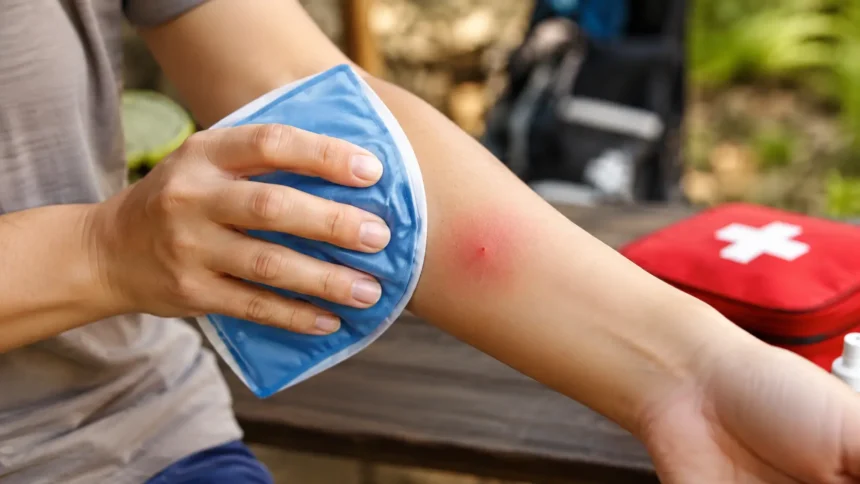
After washing the skin, apply a cold pack wrapped in cloth. Avoid placing ice directly against bare skin for prolonged periods. Keeping the affected arm or leg elevated may also help reduce swelling. While treating the area, continue paying attention to how you feel overall rather than focusing only on the appearance of the sting.
How to Reduce Red Wasp Sting Pain and Swelling
Cold therapy is one of the simplest ways to manage mild wasp sting discomfort. A cool compress or wrapped ice pack can temporarily reduce pain and help control swelling around the irritated skin. MedlinePlus advises applying wrapped ice for approximately 10 minutes at a time, followed by a break before repeating if needed.
If itching becomes bothersome, an over-the-counter antihistamine may sometimes provide relief. Topical hydrocortisone or calamine can also be used for itching and localized irritation when appropriate. People should follow medication labels carefully and consider advice from a pharmacist or clinician if they have medical conditions, allergies, take other medications, or are treating a young child.
An over-the-counter pain reliever may help when the sting remains sore. However, medications such as ibuprofen, aspirin, or acetaminophen are not suitable for everyone, so personal medical conditions and medication interactions matter. When uncertain, checking with a pharmacist or healthcare professional is safer than assuming every common pain medicine is appropriate.
Try not to scratch the sting even when it becomes itchy. Scratching damages the skin barrier and can make irritation worse while increasing the possibility of infection. Keeping the area clean, using cool compresses, and avoiding unnecessary rubbing usually provides a better environment for the skin to recover naturally.
How Long Does a Red Wasp Sting Last?
A mild sting reaction often begins with immediate pain and then gradually becomes less intense over the following hours. Redness, itching, or mild swelling may remain longer than the sharp initial pain. Many uncomplicated insect sting reactions settle within approximately one or two days, although individual reactions vary considerably.
Do not assume something is wrong simply because swelling looks slightly worse the following day. Some people experience moderate or large local reactions in which redness and swelling continue increasing for a day or two before gradually resolving. These stronger reactions can sometimes remain noticeable for several days.
Large local reactions may look alarming because swelling can extend well beyond the original puncture point. The American College of Allergy, Asthma & Immunology notes that this type of swelling can involve a substantial portion of a limb and may persist for two to three days or longer.
The direction of your symptoms matters as much as the exact number of days. Gradual improvement is reassuring, while rapidly worsening pain, spreading warmth, pus, fever, or new systemic symptoms deserve medical attention. If symptoms are not beginning to resolve after several days or you are uncertain whether the reaction is normal, contact a healthcare professional.
When a Red Wasp Sting Becomes an Emergency
The most dangerous complication of a wasp sting is anaphylaxis, a severe allergic reaction that can progress quickly. Emergency warning signs include difficulty breathing, swelling of the tongue or throat, tightness in the chest, widespread hives, dizziness, fainting, or a weak and rapid pulse. Nausea, vomiting, or diarrhea may also occur during severe reactions.
Do not wait for every possible symptom to appear before seeking emergency help. Anaphylaxis can worsen rapidly, and breathing or circulation problems require immediate treatment. Call your local emergency medical service when symptoms suggest a severe allergic reaction, even when the sting itself looks small.
If you have been prescribed an epinephrine device for severe allergies, use it immediately according to your healthcare professional’s instructions when symptoms of anaphylaxis develop. Epinephrine is a first-line emergency treatment for life-threatening allergic reactions caused by insect stings, but emergency medical assessment is still necessary afterward.
Someone experiencing a severe reaction should not simply take an antihistamine and wait to see what happens. Antihistamines may help some skin symptoms, but they are not substitutes for epinephrine in anaphylaxis. Rapid emergency treatment is important because a serious reaction can affect the airway, blood pressure, and multiple organ systems.
Local Swelling vs. an Allergic Reaction
A common source of anxiety after a wasp sting is seeing the affected area become swollen. Swelling alone does not necessarily mean you are experiencing anaphylaxis. A normal reaction occurs directly around the sting, while a large local reaction may extend significantly beyond it without causing breathing problems or symptoms throughout the rest of the body.
For example, substantial hand swelling after a sting on one finger may represent a large local reaction. Although uncomfortable and sometimes dramatic in appearance, this is different from suddenly developing hives across your chest, swelling of your lips or tongue, wheezing, or feeling faint after the sting.
A systemic allergic reaction involves symptoms beyond the local area and may affect several parts of the body. Hives in areas that were not stung, difficulty swallowing, throat swelling, breathing problems, abdominal symptoms, dizziness, or loss of consciousness are warning signs that the immune response is no longer simply localized.
If you have previously experienced a serious systemic reaction after a wasp, bee, hornet, or yellow-jacket sting, discuss future protection with an allergist. Evaluation may include allergy testing, an emergency action plan, prescribed epinephrine, and in appropriate cases venom immunotherapy designed to reduce the risk of severe reactions to future stings.
What If the Sting Is on Your Face, Mouth, or Throat?
Location can change the level of concern surrounding a sting. A sting on the hand or leg may produce significant local swelling without threatening vital structures, while swelling involving the mouth, tongue, or throat can potentially interfere with breathing. That makes stings in or around the airway especially important to evaluate carefully.
A sting on the cheek or forehead can also produce dramatic facial swelling because the tissues around the face and eyes can swell considerably. Facial swelling does not always indicate anaphylaxis, particularly when it remains close to the sting, but it can be difficult for a person without medical training to judge how quickly the reaction is progressing.
Seek urgent medical help if swelling is affecting the tongue, inside of the mouth, or throat, or if you have difficulty breathing or swallowing. Swelling of the lips, face, eyelids, or throat combined with other symptoms can be a warning sign of a serious allergic reaction.
Children deserve particularly careful monitoring because they may have difficulty explaining sensations such as throat tightness, dizziness, or breathing discomfort. Anyone with a sting inside the mouth or significant airway-related symptoms should receive professional medical evaluation rather than relying solely on home remedies.
Multiple Red Wasp Stings Need Extra Attention
One isolated sting usually involves a relatively small amount of venom. Being attacked by several wasps, however, means the body may receive substantially more venom. This increases the chance of experiencing more extensive pain, swelling, nausea, dizziness, or other systemic effects even in someone without a known insect-venom allergy.
The significance of multiple stings depends partly on how many occurred and who was stung. Children, older adults, and people with heart or breathing problems may be more vulnerable to complications. Medical guidance recommends prompt evaluation for multiple stings in higher-risk individuals.
If you have been stung repeatedly, leave the area immediately rather than attempting to find or destroy the nest. Once you are safe, count the sting sites if possible and monitor for breathing difficulty, vomiting, dizziness, weakness, severe swelling, or other unusual symptoms. Seek urgent medical help if you feel systemically unwell.
A professional pest-control service may be safer when a large or difficult-to-reach wasp nest is located around a home or frequently used area. Red and Carolina paper wasps can defend nesting areas, making attempts to disturb or remove an active nest a potential source of multiple stings.
Can a Red Wasp Sting Become Infected?
A wasp sting initially causes inflammation rather than infection. Redness, warmth, tenderness, and swelling can therefore appear immediately without bacteria being involved. This distinction matters because a normal inflammatory reaction can sometimes resemble an infection, especially when a large local reaction continues expanding during the first day or two.
Infection becomes more concerning when symptoms worsen after initially improving or when there is increasing pain, pronounced warmth, drainage, pus, fever, or progressively spreading redness. Scratching the area can damage the skin and increase the chance that bacteria enter through the irritated surface.
Wash the area after the sting and avoid repeatedly touching or picking at it. Keeping fingernails away from itchy skin can be difficult, particularly in children, so cool compresses and appropriate itch-relief treatments may help reduce the temptation to scratch. MedlinePlus advises watching for increasing redness, swelling, or pain that could suggest infection.
Contact a healthcare professional if you believe the site may be infected, especially if you develop fever or significant worsening after several days. Antibiotics are not routinely needed for an ordinary wasp sting because venom-induced inflammation is not a bacterial infection. Treatment should depend on an actual clinical assessment rather than appearance alone.
Home Remedies for a Red Wasp Sting: What Actually Helps?
The safest home care is usually simple rather than elaborate. Cleaning with soap and water, applying a cold compress, elevating a swollen limb, and using appropriate over-the-counter treatments for pain or itching are the main supportive measures recommended for uncomplicated insect stings.
Many internet remedies recommend applying toothpaste, vinegar, baking soda, meat tenderizer, essential oils, or other household substances. Evidence that these treatments meaningfully neutralize wasp venom in human skin is limited, and some products can cause irritation of their own. A dramatic homemade mixture is rarely necessary for an ordinary sting.
Avoid cutting the sting site, trying to suck venom from the skin, or applying a tourniquet. Once venom has been injected, attempting to physically extract it is unlikely to help and can create additional injury. Basic skin care and symptom management are much safer choices.
If the pain or swelling is unusually severe despite reasonable home care, seek medical advice instead of repeatedly applying new remedies. A clinician can determine whether you are experiencing a large local reaction, infection, allergic reaction, or another problem and recommend treatment appropriate to your medical history.
How to Avoid Another Red Wasp Sting
Awareness is one of the most effective forms of prevention. Paper wasps frequently build nests in protected areas around homes and outdoor structures. Check underneath eaves, around sheds, beneath outdoor furniture, in unused equipment, and around thick vegetation before beginning work that could unexpectedly disturb a nest.
If a wasp begins flying near you, resist the urge to strike at it repeatedly. Move away calmly when possible. Wasps are especially likely to defend themselves or their nest when they perceive a threat, and disturbing a nest can provoke multiple insects at once.
Be careful around outdoor food, sugary drinks, trash containers, and fallen fruit because these environments can attract various stinging insects. When drinking from cans or opaque containers outdoors, check them carefully so that an insect does not go unnoticed near the opening.
People with a known severe insect-sting allergy should follow the prevention and emergency plan provided by their allergist. Carry prescribed epinephrine as directed and make sure family members, coworkers, or companions know what to do if a serious reaction occurs. For some people with confirmed venom allergy, an allergist may recommend venom immunotherapy.
When Should You See a Doctor for a Red Wasp Sting?
You usually do not need to visit a doctor for a small localized sting that steadily improves. Mild pain, itching, redness, and swelling can typically be treated at home with cleaning, cold therapy, and appropriate symptom relief. Most uncomplicated reactions resolve without further medical intervention.
Contact a healthcare professional when swelling becomes unusually extensive, pain is severe, symptoms continue worsening rather than improving, or the sting site appears infected. You should also seek advice if symptoms persist for several days or you have experienced an allergic reaction to an insect sting before.
Seek urgent or emergency help for difficulty breathing, throat or tongue swelling, widespread hives accompanied by systemic symptoms, fainting, severe dizziness, or signs of circulatory collapse. Multiple stings, particularly in children, older adults, or people with significant heart or respiratory conditions, also deserve extra caution.
The most important rule is to pay attention to the whole person rather than only the red mark on the skin. A small sting can occasionally trigger a major allergic reaction, while dramatic local swelling may remain confined to one limb. Recognizing breathing, circulation, and widespread allergic symptoms quickly is what makes the biggest difference in an emergency.
The Bottom Line on Red Wasp Stings
A red wasp sting is painful, but most stings cause only temporary local symptoms such as burning, redness, itching, tenderness, and swelling. Moving away from the insect, washing the sting site, applying a cold compress, and avoiding scratching are usually sufficient first steps for an uncomplicated reaction.
Some people develop larger local reactions that can spread beyond the original sting site and remain noticeable for several days. Although these reactions may look alarming, they are not automatically the same as anaphylaxis. Monitor how the swelling progresses and seek professional guidance when symptoms are unusually severe or prolonged.
The situation becomes an emergency when symptoms involve breathing, throat or tongue swelling, fainting, severe dizziness, or other signs of a systemic allergic reaction. Anyone who has prescribed emergency epinephrine should use it according to their medical plan and seek emergency care immediately when anaphylaxis is suspected.
Knowing what to expect can make a frightening sting much easier to handle. Most people recover with basic care, while recognizing the relatively small number of dangerous warning signs helps ensure that serious reactions are treated quickly. When you are uncertain about a rapidly changing reaction, it is safer to obtain medical care than to wait for severe symptoms to develop.
Frequently Asked Questions
How long does a red wasp sting hurt?
The sharpest pain often occurs immediately after the sting and usually becomes less intense over several hours. Mild redness, tenderness, itching, or swelling may remain for a day or two, while larger local reactions can last several days.
Should I squeeze a red wasp sting?
No. Squeezing, cutting, or attempting to suck venom from the sting site is not recommended. Wash the area with soap and water, apply a wrapped cold pack, and monitor for allergic symptoms instead.
Why is my wasp sting swelling the next day?
Swelling can increase during the first day or two as part of a large local inflammatory reaction. However, seek medical advice if swelling becomes extremely painful, continues worsening, appears infected, or is accompanied by breathing problems or widespread symptoms.
Can a red wasp sting cause an allergic reaction hours later?
Serious allergic reactions most often develop relatively soon after a sting, but reactions do not always follow an identical timeline. Seek urgent help whenever new breathing difficulty, throat swelling, fainting, widespread hives, or other severe symptoms develop after a sting.
What is the fastest way to treat a red wasp sting?
Move away from the wasp, wash the sting with soap and water, and apply a wrapped cold pack to reduce pain and swelling. If signs of anaphylaxis appear, use prescribed epinephrine immediately and seek emergency medical care.