

Jicama: Benefits, Nutrition & Why You Should Try It
Jicama may not be the first vegetable that comes to mind when planning a healthy meal, but its crisp texture, mild sweetness, and impressive nutritional profile make it worth discovering. This round, brown-skinned root vegetable is especially popular in Mexican cuisine, where it is commonly served raw with lime, chili, or other fresh seasonings. Its refreshing crunch makes it easy to enjoy in both simple snacks and complete meals.
One of the biggest reasons people are becoming interested in jicama benefits is its combination of fiber, vitamin C, water, and relatively low calorie content. It can add volume and texture to meals without contributing large amounts of fat or calories. Jicama also contains prebiotic fiber, which has attracted attention because of its potential role in supporting beneficial bacteria within the digestive system.
Jicama is surprisingly versatile in the kitchen as well. You can slice it into sticks, shred it into slaws, add it to salads, roast it with seasonings, or use thin slices as a crunchy alternative to traditional wraps. Unlike some vegetables with strong flavors, jicama has a neutral, slightly sweet taste that pairs easily with citrus, herbs, spices, fruits, and savory foods.
Although jicama can be a nutritious addition to your diet, knowing how to prepare it properly matters. The edible part is the peeled root, while other parts of the jicama plant should not be eaten. Understanding its nutrition, potential health benefits, preparation methods, and limitations can help you decide whether this distinctive root vegetable deserves a place on your grocery list.
What Is Jicama?
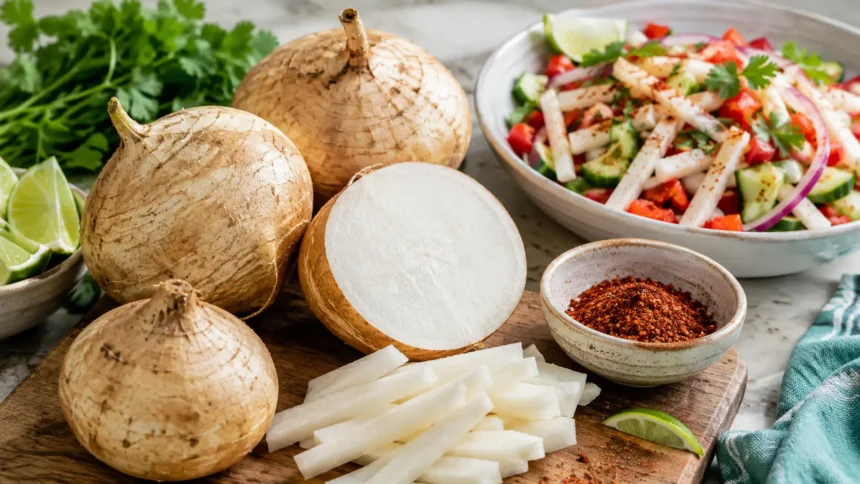
Jicama, pronounced roughly “HEE-kuh-muh,” is a root vegetable native to Mexico and parts of Central America. It grows underground and typically has a rough, light-brown exterior with firm white flesh inside. Its appearance is sometimes compared with a turnip, although the taste and texture are noticeably different from many other common root vegetables.
The flesh of jicama is crisp, juicy, and slightly sweet, with a flavor that is often described as somewhere between an apple, water chestnut, and mild pear. Because the flavor is subtle, jicama works particularly well with bold ingredients such as fresh lime juice, chili powder, cilantro, cucumber, mango, or spicy sauces without overwhelming the dish.
Jicama is sometimes called Mexican turnip, Mexican yam bean, or Mexican potato, although it is botanically different from potatoes and traditional yams. The plant belongs to the legume family, but unlike beans and peas, the underground root is the part commonly eaten. Its refreshing texture has helped it become increasingly popular beyond Latin American cuisine.
Only the fleshy root should be eaten, and the tough outer skin should normally be removed before serving. The seeds, leaves, stems, and pods of the jicama plant contain compounds that can be harmful if consumed. For ordinary grocery-store jicama, simply peel the root thoroughly and use the crisp white interior for your recipes.
Jicama Nutrition: What Does It Provide?
Jicama is naturally low in calories while providing a meaningful amount of dietary fiber. A 100-gram serving of raw jicama contains roughly 38 calories and close to 5 grams of fiber, although exact values can vary slightly. This combination makes it a useful ingredient for people who want foods that feel satisfying without being particularly energy-dense.
The root vegetable is also a good source of vitamin C, an essential nutrient involved in immune function, collagen formation, antioxidant protection, and normal tissue repair. Jicama does not provide enormous amounts of every vitamin and mineral, but its vitamin C content can contribute meaningfully to your daily intake when combined with a varied diet.
Jicama contains smaller amounts of nutrients such as potassium, folate, magnesium, and certain B vitamins. It also contains a high percentage of water, which contributes to its crisp, refreshing texture. Water-rich vegetables can be especially useful for adding volume to meals while helping people obtain fluids through foods in addition to beverages.
Perhaps the most interesting part of the jicama nutrition profile is its fiber content, particularly a type of fermentable carbohydrate known as inulin. Inulin acts as a prebiotic, meaning it can serve as fuel for certain beneficial bacteria in the gut. That makes jicama particularly interesting for people focusing on digestive health and dietary variety.
Jicama Benefits for Digestive and Gut Health
One of the most discussed health benefits of jicama is its potential to support digestion because it provides dietary fiber. Fiber adds bulk to stool and helps promote regular bowel movements as part of a balanced diet. Getting enough fiber from vegetables, fruits, whole grains, legumes, nuts, and seeds can contribute to healthy digestive function over time.
Jicama also contains inulin, a type of prebiotic fiber that is fermented by bacteria in the large intestine. Prebiotics differ from probiotics because they are not live microorganisms themselves. Instead, they provide substances that certain beneficial gut bacteria can use, potentially supporting a diverse and balanced intestinal environment.
A healthy gut microbiome is associated with several important processes in the body, including digestion, nutrient metabolism, and immune function. However, no single food can create perfect gut health. Jicama is most useful when it becomes part of a diverse eating pattern that includes multiple sources of fiber and minimally processed plant foods.
People who are not accustomed to eating large amounts of fiber may want to introduce jicama gradually. Consuming a large serving of inulin-rich foods suddenly can cause temporary bloating, gas, or abdominal discomfort in some individuals. Starting with smaller portions and increasing fiber intake gradually can make the transition easier for sensitive digestive systems.
Can Jicama Support Healthy Weight Management?
Jicama can fit particularly well into weight-management eating patterns because it offers considerable volume for relatively few calories. Foods that contain plenty of water and fiber can help meals feel more substantial without dramatically increasing calorie intake. This can make it easier to create satisfying snacks and meals while maintaining an appropriate overall energy intake.
The fiber in jicama may also slow digestion and contribute to feelings of fullness after eating. Instead of relying on highly processed snacks that are easy to overconsume, sliced jicama can provide a crunchy alternative with significantly more fiber. Pairing it with protein or healthy fats can create an even more balanced and satisfying snack.
For example, jicama sticks can be served with hummus, yogurt-based dips, avocado, beans, chicken, or other nutrient-rich foods. The objective is not to treat jicama as a special “fat-burning” food because no vegetable directly melts body fat. Weight management ultimately depends on overall dietary patterns, energy balance, movement, sleep, and individual circumstances.
Adding jicama can nevertheless make healthy eating easier because it introduces texture and variety without adding many calories. If you enjoy crunchy foods, replacing some chips, crackers, or heavily fried sides with fresh or roasted jicama may reduce overall calorie density while increasing fiber, micronutrients, and plant-food variety.
Jicama and Blood Sugar: Is It a Smart Choice?
Jicama contains carbohydrates, but it is relatively low in available carbohydrate compared with many starchy root vegetables because a significant portion of its carbohydrate content comes from fiber. Fiber is not digested in the same way as sugars and starches, which helps explain why jicama can work well in balanced meals for many people watching their carbohydrate intake.
Its high fiber and water content can also make jicama more filling than refined carbohydrate foods. Eating carbohydrates alongside protein, healthy fats, and fiber-rich vegetables generally creates a more balanced meal than consuming highly refined carbohydrates by themselves. Jicama can therefore serve as one useful component of meals designed around steady, satisfying nutrition.
People sometimes describe jicama as a low-glycemic food, but individual blood sugar responses can vary depending on portion size, preparation, other foods in the meal, activity levels, and metabolic health. Anyone managing diabetes or another condition affecting blood sugar should follow personalized dietary guidance rather than relying on one particular vegetable.
Still, fresh jicama can be a convenient substitute for certain higher-carbohydrate or highly processed foods. Thin jicama slices can replace some flour-based wraps, while jicama sticks can offer an alternative to crackers or fries. These substitutions may help increase fiber and vegetable intake while maintaining the satisfying crunch people often want from snack foods.
Antioxidants and Vitamin C in Jicama
Vitamin C is one of the standout micronutrients found in jicama. This water-soluble vitamin functions as an antioxidant and helps protect cells from oxidative stress caused by unstable molecules known as free radicals. It also supports collagen production, which is important for skin, blood vessels, cartilage, bones, and normal wound-healing processes.
Getting vitamin C from whole foods also provides benefits beyond the vitamin itself because fruits and vegetables contain water, fiber, and numerous plant compounds. Jicama can contribute to this variety alongside foods such as oranges, berries, bell peppers, broccoli, tomatoes, kiwi, and leafy vegetables rather than acting as the sole source of antioxidants in your diet.
Antioxidants are sometimes marketed as though they can prevent every disease, but nutrition is more complex than that. Eating antioxidant-rich foods supports general health, yet individual nutrients should not be treated as cures or guaranteed protection against illness. The strongest approach remains a varied dietary pattern built around fruits, vegetables, legumes, whole grains, and other nutrient-dense foods.
Adding jicama is therefore less about chasing one specific antioxidant effect and more about increasing overall dietary diversity. Its mild flavor makes that relatively easy because it can be combined with many other colorful vegetables and fruits. A jicama salad with citrus, peppers, herbs, and leafy greens can provide multiple nutrients and plant compounds in one refreshing meal.
Is Jicama Good for Heart Health?
Jicama can complement a heart-conscious diet because it is naturally low in saturated fat and provides dietary fiber. Higher-fiber dietary patterns are generally associated with better cardiovascular health when they replace diets dominated by highly processed foods. Vegetables such as jicama can therefore contribute to eating patterns that support healthy cholesterol levels and overall cardiovascular wellness.
The vegetable also contains potassium, an essential mineral involved in fluid balance, nerve signaling, and normal muscle function. Potassium-rich foods can be valuable within balanced diets, particularly when combined with sensible sodium intake. Jicama is not the richest potassium source available, but it can make a useful contribution alongside beans, potatoes, leafy greens, bananas, and other foods.
What matters most for heart health is the broader dietary pattern rather than whether jicama appears on the menu every day. A diet emphasizing vegetables, fruits, whole grains, legumes, nuts, seeds, lean proteins, and healthy fats generally provides a stronger foundation than focusing heavily on individual foods marketed as heart-health “superfoods.”
Jicama works especially well within such a pattern because it can replace less nutritious crunchy foods while adding fiber and freshness. Try combining it with black beans, avocado, tomatoes, cabbage, lime, and grilled protein for a meal containing fiber, unsaturated fats, protein, vitamins, minerals, and a satisfying combination of textures.
How to Eat Jicama: Easy Ways to Enjoy It
The simplest way to eat jicama is raw. Remove the brown skin with a vegetable peeler or sharp knife, then cut the white flesh into sticks, slices, cubes, or thin strips. Raw jicama stays crisp and refreshing, which makes it particularly enjoyable in warm weather or whenever you want something crunchy without relying on packaged snack foods.
A classic preparation involves sprinkling jicama with fresh lime juice, chili powder, and a small amount of salt. You can also combine it with cucumber, mango, pineapple, orange, cabbage, or carrots to create colorful salads and slaws. Its mild sweetness balances acidic and spicy flavors particularly well, making it flexible across many styles of cooking.
Jicama can also be cooked. Try roasting sticks with olive oil and spices, sautéing cubes with vegetables, or adding it to stir-fries shortly before serving so that some crunch remains. Cooked jicama does not become quite as soft or fluffy as a potato, so expect a firmer texture even after exposure to heat.
Thinly sliced jicama can also work as a fresh alternative to small tortillas or wraps. Fill the slices with shredded chicken, shrimp, beans, avocado, vegetables, or salsa for a light meal or appetizer. The neutral flavor allows the fillings to stand out while the jicama provides a distinctive crisp texture and additional dietary fiber.
Jicama vs. Potato: What Is the Difference?
Jicama and potatoes are both underground vegetables, but nutritionally and texturally they are quite different. Potatoes contain considerably more starch, while jicama contains more water and a greater proportion of fiber relative to its total carbohydrate content. This gives jicama fewer calories per comparable weight and produces its characteristic juicy crunch.
Potatoes remain nutritious foods in their own right and provide nutrients such as potassium, vitamin C, and vitamin B6. There is therefore no need to frame jicama as universally “better” than potatoes. The two foods simply serve different purposes, and both can fit comfortably within a balanced diet when prepared appropriately.
Jicama works particularly well when someone wants a crisp raw vegetable, lower-calorie side dish, or less starchy ingredient. Potatoes are better when the goal is a softer, more substantial carbohydrate source that contributes more energy to the meal. Choosing between them should depend on the recipe, nutritional needs, and personal preference.
You can also use both rather than choosing one permanently. A meal might include roasted potatoes alongside a fresh jicama slaw, providing contrasting textures and different nutrients. Healthy eating is usually easier to maintain when it emphasizes variety rather than dividing ordinary whole foods into strict categories of “good” and “bad.”
How to Choose, Store, and Prepare Fresh Jicama
When shopping for jicama, look for roots that feel firm, heavy, and relatively smooth. Avoid vegetables with large soft areas, excessive shriveling, mold, or obvious signs of spoilage. Smaller and medium-sized roots can sometimes have a more tender texture, although quality also depends on freshness and how the vegetable was grown and stored.
Before eating jicama, wash the outside to remove dirt and then remove the tough brown skin completely. A vegetable peeler may work on thinner skin, while a knife can be easier when the outer layer is particularly fibrous. Once peeled, the white flesh should look firm, moist, and clean without dark or unusually soft sections.
Whole jicama is generally best stored in a cool, dry environment, while peeled or cut pieces should be refrigerated in a sealed container. Keeping sliced jicama chilled also preserves the crisp texture that makes it so appealing. Preparing a container of sticks in advance can make it easier to reach for vegetables when you want a convenient snack.
Remember that the edible root is the part intended for food. The plant’s leaves, stems, seeds, and seed pods should not be consumed because they contain naturally occurring toxic compounds. This is primarily relevant for people growing jicama themselves, as grocery stores typically sell only the edible root intended for normal culinary use.
Are There Any Downsides to Eating Jicama?
Jicama is generally easy to incorporate into a balanced diet, but its high fiber and inulin content may cause digestive discomfort in some people. Individuals who are sensitive to fermentable carbohydrates may experience bloating, gas, cramping, or changes in bowel habits after consuming large portions, especially if their usual diet is relatively low in fiber.
Starting with a modest serving can help you understand how your digestive system responds. Drinking sufficient fluids and gradually increasing overall fiber intake can also make high-fiber foods easier to tolerate. Eating excessive amounts simply because a food is considered healthy is rarely necessary, and portion needs naturally differ from person to person.
People following specialized diets because of digestive disorders may need more individualized advice. For example, some people with irritable bowel syndrome are more sensitive to certain fermentable fibers than others. A registered dietitian or healthcare professional can help determine whether jicama fits comfortably into a therapeutic eating plan when persistent symptoms are present.
Preparation safety is another important consideration. Eat only the peeled root and avoid consuming other parts of the plant. When purchased from a normal grocery store and prepared correctly, jicama can be an easy and nutritious vegetable to enjoy as part of a diverse diet containing many different plant foods.
Why Jicama Deserves a Place in a Balanced Diet
Jicama offers something many healthy foods struggle to provide: a combination of nutrition, versatility, and an enjoyable crunchy texture. It provides fiber, vitamin C, water, and small amounts of several minerals while remaining relatively low in calories. That makes it easy to use in meals without dramatically changing their overall nutritional balance.
Its prebiotic fiber makes jicama particularly interesting for digestive health, while its water and fiber content can contribute to satisfying meals. However, its value comes from being part of a wider dietary pattern rather than functioning as a miracle food. Variety remains one of the most reliable principles for building a nutritious and sustainable way of eating.
If you have never tried jicama, start simply. Peel the root, cut it into sticks, and add lime juice with your favorite seasoning. From there, experiment with salads, slaws, tacos, stir-fries, roasted vegetables, and snack plates. Its mild taste makes experimentation surprisingly easy, even for people who are hesitant about unfamiliar vegetables.
Ultimately, the strongest argument for trying jicama may be that healthy eating should remain enjoyable. Foods that provide good nutrition while adding new tastes and textures can make balanced meals less repetitive. Jicama delivers freshness, crunch, fiber, and versatility in one ingredient, making it a practical addition to an everyday healthy diet.
Frequently Asked Questions
Can you eat jicama raw?
Yes. Peeled jicama root can be eaten raw and is commonly served as sticks, slices, or shredded into salads. Its crisp texture and mildly sweet flavor pair especially well with lime, chili, fruit, and fresh herbs.
Is jicama good for weight loss?
Jicama can support a weight-management diet because it is relatively low in calories while providing water and fiber. However, successful weight loss depends on your overall calorie intake, food choices, activity, sleep, and lifestyle rather than one specific food.
Is jicama high in carbohydrates?
Jicama contains carbohydrates, but much of its carbohydrate content comes from dietary fiber. It generally contains less digestible carbohydrate than starchier root vegetables, making it a useful option for people who want a lighter, fiber-rich vegetable.
What does jicama taste like?
Jicama has a mild, slightly sweet flavor and a juicy, crunchy texture. Many people compare it with a combination of apple, pear, water chestnut, and turnip, although its flavor is neutral enough to work in both savory and sweet dishes.
What part of jicama is safe to eat?
Only the fleshy root is normally eaten, and its tough outer skin should be removed first. The leaves, stems, seeds, and pods of the jicama plant should not be consumed because they contain naturally occurring toxic compounds.