

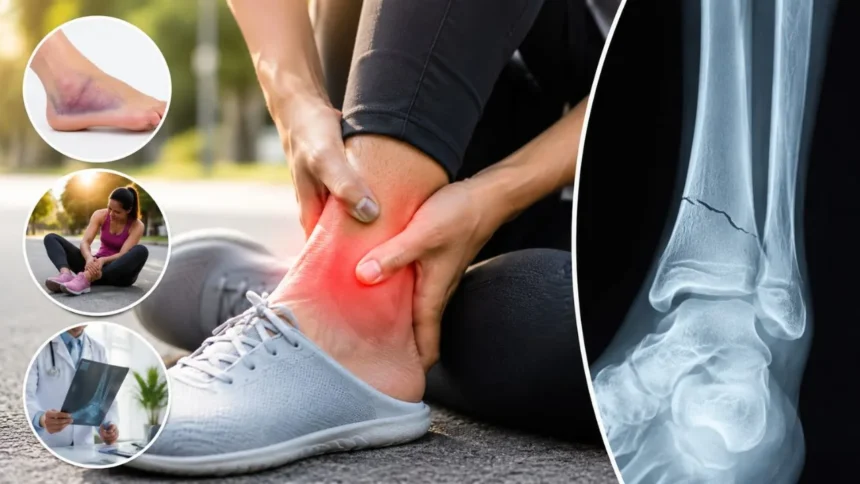
A hairline fracture is a small crack in a bone that may develop gradually or follow a relatively minor injury. Unlike a severely displaced break, the bone may remain in its normal position, making the injury difficult to recognise. Pain may initially feel mild enough to continue walking, working or exercising.
Many people use “hairline fracture” to describe a stress fracture caused by repeated pressure on a bone. The term may also be used informally for a thin, nondisplaced fracture following a fall or direct impact. In either situation, the affected bone needs protection and enough time to heal properly.
Hairline fracture symptoms often include focused pain, tenderness and mild swelling. The discomfort usually becomes worse when the bone carries weight or performs the activity that caused the injury. Continuing to exercise through the pain can allow a small bone injury to progress into a more serious fracture.
Early assessment matters because hairline fractures are not always visible on the first X-ray. A clinician may diagnose the injury from your symptoms and examination or recommend an MRI when suspicion remains high. Most cases heal successfully with activity modification, protection and a gradual return to movement.
What Is a Hairline Fracture?
A hairline fracture is a narrow crack that does not completely separate a bone into two pieces. The surrounding tissues may remain relatively stable, and the affected limb may not look deformed. This is why someone can have a genuine fracture even when they can still move the area or place some weight on it.
The phrase is commonly associated with a stress fracture, which develops when repeated loading damages bone faster than it can repair itself. Bone is living tissue that constantly remodels in response to activity. When training demands increase too quickly, small areas of damage can accumulate and form a crack.
A hairline fracture can also occur after a single event, such as twisting an ankle, falling onto a hand or striking a toe. When the bone remains aligned, the injury may be described as a nondisplaced fracture. Treatment depends on the location, stability and cause rather than the informal name alone.
Even a very small fracture should be taken seriously. Some bones have a limited blood supply or carry substantial body weight, making them slower or more difficult to heal. Medical assessment helps determine whether simple rest is enough or whether a boot, cast, crutches or surgery may be required.
Hairline Fracture vs Stress Fracture
A stress fracture is a type of bone stress injury caused by repetitive loading rather than one major accident. Running, jumping, marching and repeated changes of direction can gradually overload a bone. Pain often begins during activity, improves with rest and returns when the same movement is attempted again.
“Hairline fracture” is a less precise term. It may refer to a stress fracture, but people also use it to describe a small traumatic crack. A traumatic hairline fracture usually follows a recognisable event, whereas a stress fracture may appear slowly over days or weeks without one memorable injury.
Stress fractures frequently affect weight-bearing bones in the feet, ankles, lower legs and hips. Traumatic hairline fractures can occur in almost any bone, including the wrist, ribs, toes and arms. The symptom pattern and history of activity or injury help a healthcare professional distinguish between them.
The distinction matters because treatment and recovery risks can differ by location. A low-risk stress fracture may improve through reduced loading, while a fracture in the hip, navicular foot bone or another high-risk area may need stricter protection. Do not use the word “hairline” to assume that an injury is automatically minor.
What Does a Hairline Fracture Feel Like?
The most common symptom is pain focused around one particular point on the bone. At first, it may feel like a mild ache that appears near the end of a workout or long day. As the injury progresses, the pain may begin earlier and continue after the activity has stopped.
A stress-related hairline fracture often hurts more during running, jumping, walking or standing. Rest may reduce the discomfort during the early stages, which can make the injury seem less important. Pain that returns whenever the bone is loaded is a warning sign that the area has not recovered.
Tenderness is usually more localised than the broad soreness caused by an overworked muscle. Pressing directly over the injured bone may produce sharp or focused pain. Swelling can develop around the area, although some hairline fractures cause little visible change and no obvious bruising.
Symptoms that occur at rest or wake you during the night deserve prompt assessment. They may indicate that the bone injury has progressed or that another condition is causing the pain. Persistent, localised bone pain should not be repeatedly tested through running, hopping or forceful exercise.
Common Hairline Fracture Symptoms
Pain that worsens with activity is one of the clearest hairline fracture symptoms. You may feel comfortable after waking but notice discomfort after walking, training or repeatedly using the affected limb. Over time, less activity may be required to trigger the same level of pain.
Swelling may appear around the injured bone, particularly after activity. The swelling can be mild and may disappear after elevation or overnight rest. Some people also notice slight warmth, bruising or sensitivity when shoes, clothing or equipment press against the affected area.
Changes in movement can provide another clue. You may begin limping, shifting your weight, avoiding one foot or using an arm differently without consciously deciding to do so. These compensations reduce pain temporarily but may place additional stress on other muscles, joints and bones.
A hairline fracture does not always cause a snapping sound, severe bruising or immediate inability to move. Being able to walk or use the limb does not rule out a small fracture. Seek an assessment when focused bone pain continues, repeatedly returns or becomes worse despite rest.
Where Do Hairline Fractures Commonly Occur?
The metatarsal bones in the foot are among the most common locations for stress-related hairline fractures. These long bones absorb force during walking and running. Pain usually develops over the top or front of the foot and becomes more noticeable when pushing off the toes.
The tibia, commonly called the shinbone, is another frequent site. Runners, dancers, military recruits and people who suddenly increase their walking may experience focused shin pain. Unlike ordinary shin splints, a stress fracture often produces tenderness over one small point rather than a wider painful area.
Hairline fractures can also affect the heel, ankle, hip and small bones beneath the big toe. Hip stress fractures require particular caution because continued weight-bearing may allow the crack to become unstable. Groin or upper-thigh pain that worsens when walking should be assessed promptly.
Small fractures may occur in the wrist, ribs, arms and spine as well. Wrist injuries can follow a fall onto an outstretched hand, while rib fractures may develop after trauma or repeated coughing. The symptoms and treatment vary considerably according to the bone involved and its blood supply.
What Causes a Hairline Fracture?
A sudden increase in activity is one of the leading causes of stress fractures. Increasing running distance, exercise intensity or training frequency too quickly gives the bone insufficient time to adapt. The risk can rise even when the activity itself is familiar but the volume or surface has recently changed.
Repetitive high-impact movement can gradually overload the skeleton. Running, dancing, gymnastics, tennis and basketball repeatedly send force through the feet and legs. Muscles normally absorb some of that force, but tired muscles may transfer more stress to the underlying bone.
A direct impact or awkward movement can cause a small traumatic fracture. Examples include dropping an object onto the foot, falling onto the wrist, twisting the ankle or striking a hard surface. The crack may remain aligned and therefore look less dramatic than a complete or displaced break.
Some hairline fractures occur because the bone is already weakened. Osteoporosis, nutritional deficiencies and certain long-term medical treatments can reduce bone strength. In these cases, ordinary activities may produce an insufficiency fracture even without an unusually demanding exercise programme.
Who Is More Likely to Develop One?
People who participate in running and jumping sports have a higher risk because their bones experience repeated impact. New athletes may be particularly vulnerable when motivation increases faster than physical adaptation. Experienced competitors can also develop stress injuries after changing their programme, footwear, surface or training intensity.
Low energy availability is another important risk factor. This occurs when the body does not receive enough energy to support both exercise and normal biological functions. It can affect hormones, recovery and bone health in athletes of any sex, even when body weight appears stable.
Poor bone density can make fractures more likely. Risk may increase with osteoporosis, advancing age, low vitamin D, inadequate calcium intake, smoking and certain medical conditions or medicines. Repeated fractures deserve investigation instead of being treated as a normal consequence of exercise.
Foot structure, muscle weakness and worn or unsuitable footwear may also affect how force travels through the body. Hard surfaces and limited recovery time can add further stress. Usually, several factors combine rather than one single issue being responsible for the fracture.
Hairline Fracture or Sprain: How Can You Tell?
A sprain affects a ligament, which is the strong tissue connecting one bone to another around a joint. A fracture affects the bone itself. Both injuries can cause pain, swelling, bruising and difficulty moving, making it challenging to identify the problem from appearance alone.
Sprain pain is often centred around a joint or along the path of an injured ligament. Hairline fracture pain may feel more focused directly over a bone. However, this distinction is not reliable enough for self-diagnosis, especially after an ankle, wrist or foot injury.
The ability to walk does not prove that the injury is only a sprain. Some nondisplaced fractures remain stable enough to tolerate limited movement, although doing so may be painful. Similarly, a serious sprain can make weight-bearing impossible even when no bone is broken.
An examination and imaging may be needed when pain is severe, localised or not improving. Until the injury is assessed, protect the area and avoid activities that reproduce the pain. Repeatedly hopping, running or twisting the limb to test it could worsen either a fracture or ligament injury.
How Is a Hairline Fracture Diagnosed?
A clinician will ask when the pain began and whether it followed an accident or developed gradually. They may ask about recent changes in exercise, work demands, shoes, diet, medications and previous fractures. This history can reveal whether the injury is more likely traumatic or stress-related.
During the examination, the clinician may check for swelling, bruising and focused bone tenderness. They may observe how you walk and assess nearby joints, muscles, circulation and sensation. Certain movements may be used carefully to locate the pain, but you should not reproduce these tests aggressively at home.
An X-ray is often the first imaging test after a suspected fracture. A traumatic crack may be visible immediately, but an early stress fracture may not appear because the initial bone changes can be too subtle. A normal first X-ray therefore does not always rule out a bone stress injury.
When symptoms strongly suggest a stress fracture despite a negative X-ray, an MRI may be recommended. MRI can reveal bone swelling and subtle injury earlier than standard radiography. CT may be used to examine an identified crack more closely or assist with treatment planning in selected cases.
Can a Hairline Fracture Be Missed on an X-Ray?
Yes, an early stress fracture may be missed on an X-ray. The bone can become irritated and swollen before a clear crack or healing response is visible. This means someone may have classic symptoms even though the first image appears normal.
Changes can become visible on a later X-ray as the bone begins repairing itself. For this reason, a clinician may recommend protection and reduced activity based on the examination rather than waiting for a visible crack. A follow-up image may then be arranged if the pain continues.
MRI is generally more sensitive for an early bone stress injury. It can show inflammation and bone-marrow changes that do not appear on a standard X-ray. The need for MRI depends on the suspected location, severity, symptoms and whether the result would change treatment.
Do not return to painful exercise only because an initial X-ray was described as normal. Follow the care plan and seek reassessment if focused pain continues. Persistent symptoms are especially important when the suspected fracture involves the hip, wrist or a high-risk bone in the foot.
How Is a Hairline Fracture Treated?
The main goal of treatment is to reduce stress on the bone so it can repair itself. This normally means stopping running, jumping or any activity that causes pain. Simply reducing the intensity may not be enough when the movement continues loading the same injured area.
Some fractures require a stiff-soled shoe, walking boot, brace or cast. Crutches may be recommended when walking places too much pressure on the bone. The correct level of protection depends on the fracture’s location, stability and risk of becoming displaced.
Pain relief should be discussed with a clinician or pharmacist, particularly if you take other medicines or have kidney, stomach, heart or liver problems. Do not use pain medication to hide symptoms so that you can continue exercising. Pain is an important signal that the bone is not ready for that activity.
Surgery is uncommon for many straightforward stress fractures, but it may be needed for unstable fractures or injuries in bones that heal poorly. Metal screws, plates or other fixation devices can hold the bone in position. The decision is made according to imaging, alignment and the demands placed on the area.
What to Do While Waiting for Medical Care
Stop the activity that caused the pain and avoid testing the injury repeatedly. Protect the affected area from further impact and limit weight-bearing when walking is painful. A temporary reduction in activity is safer than turning a small crack into a complete fracture.
Apply a wrapped ice pack for short periods to help manage pain and swelling. Never place ice directly against the skin, and remove it if the area becomes numb or unusually painful. Elevating an injured foot, ankle, hand or arm may also help reduce swelling.
Do not attempt to straighten a visibly deformed limb or push a protruding bone back under the skin. Keep the person still, protect the area and obtain emergency help. Open fractures carry a serious infection risk and require immediate professional treatment.
Avoid tight homemade bandages that could interfere with circulation. Seek urgent help if the fingers or toes become cold, pale, blue, increasingly numb or difficult to move. These changes may indicate impaired circulation, nerve pressure or a more severe injury.
How Long Does a Hairline Fracture Take to Heal?
Many uncomplicated hairline fractures heal in approximately six to eight weeks, but recovery time varies significantly. Some foot stress fractures may take four to twelve weeks, while high-risk fractures can require longer. The absence of severe pain does not necessarily mean the bone has fully regained its strength.
Your age, bone health, fracture location and ability to protect the injury all influence healing. Smoking, poor nutrition, inadequate rest and certain medical conditions can slow bone repair. Continuing the activity that caused the crack may repeatedly interrupt the healing process.
Symptoms should gradually improve as the bone recovers. Increasing pain, swelling or tenderness can indicate that the area is being loaded too soon. A clinician may use follow-up examinations or imaging to decide whether you can progress to the next stage of rehabilitation.
Do not compare your timeline directly with another person’s recovery. Two fractures that sound similar may have different blood supplies, depths and mechanical demands. Follow the individual weight-bearing and movement instructions provided by your healthcare professional.
Returning to Exercise After a Hairline Fracture
Return to exercise only when ordinary daily movement is comfortable and your clinician has confirmed that progression is appropriate. Starting too soon can recreate the same bone stress before healing is complete. Pain-free rest alone is not enough when walking, hopping or running still causes symptoms.
Low-impact activities may help maintain fitness while reducing load on the injured bone. Swimming or carefully selected cycling may be suitable for some lower-limb injuries, but not every fracture. Obtain guidance before beginning cross-training because even low-impact movement can stress certain bones.
When you are cleared to return, increase activity gradually. Begin with shorter, easier sessions and allow recovery days between them. Do not immediately return to the distance, speed or frequency you were completing before the injury developed.
Stop and seek advice if focused bone pain returns during or after exercise. Mild general muscle tiredness may be expected during rehabilitation, but the original sharp or localised pain is not something to push through. A structured physiotherapy plan can help rebuild strength, balance and movement control safely.
Foods and Nutrients That Support Bone Healing
Bone healing requires enough overall energy, protein and micronutrients. Severe dieting during recovery may limit the resources available for tissue repair. Build meals around varied whole foods instead of expecting one supplement, drink or “bone-healing” ingredient to repair the fracture.
Protein provides amino acids needed for rebuilding tissue. Useful sources include eggs, fish, poultry, dairy foods, beans, lentils, tofu and soy products. Spread protein across meals according to your individual nutritional needs rather than consuming an excessive amount in one sitting.
Calcium and vitamin D support normal bone health. Calcium-rich foods include dairy products, fortified plant drinks, tofu, leafy vegetables and some fish. Vitamin D can come from safe sunlight exposure, fortified foods and supplements when a deficiency or increased need has been identified.
Do not take very high doses of calcium, vitamin D or other supplements without professional guidance. More is not always better, and excessive intake can cause harm or interact with medication. Repeated stress fractures may justify a nutrition review, blood tests or bone-density assessment.
What Happens If a Hairline Fracture Is Ignored?
Continuing to load an injured bone can cause the crack to grow. A stable hairline fracture may progress into a complete or displaced fracture, which can require longer immobilisation or surgery. The risk is greater in areas exposed to repeated body weight or strong muscle forces.
Delayed treatment may also lead to delayed union or nonunion, meaning the bone heals slowly or fails to unite properly. This is more likely in bones with limited blood supply and in people with certain health or lifestyle risk factors. Ongoing pain should therefore not be dismissed as ordinary soreness.
Changing the way you walk or move to avoid pain can affect nearby areas. A limp may place additional strain on the opposite leg, hips or lower back. Upper-limb compensation can similarly irritate the shoulder, elbow or wrist while the original injury remains untreated.
Early care generally makes recovery simpler and reduces the chance of complications. Seek assessment when pain is focused over a bone, increases with repeated loading or persists despite several days of rest. Waiting for the pain to become unbearable is not necessary before asking for help.
How to Prevent Future Hairline Fractures
Increase exercise gradually instead of making sudden jumps in distance, speed or frequency. Bones need time to adapt to new loads, just as muscles and the cardiovascular system do. A training programme should include easier sessions and rest days rather than constant high-impact work.
Wear footwear appropriate for your activity and replace it when support or cushioning has significantly deteriorated. Shoes cannot prevent every fracture, but unsuitable footwear may change force distribution. People with recurring foot injuries may benefit from a professional movement or footwear assessment.
Include strength training to develop the muscles that help absorb impact and control movement. Work on the whole body rather than only the painful area. Balance, mobility and technique may also need attention when repeated injuries follow the same activity pattern.
Support bone health through adequate nutrition, sufficient recovery and appropriate medical care. Avoid smoking and discuss menstrual changes, low energy intake or repeated fractures with a clinician. These signs can indicate that bone health needs more attention than changing a training plan alone.
When Is a Hairline Fracture an Emergency?
Seek emergency care after a major accident or when the injured area is visibly bent, shortened or out of position. A wound with bone visible is an open fracture and requires urgent treatment. Do not move the person unnecessarily unless they are in immediate danger.
Urgent assessment is also needed when the injured limb becomes cold, pale, blue or numb. Inability to move the fingers or toes may indicate nerve or circulation involvement. Rapidly increasing swelling or severe pain that feels out of proportion should not be managed at home.
Hip or groin pain that makes weight-bearing difficult deserves prompt attention, particularly in an older adult or athlete. A small hip fracture can become displaced if the person continues walking. New back pain after a minor fall also needs assessment when osteoporosis may be present.
Contact a healthcare professional for pain that continues at rest, occurs at night or repeatedly returns with activity. Persistent local tenderness and swelling may represent a stress fracture even without a major injury. Early diagnosis can prevent a small bone injury from becoming more difficult to treat.
Final Thoughts
A hairline fracture may be small, but it still represents genuine damage to a bone. The injury can follow a direct impact or develop gradually through repetitive stress. Localised pain that worsens with activity is one of the most important warning signs.
Because early stress fractures may not appear on an initial X-ray, symptoms and clinical examination remain important. An MRI may be needed when suspicion remains high. Do not assume that a normal X-ray or the ability to walk proves that the bone is healthy.
Most hairline fractures heal successfully when the affected area is protected and given enough recovery time. Treatment may include rest, modified weight-bearing, a walking boot, a brace or a cast. More complicated or high-risk fractures occasionally require surgery.
The safest approach is to stop painful activity and obtain appropriate medical advice. Returning gradually, eating adequately and correcting training or bone-health risk factors can support recovery. Trying to exercise through focused bone pain can turn a manageable injury into a longer and more serious problem.
Frequently Asked Questions
Can You Walk With a Hairline Fracture?
Some people can still walk, but weight-bearing may worsen the crack. Limit painful movement and follow a clinician’s instructions regarding crutches, a walking boot or complete rest.
Does a Hairline Fracture Need a Cast?
Not every hairline fracture requires a cast. Treatment may involve rest, a stiff shoe, brace or walking boot, depending on the affected bone and fracture stability.
Can a Hairline Fracture Heal on Its Own?
Many stable fractures heal without surgery when properly protected. However, medical assessment is important because high-risk or displaced fractures may need stricter treatment.
How Painful Is a Hairline Fracture?
Pain may begin as a mild, focused ache that worsens with activity. As the injury progresses, it can become persistent and may eventually occur during rest or at night.
Will a Hairline Fracture Show on an X-Ray?
A traumatic fracture may appear immediately, but an early stress fracture can be missed. A repeat X-ray or MRI may be recommended when symptoms continue.