

The article below avoids a reference section and keeps medical claims balanced. Research suggests there is no universally accepted cutoff for “excessive” anterior pelvic tilt, its relationship with pain varies between individuals(PubMed)orcing everyone into one ideal posture. (PubMed)=”document” id=”31864″}
Meta Title: Anterior Pelvic Tilt: Causes, Symptoms & Easy Fixes
Meta Description: Learn what causes anterior pelvic tilt, common symptoms, and simple stretches and exercises that support better movement and comfort.
Anterior Pelvic Tilt: Causes, Symptoms & Easy Fixes
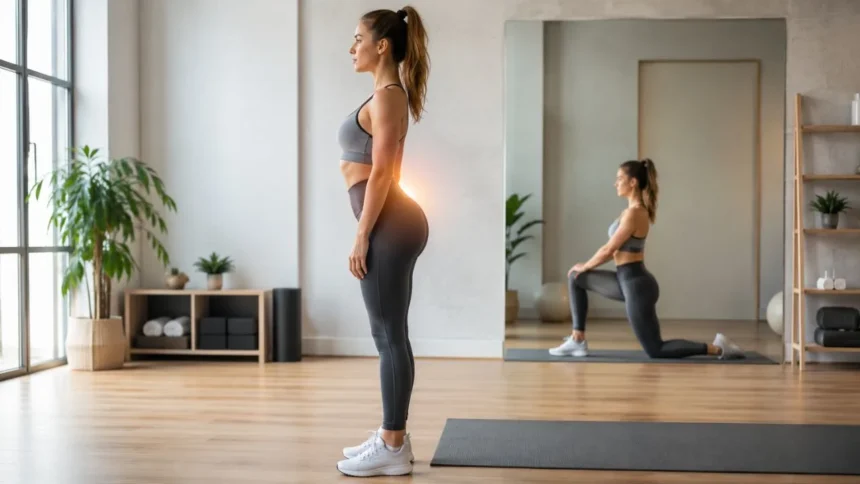
Anterior pelvic tilt is a position in which the front of the pelvis rotates slightly downward while the back rises. This position may increase the natural curve in the lower spine and make the abdomen or buttocks appear more prominent. However, some degree of forward pelvic tilt is normal and does not automatically indicate a medical problem.
Many people first notice their pelvic position in a photograph, mirror, workout video, or posture assessment. They may then assume that every episode of lower back tightness, hip discomfort, or poor posture comes from an anterior pelvic tilt. In reality, posture is only one part of a much larger picture involving strength, movement, sleep, activity, stress, and previous injuries.
When an anterior pelvic position is linked with discomfort or limited movement, a balanced exercise routine may be helpful. The goal is not to force your body into a perfectly straight position all day. It is to improve hip mobility, strengthen the glutes and abdominal muscles, and give your pelvis more comfortable movement options.
This guide explains the possible anterior pelvic tilt causes, common signs, simple self-checks, and easy exercises you can perform at home. You will also learn why stretching alone may not be enough and when persistent symptoms should be evaluated by a qualified healthcare professional.
Anterior Pelvic Tilt at a Glance
Anterior pelvic tilt describes the direction of the pelvis rather than a disease or injury. The pelvis naturally moves forward and backward when you walk, run, squat, sit, and bend. A forward tilt becomes more relevant when it is excessive for the individual, difficult to control, or connected with symptoms during movement.
A person with a forward pelvic position may have a visibly increased lower-back curve, sometimes called lumbar lordosis. The front of the hips may feel tight, while the glutes or abdominal muscles may feel difficult to engage. However, these observations cannot confirm a diagnosis because body shape and spinal curves vary naturally.
Common management strategies include hip flexor mobility, glute strengthening, core stability exercises, breathing practice, and better movement variety. These strategies may improve lumbopelvic control and reduce unnecessary tension. They should be performed gradually and adapted according to the person’s comfort, strength, and health history.
Most people do not need to hold a rigid “neutral pelvis” throughout the entire day. Healthy movement involves changing positions rather than remaining fixed. Learning to move between anterior, neutral, and posterior pelvic positions can be more useful than constantly squeezing the glutes or pulling the stomach inward.
What Is Anterior Pelvic Tilt?
The pelvis is a ring-shaped structure located between the spine and legs. It supports the trunk, transfers forces between the upper and lower body, and provides attachment points for several muscles. Its position can influence how the hips and lower back move, but it also changes naturally during everyday activities.
During an anterior pelvic tilt, the top front portion of the pelvis rotates downward and forward. At the same time, the back portion of the pelvis moves upward. This rotation may increase the inward curve of the lumbar spine, although pelvic position and spinal curvature do not always change in exactly the same way.
The opposite movement is called posterior pelvic tilt. During a posterior tilt, the front of the pelvis rotates upward and the lower back may flatten slightly. Neither direction is automatically good or bad because both movements are needed for comfortable sitting, standing, lifting, walking, and athletic activity.
Problems may arise when a person lacks control, strength, or movement variety around the pelvis. For example, someone may repeatedly arch the lower back instead of extending through the hips. In this case, exercises that improve hip mobility and core control may help distribute movement more comfortably.
Is Anterior Pelvic Tilt Bad for You?
Anterior pelvic tilt is not always harmful. Many people naturally stand with a noticeable pelvic angle and experience no pain, weakness, or movement limitations. Differences in bone structure, muscle development, body proportions, age, and habitual posture can all affect how the pelvis appears.
It is also important to avoid treating posture as the only explanation for lower back pain. Two people can have similar pelvic alignment while only one experiences symptoms. Pain may involve several physical and non-physical factors, including activity changes, poor recovery, stress, sleep quality, injury history, and sensitivity of the nervous system.
A forward pelvic position may become relevant when it is accompanied by repeated lower-back compression, limited hip extension, poor lifting control, or discomfort during standing and exercise. Even then, the goal should be to assess the entire movement pattern rather than blaming the visible posture alone.
The most helpful question is not simply, “Do I have anterior pelvic tilt?” A better question is, “Can I move comfortably, control my pelvis, and perform daily activities without symptoms?” When the answer is no, a personalized mobility and strengthening plan may be appropriate.
What Causes Anterior Pelvic Tilt?
There is rarely one single cause of anterior pelvic tilt. Pelvic position is influenced by anatomy, movement habits, muscle coordination, activity level, and the way a person responds to different tasks. What appears to be a muscle imbalance may sometimes be a normal postural preference rather than a problem requiring correction.
Long periods of sitting may contribute to stiffness around the hips, particularly when movement breaks are limited. Sitting keeps the hips in a flexed position, which may make standing and extending the legs feel restricted. However, sitting alone does not prove that someone has developed an abnormal or permanent pelvic tilt.
Exercise habits can also influence lumbopelvic posture. Repeatedly arching the back during lifting, running, or abdominal training may reinforce a forward pelvic position. Athletes may develop strong hip flexors without enough control from the glutes and abdominal muscles, while inactive people may lack strength throughout the entire hip and trunk region.
Pregnancy, weight changes, growth, previous injuries, joint mobility, and natural skeletal structure may also affect pelvic alignment. Because multiple factors can contribute, an effective approach should focus on symptoms and function rather than trying to identify one supposedly tight or weak muscle.
Can Tight Hip Flexors Cause Anterior Pelvic Tilt?
The hip flexors are muscles located around the front of the hip that help lift the thigh toward the torso. Important hip flexors include the iliopsoas, rectus femoris, sartorius, and tensor fasciae latae. These muscles work during walking, climbing, running, sitting, and many common exercises.
When hip flexors feel stiff, they may limit comfortable hip extension as the leg moves behind the body. Some people compensate by arching the lower back or rotating the pelvis forward. This can create the appearance of a larger anterior pelvic tilt during standing, walking, lunging, or running.
However, the sensation of tightness does not always mean a muscle is physically shortened. A muscle can feel tense because it is tired, weak, overworked, sensitive, or repeatedly used for stability. Stretching may provide temporary relief, but it may not solve the problem when strength or movement control is also limited.
A balanced routine should therefore include both mobility and strength. Gentle hip flexor stretches may improve comfort, while glute bridges, split squats, dead bugs, and other exercises build control. This combination is generally more useful than performing aggressive stretching several times a day.
Can Weak Glutes and Core Muscles Affect Pelvic Position?
The glute muscles help extend the hips, stabilize the pelvis, and control the legs during walking, running, climbing, and lifting. When the glutes are difficult to engage, a person may rely more heavily on the lower back or hip flexors. This may increase arching during movements that should come primarily from the hips.
The abdominal muscles also contribute to trunk and pelvic control. Their role is not to flatten the lower back permanently but to help manage forces and prevent unnecessary movement. Poor abdominal coordination may allow the ribs to flare and the pelvis to tip forward during exercise.
Weakness is not always obvious from appearance. Someone can have developed abdominal muscles but still struggle to control the pelvis during a dead bug or squat. Similarly, a person may have strong glutes in one movement but compensate during walking, running, or single-leg activities.
Strengthening these areas may improve movement options and reduce excessive lower-back extension. The aim is not to keep the muscles contracted all day. Instead, training should help them activate when needed and relax when the body no longer requires high levels of stability.
Common Anterior Pelvic Tilt Symptoms
Anterior pelvic tilt itself may not cause noticeable symptoms. Some people discover it only after seeing their posture in a photograph or receiving a fitness assessment. If they move comfortably and have no pain, intensive posture correction may be unnecessary.
When symptoms are present, a person may notice tightness across the front of the hips or thighs. Standing for a long time may create fatigue in the lower back, while walking or lunging may feel restricted as the leg moves behind the body. These symptoms can have other causes and are not exclusive to pelvic tilt.
Some people find it difficult to engage their glutes during squats, bridges, or running. Others repeatedly arch their backs during overhead movements or abdominal exercises. A forward pelvic position may also be accompanied by rib flaring, although the relationship differs between individuals.
Pain should not be diagnosed through posture alone. Lower-back pain, hip pain, groin discomfort, and leg symptoms can involve muscles, joints, discs, nerves, or other structures. Persistent or worsening discomfort should be assessed rather than automatically treated as a simple alignment problem.
What Does Anterior Pelvic Tilt Look Like?
From the side, an anterior pelvic tilt may make the belt line appear lower at the front and higher at the back. The lower spine may look more curved, while the abdomen and buttocks may appear more prominent. These visual signs can be influenced by clothing, body shape, camera angle, and natural anatomy.
A person may also stand with the ribs positioned in front of the pelvis. When asked to bring the ribs down, they may flatten the lower back aggressively or hold their breath. This suggests difficulty coordinating the rib cage, abdominal muscles, breathing, and pelvis rather than a simple fixed deformity.
During exercise, the tilt may become more visible when the person raises the arms, extends one leg backward, or reaches the bottom of a squat. The lower back may arch before the hips complete the movement. Video recorded from the side can sometimes reveal this compensation.
Visual assessment has limitations, and small postural differences are normal. A mirror or photograph cannot show muscle strength, joint mobility, pain sensitivity, or movement control. A professional assessment may be more helpful when appearance is accompanied by pain or reduced function.
How to Check for Anterior Pelvic Tilt at Home
Stand naturally in front of a side-view mirror without trying to correct your posture. Notice the position of your rib cage, belt line, lower-back curve, and hips. Avoid assuming that a visible curve means something is wrong because the lumbar spine is naturally curved.
Next, practise moving the pelvis slowly forward and backward. Gently arch the lower back to create an anterior tilt, then tighten the lower abdomen slightly and roll the pelvis backward. The goal is to discover whether you can control both directions without pain, holding your breath, or moving the entire body.
You can also perform a half-kneeling hip flexor stretch. If extending the hip immediately causes a strong front-of-hip pull or lower-back arch, mobility may be limited. However, this result does not confirm anterior pelvic tilt because the sensation may be related to several muscles or joint structures.
Another useful check is the dead bug exercise. If your lower back arches as soon as one leg moves away from the body, you may need better trunk control. These home observations can guide exercise selection, but they should not be treated as a medical diagnosis.
Easy Fixes for Anterior Pelvic Tilt
The phrase “fix anterior pelvic tilt” can create the impression that the pelvis must be permanently repositioned. In reality, the more practical goal is to improve mobility, strength, coordination, and comfort. A successful routine should help you move through different pelvic positions rather than remain rigidly neutral.
Exercises should target the hips, glutes, abdominal muscles, and overall movement pattern. Stretching the front of the hips may feel helpful, but strengthening the surrounding muscles is equally important. Walking, resistance training, and frequent position changes can also contribute to better function.
Begin with controlled movements and a comfortable range. Mild muscular effort or stretching is acceptable, but sharp pain, numbness, tingling, or joint pinching is a reason to stop. Exercise quality is more valuable than forcing additional repetitions or range.
The following anterior pelvic tilt exercises can be completed at home with minimal equipment. Perform them two to four times per week according to your ability. People with injuries, recent surgery, pregnancy-related concerns, or ongoing pain should obtain individualized guidance before beginning.
1. Supine Pelvic Tilt
Lie on your back with your knees bent and your feet resting flat on the floor. Keep your arms relaxed beside your body and allow your spine to settle naturally. Notice the small space underneath your lower back without trying to flatten it immediately.
Gently roll the pelvis backward by bringing the front of your belt toward your ribs. Your lower back should move slightly closer to the floor as your abdominal muscles engage. Avoid squeezing as hard as possible or pushing forcefully through your feet.
Return slowly to the starting position, then allow a small anterior tilt by increasing the space beneath your lower back. Move between the two positions with control. This drill helps you understand pelvic movement rather than holding one position for a long time.
Complete 8 to 12 slow repetitions while breathing normally. Exhale during the posterior tilt and inhale as you return. Reduce the range if the movement causes discomfort, and avoid using it as a test of how firmly you can press your back down.
2. Half-Kneeling Hip Flexor Stretch
Place one knee on a folded towel or exercise mat and step the opposite foot forward. Keep your front foot flat and create enough space between your feet to maintain balance. Place your hands on your hips or use a chair for support.
Gently squeeze the glute on the kneeling side and tuck the pelvis slightly. Shift your weight forward until you feel a mild stretch across the front of the kneeling hip. The movement should come from the hip rather than a large arch in the lower back.
Keep the chest upright, ribs relaxed, and breathing steady. You may raise the arm on the kneeling side to increase the stretch, but avoid leaning backward. A deeper position is not better when it causes back pressure or front-of-hip pinching.
Hold the stretch for 20 to 30 seconds and repeat two times per side. Perform it after a brief warm-up rather than stretching cold muscles aggressively. If kneeling is uncomfortable, use a standing split-stance version while holding a stable surface.
3. Glute Bridge
Lie on your back with your knees bent and feet approximately hip-width apart. Position your heels close enough that you can press through them comfortably. Keep your ribs relaxed and begin with the pelvis in a comfortable position.
Tighten your abdominal muscles gently and squeeze your glutes. Lift the hips until the shoulders, hips, and knees form a smooth diagonal line. Stop before the lower back begins to arch or the ribs flare upward.
Pause briefly at the top and focus on the buttock muscles doing the work. Lower your hips slowly instead of dropping them to the floor. If the hamstrings cramp, move your feet slightly closer or reduce the lifting height.
Perform 8 to 12 repetitions for two or three sets. Progress by adding a resistance band above the knees or holding a light weight across the hips. Do not progress to single-leg bridges until you can keep the pelvis level comfortably.
4. Dead Bug
Lie on your back and lift your legs so the knees are positioned above the hips. Reach your arms toward the ceiling and allow your head to remain relaxed. Gently tighten your abdominal muscles without holding your breath.
Slowly lower one heel toward the floor while keeping the opposite leg still. Move only as far as you can without the ribs lifting or the lower back arching excessively. Return the leg to the starting position and change sides.
The dead bug teaches the trunk to remain controlled while the hips move. This skill can reduce unnecessary lower-back extension during walking, running, lifting, and abdominal training. The movement should be slow enough that you can notice when your position begins to change.
Complete 6 to 10 repetitions per side for two sets. Make the exercise easier by keeping one foot on the floor or moving only the arms. Increase the challenge by extending the opposite arm and leg at the same time.
5. Bird Dog
Begin on your hands and knees with your wrists beneath your shoulders and knees beneath your hips. Keep your spine comfortable rather than forcing it completely flat. Imagine balancing a glass of water across your lower back.
Extend one leg behind you while keeping the pelvis level. Stop when the leg is approximately in line with the torso rather than lifting it as high as possible. Raising the leg too far often creates lower-back arching instead of hip extension.
When the leg movement feels controlled, reach the opposite arm forward. Keep your ribs from rotating and avoid shifting all your weight toward one side. Hold the position briefly, then return your hand and knee slowly.
Perform 6 to 8 repetitions on each side for two sets. Shorten the reach when balance is difficult. You can also slide the toes backward along the floor before attempting to lift the leg.
6. Bodyweight Split Squat
Stand with one foot in front and the other foot behind you. Keep your feet separated from side to side rather than balancing on one narrow line. Hold a wall or chair if you need additional stability.
Bend both knees and lower your body straight toward the floor. Keep the front foot planted and allow the rear heel to rise. Maintain a comfortable rib and pelvis position without aggressively tucking your tailbone.
Press through the front foot to return to standing while squeezing the front glute. The split squat strengthens the hips and legs through a useful range of motion. It also teaches you to control the pelvis when the legs are in different positions.
Complete 6 to 10 repetitions per side for two or three sets. Begin with a shallow range and increase it gradually. Add light weights only after you can perform the bodyweight version without pain, wobbling, or excessive back arching.
7. Hip Hinge
Stand with your feet around hip-width apart and knees slightly bent. Place your hands on the front of your hips. Keep your spine comfortable and imagine that your hips are moving toward a wall behind you.
Push the hips backward while allowing your torso to lean forward. You should feel the glutes and hamstrings working rather than pressure concentrating in the lower back. Keep the weight balanced across your feet.
Return to standing by pressing the floor away and bringing the hips forward. Finish tall without leaning backward or pushing the pelvis excessively ahead of the ribs. The hip hinge teaches you to move through the hips during lifting and bending.
Practise 8 to 12 repetitions using only body weight or a light stick for feedback. Once the technique feels natural, you can progress to a light deadlift. Stop if the exercise creates sharp back pain or symptoms travelling into the leg.
A Simple 10-Minute Anterior Pelvic Tilt Routine
Begin with one minute of comfortable walking or marching in place. Follow with 10 slow supine pelvic tilts to practise moving between anterior and posterior positions. Use a gentle range and continue breathing throughout the drill.
Perform the half-kneeling hip flexor stretch for 20 to 30 seconds on each side. Complete two rounds when the front of the hips feels particularly stiff. Avoid pushing farther forward when the lower back begins to arch.
Next, complete two sets of 10 glute bridges and six dead bugs per side. Rest briefly between sets and stop each set before your technique changes. These exercises strengthen the glutes and abdominal muscles while improving control around the pelvis.
Finish with six bird dogs and eight split squats on each side. The entire routine should leave you feeling warmer and more controlled rather than exhausted. Begin with fewer repetitions if you are new to exercise and progress gradually.
Daily Habits That Support Better Pelvic Alignment
Avoid searching for one perfect sitting posture. Even an ideal-looking position can become uncomfortable when held for several hours. Change position regularly by standing, walking, stretching, or completing a few gentle movements throughout the day.
When practical, take a short movement break every 30 to 60 minutes. Walk to another room, climb a flight of stairs, or perform several bodyweight squats. These brief breaks provide movement variety and interrupt long periods of hip flexion.
Adjust your workstation so your feet are supported and the screen is easy to view. A chair with appropriate back support may improve comfort, but equipment cannot replace movement. Standing desks are most helpful when they allow regular position changes rather than constant standing.
Include full-body strength training two or three times per week according to your fitness level. Squats, rows, carries, presses, hinges, and step-ups can support overall capacity. A stronger body usually handles sitting, lifting, and daily activity better than one trained only through corrective stretches.
Should You Keep Your Pelvis Tucked All Day?
Constantly tucking the pelvis is not an ideal solution. Holding a strong posterior tilt can create unnecessary tension in the glutes and abdominal muscles. It may also restrict breathing and make normal walking or standing feel stiff.
The pelvis is designed to move in both directions. It tilts forward when the hips flex and adjusts as the legs move during walking. Trying to keep it fixed can replace one rigid posture with another rather than improving movement quality.
Use gentle pelvic control during specific exercises when excessive arching affects technique. After the exercise, allow the muscles to relax and return to a comfortable position. Good posture should not require continuous maximum effort.
Think of posture as a range rather than one correct shape. The ability to change positions, tolerate everyday loads, and move without fear is often more useful than maintaining a carefully arranged alignment in every photograph.
Common Anterior Pelvic Tilt Correction Mistakes
One common mistake is stretching the hip flexors aggressively every day. A strong pulling sensation may feel productive, but it can irritate sensitive tissues. Stretching should be comfortable and combined with exercises that improve strength and control.
Another mistake is performing hundreds of abdominal exercises while allowing the lower back to arch. More repetitions do not correct poor coordination. Slower dead bugs, planks, carries, and controlled compound exercises may provide better opportunities to practise trunk stability.
People may also squeeze the glutes and tuck the pelvis throughout the entire day. This creates stiffness and can make walking feel unnatural. Use muscular tension when a task requires it, then allow the body to move and relax.
Finally, avoid judging progress only by appearance. Camera angle, lighting, clothing, and body composition can change how posture looks. Improvements in comfort, strength, mobility, confidence, and daily function are usually more meaningful measures.
How Long Does It Take to Improve Anterior Pelvic Tilt?
You may feel more mobile after one gentle stretching and strengthening session. However, temporary relief does not mean that muscle capacity or movement habits have changed permanently. Meaningful improvements generally require repeated practice over several weeks.
The timeline depends on your symptoms, activity level, consistency, health history, and exercise selection. Someone with mild stiffness may progress quickly, while a person with longstanding pain may need a slower and more individualized approach.
Performing a manageable routine three times per week is often more useful than completing an exhausting workout once and stopping. Gradually increase repetitions, resistance, range, or exercise difficulty as your control improves.
Progress does not require creating a perfectly vertical pelvis. A successful outcome may be standing longer without fatigue, extending the hips more comfortably, lifting with better control, or returning to an activity that previously caused symptoms.
Can Anterior Pelvic Tilt Cause Lower Back Pain?
A forward pelvic position may contribute to discomfort in some people, particularly when it is accompanied by repeated lower-back extension or limited hip mobility. Standing, running, or lifting may then place more demand on sensitive muscles and joints.
However, anterior pelvic tilt cannot explain every case of lower back pain. Many people with a visible tilt have no symptoms, while some people with apparently neutral posture experience significant pain. This means posture should be considered alongside other possible factors.
Exercise may help by improving strength, confidence, movement options, and physical capacity. It does not need to change your resting posture dramatically to be beneficial. Activities should be selected according to your symptoms and gradually progressed.
Seek professional advice when pain is persistent, severe, spreading into the leg, or interfering with normal activity. A healthcare professional can evaluate your back, hips, strength, sensation, and movement instead of relying on one postural observation.
When to See a Healthcare Professional
Arrange an assessment if discomfort continues for several weeks despite gentle activity changes. A physical therapist or other qualified professional can determine whether pelvic position is relevant and build a plan based on your specific movement limitations.
Seek prompt care after a significant fall, collision, or lifting injury when pain is severe. Inability to bear weight, visible deformity, rapidly increasing swelling, or major weakness should not be managed only with corrective exercises.
Urgent assessment is needed when severe back pain is accompanied by new bladder or bowel problems, numbness around the groin or saddle area, or major weakness in one or both legs. These symptoms may indicate serious nerve involvement.
Fever, unexplained weight loss, a history of cancer, severe night pain, or worsening symptoms also require medical attention. These signs do not always indicate a dangerous condition, but they should be evaluated rather than attributed automatically to posture.
Frequently Asked Questions About Anterior Pelvic Tilt
Anterior pelvic tilt is widely discussed online, but many popular explanations oversimplify the issue. People are often told that one muscle is tight, another is weak, and a few stretches will permanently reposition the pelvis.
In reality, pelvic posture varies naturally and does not always need correction. Exercises are most valuable when they improve symptoms, movement control, strength, or confidence rather than simply changing appearance.
A combination of mobility, strengthening, and regular movement is usually more practical than focusing on a single corrective drill. The routine should also reflect your fitness level and response to each exercise.
The following answers address common questions about anterior pelvic tilt correction. They provide general information and should not replace an individualized assessment for ongoing pain, injury, or neurological symptoms.
Can anterior pelvic tilt be completely fixed?
Pelvic position can often become more controlled through mobility and strengthening exercises. However, natural anatomy varies, so achieving a perfectly neutral-looking pelvis is neither realistic nor necessary for everyone.
What muscles are weak with anterior pelvic tilt?
The glutes and abdominal muscles may have limited strength or coordination in some people. Muscle function should be tested through movement because posture alone cannot reliably identify which muscles are weak.
What muscles should I stretch for anterior pelvic tilt?
Gentle hip flexor and front-thigh stretches may improve mobility when those areas feel restricted. Stretching should be combined with glute, core, and lower-body strengthening for a more balanced approach.
Are squats good for anterior pelvic tilt?
Squats can strengthen the hips, legs, and trunk when performed with a comfortable technique. Avoid forcing the pelvis into one position and use a depth you can control without pain.
Can walking improve anterior pelvic tilt?
Walking provides regular hip movement and interrupts prolonged sitting. It may improve stiffness and general fitness, although walking alone may not address every strength or mobility limitation.
Final Thoughts
Anterior pelvic tilt is a common postural position rather than an automatic sign that something is wrong. Some people have a noticeable forward pelvic angle without pain, weakness, or movement difficulties. Treatment should therefore focus on the individual rather than appearance alone.
When stiffness or poor control is present, a combination of hip flexor mobility, glute strengthening, core exercises, and lower-body training may help. The exercises should feel controlled and should not cause sharp pain, numbness, or joint pinching.
Regular movement throughout the day is equally important. Break up prolonged sitting, vary your posture, walk often, and build general strength. These habits can improve your ability to tolerate everyday activities without requiring rigid posture correction.
Most importantly, do not blame every episode of back or hip discomfort on pelvic alignment. Persistent symptoms deserve a complete assessment. A personalized approach can identify what your body needs and help you return to comfortable, confident movement.