

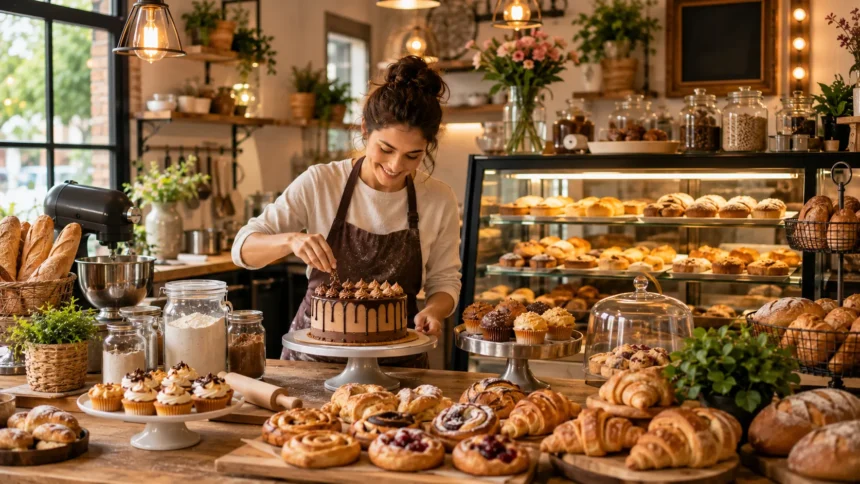
How to Start a Bakery Business
Starting a bakery business can turn a passion for baking into a practical source of income, but successful bakeries require much more than delicious cakes, bread, cookies, or pastries. You also need to understand customers, costs, pricing, food safety, production, marketing, and daily operations. A strong bakery combines creativity with disciplined business management so that every product tastes good while still generating enough profit to support the company. Planning carefully before opening can prevent many of the expensive mistakes new bakery owners commonly face.
The good news is that bakery businesses can be started in several different ways depending on your budget and goals. You might begin as a home-based bakery, sell through local markets, operate a delivery-focused baking business, supply cafés and restaurants, or open a full retail bakery. Each model has different startup costs, legal requirements, staffing needs, and growth opportunities. Choosing the right format makes it easier to control risk during the early stages.
Learning how to start a bakery business also means understanding what makes your products different. Customers may already have access to supermarkets, local bakeries, cafés, and online cake sellers, so simply offering baked goods may not be enough. Specializing in artisan bread, customized cakes, premium desserts, wedding cakes, healthy baked goods, regional specialties, or another clear niche can make your bakery easier to market and remember.
This guide explains the bakery startup process from idea to launch and long-term growth. You will learn how to research your market, choose a bakery model, create a business plan, estimate startup costs, develop products, set profitable prices, meet legal requirements, purchase equipment, build a brand, and attract customers. The goal is to help you create a bakery that feels personal and creative while operating like a serious business.
Decide What Type of Bakery You Want to Start
The first major decision is choosing the type of bakery that fits your budget, skills, lifestyle, and customers. A traditional storefront bakery requires commercial space, equipment, utilities, staff, displays, and higher ongoing expenses. A home bakery can usually begin with lower overhead, although local food-production rules may restrict which products you can make and where you can sell them. Understanding these differences before spending money is essential.
A delivery or online bakery is another option that reduces the need for a large customer-facing location. Customers can order through a website, social platform, messaging service, or delivery marketplace, while you focus primarily on production and fulfillment. This model can work particularly well for custom cakes, dessert boxes, cookies, brownies, and products that customers normally order in advance.
Wholesale bakeries operate differently because they sell larger quantities to cafés, restaurants, hotels, retailers, or other businesses instead of depending mainly on individual customers. This approach can generate recurring orders, but margins and production requirements may be different. You will also need reliable delivery schedules and enough capacity to meet consistent business-to-business demand without compromising quality.
Choose the bakery model according to what you can realistically manage rather than simply selecting the most impressive option. A small home-based operation can become profitable before a storefront is necessary, while a commercial bakery may be appropriate if you already have strong demand and sufficient capital. Starting with the right scale gives you room to learn before taking on larger financial commitments.
Choose a Profitable Bakery Niche
A clear niche helps your bakery stand out in a competitive market. Instead of trying to make every possible baked product, consider becoming especially known for one category. Custom celebration cakes, sourdough bread, cupcakes, cookies, pastries, wedding desserts, doughnuts, healthy snacks, regional baked goods, or premium dessert boxes are all examples of niches that can create stronger positioning.
Think about both your skills and customer demand. You might enjoy making elaborate cakes, but your local market may have stronger demand for affordable breakfast pastries or fresh bread. Research what people are already buying and where customers appear dissatisfied with current options. A strong niche connects something you can produce consistently with a problem or desire customers genuinely care about.
Specialization can also improve production efficiency. If your bakery focuses on a smaller number of core products, you can standardize recipes, ingredients, packaging, equipment, and workflow more easily. This can reduce waste and simplify inventory management. It also makes staff training easier when the business grows because employees do not need to master dozens of unrelated products immediately.
Your niche does not have to remain narrow forever. Begin with a focused identity and expand gradually based on customer demand. A cookie business might later introduce brownies and gift boxes, while an artisan bread bakery could add sandwiches or breakfast items. Starting focused helps customers understand why they should choose you before you broaden the menu.
Research Your Local Bakery Market
Market research can help you understand whether enough customers are willing to buy the products you plan to offer. Start by studying local bakeries, supermarkets, cafés, home bakers, dessert shops, and online sellers. Look at their product ranges, prices, presentation, reviews, delivery options, opening hours, and customer feedback. Your goal is not to copy competitors but to understand what customers already expect.
Customer reviews can reveal useful gaps in the market. People may repeatedly complain about limited customization, inconsistent quality, slow delivery, high prices, poor packaging, or limited options for specific dietary preferences. When the same complaints appear repeatedly, they may represent opportunities for your bakery to offer a better experience.
Speak directly with potential customers as well. Ask what baked products they purchase most often, how much they normally spend, where they currently buy them, and what would make them try a new bakery. These conversations can be particularly helpful when deciding between premium and affordable positioning. Customer behavior should guide your menu rather than assumptions alone.
You can also test demand before fully launching. Sell a limited number of products through preorders, weekend markets, small events, or a temporary online menu. Track which products sell quickly, which price points customers accept, and which items receive repeat orders. Real purchasing behavior provides much stronger evidence than simply asking friends whether they like your idea.
Create a Practical Bakery Business Plan
A bakery business plan helps turn your idea into a structured commercial strategy. It should explain what products you will sell, who your target customers are, how you will produce and distribute the products, what competitors you face, and how the company will make money. The plan can be simple at the beginning, but it should provide enough detail to guide important financial and operational decisions.
Include a clear description of your bakery concept and niche. Explain whether you will operate from home, online, through wholesale accounts, at markets, or from a storefront. Describe your main products, price range, target market, and competitive advantage. A clear plan makes it easier to determine which equipment, staff, premises, and marketing channels are genuinely necessary.
The financial section should include startup costs, monthly expenses, projected sales, expected profit margins, and cash-flow needs. Estimate how many products you must sell each day or week to cover your costs. Conservative projections are usually more useful than assuming every day will be busy immediately after opening.
Review the plan after the business starts operating. Your best-selling products, customer type, ingredient costs, and marketing results may differ from your original expectations. Update the plan based on what you learn. A business plan should guide decisions rather than become a document stored away after launch.
Calculate Bakery Startup Costs Carefully
Bakery startup costs vary considerably depending on whether you operate from home or open a commercial location. Expenses may include ovens, mixers, refrigerators, freezers, baking trays, worktables, display cabinets, packaging, ingredients, furniture, permits, insurance, signage, website development, point-of-sale systems, and deposits. Creating a detailed list before launching helps you understand how much capital is actually required.
Separate one-time purchases from recurring monthly expenses. Equipment and renovations may be major initial costs, while rent, utilities, ingredients, packaging, payroll, insurance, marketing, and software continue every month. This distinction helps you estimate both the money needed to open and the amount of sales required to keep operating.
Include a financial cushion because some expenses will probably be higher than expected. Equipment can require repairs, ingredient prices can fluctuate, or renovations may reveal additional work. A startup budget with no flexibility can create immediate financial pressure. Extra working capital gives you more time to build consistent customer demand.
Avoid spending heavily on decorative upgrades that do not directly improve production, safety, customer experience, or revenue. A beautiful bakery is valuable, but expensive furniture or elaborate branding should not prevent you from buying reliable equipment or maintaining enough cash for operations. Prioritize essentials first and improve cosmetic details gradually as the business generates income.
Decide How You Will Fund the Bakery
Some bakery businesses can be started with personal savings, especially small home-based models. Larger commercial bakeries may require additional financing for equipment, deposits, renovation, and working capital. Potential funding sources can include personal savings, business loans, family financing, partners, equipment financing, or other locally available small-business programs.
Before borrowing, calculate exactly how the money will be used. Avoid requesting a round number without a detailed budget. A lender or investor will usually want to understand whether the funds are being used for productive expenses such as ovens, refrigeration, fit-out, inventory, or working capital. Clear planning also helps you avoid borrowing more than necessary.
Consider the effect of repayments on monthly cash flow. A bakery may need several months to develop consistent customer traffic, while loan payments usually begin according to a fixed schedule. Test whether the business can still manage repayments if sales are slower than expected. Financing should support growth rather than create immediate pressure.
Bootstrapping can reduce financial risk when your bakery concept can be tested on a smaller scale. You might begin with preorders or a home-based operation and reinvest profits before opening a retail location. Demonstrating real customer demand before making a larger investment can also help you make more confident expansion decisions.
Develop a Focused Bakery Menu
A large menu may appear attractive because customers have more options, but it can make production, inventory, staffing, and quality control much harder. Begin with a focused menu containing products you can prepare consistently and profitably. Each additional item requires ingredients, storage, preparation time, equipment, packaging, and staff knowledge.
Choose several signature products that customers can associate with your brand. A bakery might become known for one exceptional chocolate cake, sourdough loaf, cookie flavor, cinnamon roll, or pastry. Signature items can become powerful marketing tools because customers know exactly what to recommend when introducing your bakery to someone else.
Use ingredients across several products when possible. If the same chocolate, flour, fruit, fillings, or toppings can be used in multiple recipes, inventory management becomes easier and waste may decrease. Avoid maintaining large amounts of ingredients used for only one rarely ordered product unless the margin justifies it.
Review your menu regularly using real sales information. Remove products that consume excessive time, produce weak margins, or sell infrequently. Give more attention to items that customers buy repeatedly and that can be produced efficiently. A shorter profitable menu is generally more valuable than a huge menu that creates operational complexity.
Standardize Every Bakery Recipe
Standardized recipes are essential if you want customers to receive the same product every time. Record exact ingredient quantities, temperatures, preparation methods, baking times, portion sizes, decorating procedures, and expected yields. Relying entirely on memory can lead to inconsistent results, especially once employees begin helping with production.
Recipe standardization also supports accurate costing. When you know exactly how much flour, butter, sugar, chocolate, filling, and decoration go into each product, you can calculate the real ingredient cost per unit. This information becomes the foundation for profitable pricing. Without standardized recipes, your costs may vary without you realizing it.
Include instructions for storage and shelf life as well. Baked goods can lose quality quickly when handled incorrectly, so employees need to understand how products should be cooled, packaged, refrigerated, frozen, or displayed. Clear standards protect both food quality and customer experience.
Test recipes several times before adding them permanently to the menu. A product that works perfectly in a small home batch may behave differently when produced in larger quantities. Commercial production can affect mixing, timing, oven capacity, and workflow. Testing helps ensure your signature products remain consistent as volume increases.
Calculate the True Cost of Every Product
Pricing begins with understanding exactly what each product costs to make. Ingredient cost is the most obvious component, but it is not the only expense. Packaging, labor, electricity or gas, delivery, payment-processing fees, rent, equipment depreciation, marketing, and waste also influence the real cost of operating the bakery.
Calculate ingredient costs according to actual recipe quantities. If a bag of flour costs a certain amount, determine how much of that bag is used for one batch and how many products the batch produces. Repeat this process for every ingredient. Detailed costing makes it easier to see which products generate healthy margins.
Labor should also be considered, even if you personally perform the baking. Your time has value and should not be treated as free. Custom cakes can be particularly deceptive because decorating, customer communication, revisions, delivery, and setup may require many hours beyond the basic ingredient cost.
Update your calculations as supplier prices change. Ingredient costs can rise, and a price that was profitable six months ago may gradually become too low. Regular costing reviews help you make informed decisions about menu prices, supplier negotiations, portion sizes, or recipe adjustments.
Set Bakery Prices for Sustainable Profit
Once you know your costs, set prices that provide enough margin to cover overhead and generate profit. Avoid pricing only according to what competitors charge because another bakery may have completely different expenses, production capacity, or product quality. Your prices should reflect both your costs and the value customers receive.
Premium ingredients, custom decoration, unique flavors, specialized craftsmanship, and convenient delivery can all justify higher prices when customers understand the benefit. Instead of competing entirely on being cheaper, communicate what makes your bakery different. Strong positioning can reduce pressure to continuously lower prices.
Be particularly careful when pricing customized products. A bespoke birthday or wedding cake may require consultations, design planning, special ingredients, decorating, transportation, and setup. Create a pricing structure that accounts for complexity, size, labor, and additional services rather than charging only according to the weight or ingredient cost.
Review prices regularly instead of keeping them unchanged for years. Rent, labor, utilities, ingredients, and packaging can increase over time. Gradual adjustments are usually easier to manage than waiting until prices are far below sustainable levels. Customers are more likely to accept increases when quality and communication remain consistent.
Find Reliable Ingredient Suppliers
Ingredient quality directly affects the taste and consistency of your baked products, making suppliers an important part of the business. Identify reliable sources for flour, butter, eggs, chocolate, sugar, dairy products, fruit, flavors, fillings, decorations, packaging, and other ingredients required by your menu.
Compare suppliers based on more than price. Delivery reliability, quality consistency, minimum order quantities, payment terms, availability, and customer service all matter. A slightly cheaper supplier can become expensive if deliveries are regularly late or ingredients vary noticeably in quality.
Avoid depending entirely on one supplier for critical ingredients when alternatives are available. Supply disruptions can stop production, particularly when your recipes depend on specific products. Maintaining backup supplier relationships can reduce operational risk and give you more flexibility during shortages.
Track ingredient usage and waste so you can order more accurately. Buying too much perishable stock can reduce profit through spoilage, while ordering too little may cause popular products to sell out unnecessarily. Good purchasing systems balance availability with freshness and cash flow.
Choose the Right Location for a Retail Bakery
If you plan to operate a storefront, location can strongly influence customer traffic and operating costs. Consider visibility, pedestrian activity, nearby businesses, parking, delivery access, neighborhood demographics, and competition. A busy location may generate more walk-in customers, but higher rent can significantly increase the amount of revenue required every month.
Think about your actual customer behavior. A premium cake studio may depend primarily on appointments and online orders, making expensive high-street space less important. A breakfast bakery selling coffee and pastries may benefit much more from heavy morning foot traffic near offices, schools, or transit routes.
Evaluate the property from a production perspective as well. You may need enough electrical capacity, ventilation, drainage, food-storage areas, refrigeration, preparation space, sinks, and delivery access. Converting an unsuitable property into a commercial bakery can become significantly more expensive than expected.
Do not sign a long lease simply because you are excited about the location. Estimate the total cost of rent, deposits, renovations, utilities, and required improvements. Confirm that the location can legally support your intended food business before making a major financial commitment.
Understand Bakery Licenses and Food Regulations
Food businesses usually face more regulation than many ordinary service businesses because customer health and safety are involved. Depending on your location and business model, you may need business registration, food-business approval, health permits, food-handler certification, sales-tax registration, zoning approval, or other licenses before selling commercially.
Home-based bakeries may be subject to specific cottage-food or home-food-production rules in jurisdictions where such systems exist. These rules can define which foods are allowed, where products can be sold, labeling requirements, production limits, or whether inspection is required. Do not assume that baking from home automatically removes regulatory responsibilities.
Retail and commercial bakeries may need additional inspections covering sanitation, food storage, ventilation, water supply, pest prevention, and employee hygiene. Requirements vary considerably by location. Research your national, regional, and local rules early because licensing and property approval can affect your startup timeline.
Keep records of permits, inspections, training, and renewal dates after opening. Compliance is an ongoing responsibility rather than something completed on launch day. When rules are unclear, contact the relevant local authority or qualified professional rather than relying on outdated information from another bakery operating somewhere else.
Make Food Safety a Daily Priority
Food safety should become part of your daily bakery routine rather than something performed only when an inspection is expected. Clean working surfaces, safe ingredient storage, appropriate temperatures, employee hygiene, pest control, and separation of raw materials are essential. Consistent procedures help protect customers while reducing the risk of contamination or product loss.
Create cleaning schedules showing what should be cleaned, how frequently, and who is responsible. Mixers, worktables, refrigerators, ovens, sinks, utensils, floors, handles, and storage areas all need appropriate attention. Written schedules make accountability easier when several employees share the kitchen.
Temperature control is particularly important for products containing cream, custard, dairy fillings, eggs, or other ingredients requiring refrigeration. Store ingredients and finished goods according to appropriate food-safety requirements. Monitor equipment so refrigerator or freezer problems are discovered before large amounts of stock become unsafe.
Train every employee according to their responsibilities. Food safety becomes weaker when only the owner understands the rules. Staff should know how to wash hands properly, prevent cross-contact, handle food safely, and respond to spills or contamination. A strong food-safety culture protects both customers and the reputation of your bakery.
Manage Allergens Carefully
Allergen management deserves particular attention because baked products commonly contain ingredients such as wheat, eggs, milk, nuts, peanuts, sesame, or soy. Customers may have serious allergies, so vague assumptions or careless labeling can create significant risk. Understand the allergen rules that apply in your market and communicate ingredients clearly.
Keep accurate ingredient information for every recipe, including packaged ingredients used inside your products. An ingredient such as chocolate, flavoring, or decoration may itself contain additional allergens. Update your information whenever suppliers or recipes change. Never rely entirely on memory when answering customer questions about allergens.
Cross-contact can happen when the same equipment, utensils, work surfaces, or storage areas are used for different products. A bakery offering products marketed for customers with specific allergies needs procedures appropriate to the claim being made. If you cannot guarantee separation, communicate limitations clearly rather than creating unrealistic expectations.
Train employees to treat allergy questions seriously. Staff should know where accurate ingredient information is stored and should never guess. Clear communication can protect both customers and your business. Responsible allergen management should be considered part of product quality, not merely a legal requirement.
Buy the Right Bakery Equipment
Equipment needs depend on your menu and production volume. Common bakery equipment may include commercial ovens, mixers, refrigerators, freezers, proofing equipment, baking trays, cooling racks, scales, worktables, display cases, sinks, and storage containers. Create your equipment list from your production process rather than copying another bakery’s setup.
Prioritize reliable equipment that affects product quality and output. A suitable oven and mixer may be more important than expensive decorative displays during the early stage. Consider capacity carefully. Equipment that is too small can create production bottlenecks, while oversized equipment may waste money and energy before customer demand justifies it.
Used commercial equipment can reduce startup costs, but inspect condition carefully before buying. Maintenance history, energy efficiency, replacement parts, installation requirements, and warranties can affect the real value. A cheap oven that requires frequent repairs may become more expensive than a reliable new alternative.
Plan maintenance before something breaks. Keep equipment clean, follow manufacturer recommendations, and develop relationships with repair professionals where appropriate. A failed mixer or refrigerator can disrupt an entire production schedule. Preventive maintenance helps protect both productivity and the investment you made in equipment.
Design an Efficient Bakery Kitchen
An efficient bakery layout reduces unnecessary movement and allows products to move logically from storage through preparation, baking, cooling, decorating, packaging, and dispatch. Think about the complete workflow before installing equipment. Poor layouts can make employees repeatedly cross the kitchen, slowing production and increasing the chance of accidents.
Place frequently used ingredients and tools close to relevant workstations. Flour, sugar, scales, mixing tools, and baking trays should be stored where employees can access them without constantly walking across the room. Specialized decorating equipment can have its own area so production tasks do not interfere with detailed finishing work.
Leave enough space around ovens, refrigerators, mixers, and worktables for safe movement and maintenance. Narrow pathways can become dangerous when employees carry hot trays or heavy ingredients. The layout should also support cleaning because inaccessible corners and overcrowded storage can create sanitation problems.
Review workflow after the bakery begins operating. Employees may identify bottlenecks that were not obvious during planning. Moving one storage rack or changing the order of production can sometimes save considerable time. Efficient kitchens evolve as owners gain real experience with customer volume and menu demand.
Develop Attractive Bakery Packaging
Packaging protects the product, supports food safety, and influences how customers perceive your brand. Cakes, cookies, pastries, bread, and dessert boxes all require packaging suited to their shape, fragility, storage needs, and transportation. Good packaging should make delivery easier without damaging presentation.
Choose materials that keep products fresh for the expected period. A package that looks beautiful but causes pastries to become soggy or cakes to move during delivery is not effective. Test packaging with real products before ordering large quantities. Consider how it performs during transport, refrigeration, stacking, and customer handling.
Branding can be added through labels, stickers, boxes, ribbons, stamps, or printed packaging depending on your budget. You do not need expensive custom boxes on the first day. Simple, clean packaging with consistent branding can look highly professional while keeping startup expenses manageable.
Include required product and allergen information according to applicable rules. Packaging should support transparency as well as aesthetics. Clear labels can communicate the product name, storage instructions, ingredients where required, and your business details. Customers should feel confident about what they are purchasing.
Create a Memorable Bakery Brand
Your bakery brand should communicate what customers can expect before they taste the product. The name, logo, colors, packaging, photography, shop environment, website, tone of voice, and customer service all contribute to that perception. A bakery specializing in luxury wedding cakes should naturally feel different from a cheerful neighborhood cookie business.
Choose a business name that is easy to remember and fits your intended positioning. Check legal name availability and digital availability before investing heavily in signage or packaging. A name should also be broad enough to support reasonable future growth unless your specialization is intentionally narrow.
Keep the visual identity consistent. Use a controlled color palette, readable typography, and photography that presents products clearly. Customers should be able to recognize your bakery when they see packaging, social media posts, menus, or website pages. Consistency builds familiarity and makes a small operation appear more established.
Most importantly, make sure the actual customer experience supports the brand. Beautiful packaging cannot compensate for inconsistent products or missed delivery times. A premium bakery needs premium service, while a neighborhood bakery should feel approachable and reliable. Branding becomes valuable when the promise and actual experience match.
Take High-Quality Photos of Your Baked Products
Customers often decide what to buy with their eyes first, particularly when ordering cakes, desserts, or pastries online. High-quality product photography can therefore become one of your strongest marketing assets. You do not necessarily need expensive professional equipment at the beginning; good natural light, clean backgrounds, and careful styling can produce attractive images.
Photograph products from several useful angles. Show the overall appearance, interior texture, filling, portion size, and decorative details when relevant. Customers ordering online need enough visual information to imagine what they will receive. Avoid editing photos so heavily that the final product no longer resembles reality.
Create a consistent visual style across your photos. Similar lighting, backgrounds, colors, and presentation can make social profiles and websites look more professional. Consistency is particularly valuable for premium bakeries because visual presentation contributes strongly to perceived quality.
Capture real customer orders as well as styled products when appropriate. Wedding cakes, birthday designs, dessert tables, and gift boxes can become excellent portfolio content. Ask for appropriate permission before sharing images connected with private events. A growing portfolio gives future customers more confidence in your capabilities.
Build a Professional Bakery Website
A bakery website gives customers a reliable place to understand your menu, pricing, location, ordering process, and contact information. Even if most orders currently arrive through social media, owning a website reduces dependence on a platform you do not control. It can also help customers discover your bakery through search engines.
Keep the site simple and useful. Include high-quality product photos, an understandable menu, opening hours, delivery or collection information, contact details, and clear instructions for ordering. Custom cake businesses should explain the inquiry process and what information customers need to provide.
Make sure the website works well on mobile devices because customers may search for bakeries while traveling or planning an event from their phone. Pages should load efficiently and buttons should be easy to tap. Complicated navigation can cause potential customers to leave before placing an order.
Add useful local SEO information naturally if you serve a specific geographic area. Mention where you operate, which products you specialize in, and what services are available. Creating genuinely useful pages for products and services can help search engines understand your business while giving customers the information they need.
Use Local SEO to Attract Nearby Customers
Local search can be especially important for bakeries because many customers search for products within their city or neighborhood. Make sure your business name, address, contact details, operating hours, and website information remain accurate across the platforms customers use to find local businesses.
Create pages around important bakery services rather than relying only on one homepage. Wedding cakes, birthday cakes, artisan bread, custom cupcakes, catering desserts, or delivery services may deserve separate pages if they are significant parts of the business. Each page should provide useful information instead of simply repeating keywords.
Customer reviews can strengthen both visibility and trust. Encourage satisfied buyers to leave genuine feedback on relevant platforms. Do not pressure customers for positive reviews; simply make the process easy. Respond professionally to both praise and criticism because potential customers may evaluate how you communicate.
Keep local information updated whenever hours, locations, contact details, or services change. Incorrect opening times can create immediate frustration for people planning a visit. Local SEO works best when accurate business information is combined with a strong real-world customer experience.
Market Your Bakery on Social Media
Social media works particularly well for bakeries because cakes, pastries, bread, and desserts are naturally visual. Platforms built around photographs and short videos can showcase products, decorating processes, behind-the-scenes baking, customer orders, new flavors, and seasonal launches. Consistent content can help people remember your bakery before they need to place an order.
Avoid making every post a direct advertisement. Educational or entertaining content can attract attention while demonstrating expertise. Show decorating techniques, ingredient preparation, product launches, packaging processes, or the story behind a signature item. Customers often enjoy seeing how food is created as much as seeing the final result.
Use social media to communicate practical information too. Announce preorder deadlines, holiday schedules, sold-out products, special collections, and changes to operating hours. Clear communication reduces repetitive customer questions and can create urgency around limited products without relying on aggressive sales tactics.
Measure whether social media activity produces orders, website visits, inquiries, or repeat customers rather than judging success only by likes. A smaller local audience containing real customers may be more valuable than a large audience from locations you cannot serve. Focus on relevance rather than vanity metrics.
Use Preorders to Reduce Waste
Preorders can be extremely useful for bakeries because baked products are often perishable. Knowing how many items have already been sold before production allows you to purchase ingredients and plan quantities more accurately. This reduces the risk of ending the day with large amounts of unsold stock.
Preorder systems work especially well for specialty cakes, weekend boxes, holiday collections, and limited-edition flavors. Set clear ordering deadlines and collection or delivery times so customers understand the process. Payment in advance can also reduce cancellations where appropriate for your business model.
Use preorder data to understand demand. If one dessert box sells out quickly while another performs poorly, you gain useful information before producing large quantities. This can guide future menu planning and seasonal launches. Preorders therefore support both cash flow and product research.
Do not allow custom preorder arrangements to become operationally chaotic. Define available products, customization limits, lead times, and payment policies. Structured ordering makes production easier while still giving customers enough choice. Successful bakeries usually balance flexibility with operational discipline.
Create Seasonal and Limited-Time Products
Seasonal products can generate excitement and give customers reasons to return throughout the year. Holidays, local events, weddings, school periods, and seasonal ingredients can inspire special collections. Limited-time flavors also allow you to test new products without permanently expanding the core menu.
Plan seasonal launches well in advance. Packaging, ingredients, photography, marketing, and preorder systems may all need preparation before the selling period begins. Waiting until the holiday is already close can create unnecessary production pressure and reduce marketing time.
Keep successful seasonal items in your records so they can be improved the following year. Track quantities sold, costs, customer feedback, and production challenges. Seasonal products become more profitable when planning improves each time they return.
Avoid introducing too many seasonal products simultaneously. A focused collection is easier to produce and market than a huge temporary menu. Select several items that fit your brand and operational capacity. Scarcity can also make a limited collection feel more special to customers.
Offer Custom Cakes Without Losing Profit
Custom cakes can generate higher order values but can also consume significant time. Consultations, design work, ingredient sourcing, baking, decoration, revisions, transportation, and setup should all be considered when pricing. Do not assume that a cake with inexpensive ingredients is inexpensive to produce.
Develop an inquiry form that collects essential information such as date, serving size, theme, flavors, budget range, and delivery needs. This reduces repeated messages and helps you identify whether the customer is a suitable fit before spending time on detailed design discussions.
Set limits around revisions and customization. Customers may continue requesting changes if the process is completely open-ended. Confirm the final design, price, delivery details, and payment schedule in writing. Clear agreements protect both the bakery and the customer.
Build a portfolio of completed work so customers understand your style before contacting you. This can attract clients who already appreciate your approach and reduce unrealistic requests. Custom work becomes more profitable when your reputation allows you to specialize instead of trying to create every imaginable design.
Develop a Reliable Ordering and Payment Process
Customers are more likely to complete purchases when ordering feels simple. Decide whether orders will come through your website, phone, messaging apps, social media, or an online ordering system. Too many disconnected channels can create mistakes, especially when several employees are managing customer communication.
Collect essential order details in a consistent format. Product, quantity, date, collection time, delivery address, customization, allergies, payment status, and contact details should all be recorded accurately. Relying on scattered chat messages can make important information easy to miss.
Use deposits or advance payment where appropriate, especially for customized or high-value orders. Clear cancellation and refund policies can reduce disputes when customers change plans. Make sure policies are communicated before payment rather than introduced only after a problem occurs.
Send confirmations and reminders for important orders. A short confirmation gives customers confidence that their request has been recorded correctly and gives you another opportunity to identify mistakes. Reliable order management is one of the simplest ways to improve customer experience and reduce operational stress.
Plan Delivery Without Damaging Products
Bakery delivery requires more care than ordinary parcel delivery because cakes and pastries can be fragile, temperature-sensitive, and difficult to replace quickly. Packaging, vehicle temperature, route planning, and handling procedures all influence whether products arrive in the same condition they left the kitchen.
Set realistic delivery zones and fees. Traveling long distances for small orders can quickly become unprofitable when fuel, driver time, and vehicle costs are considered. Minimum order values or zone-based delivery pricing can help protect margins while still offering customer convenience.
Test packaging under actual delivery conditions. Drive with sample cakes, boxes, or pastries and check whether products slide, soften, or become damaged. Small adjustments to boxes, supports, refrigeration, or vehicle setup can prevent expensive failures during customer orders.
Allow extra time for important events such as weddings or corporate functions. Traffic delays and access problems can create serious stress when the delivery deadline is fixed. Planning buffers and confirming venue details beforehand can make high-value deliveries more reliable.
Hire Bakery Staff at the Right Time
Hiring can become necessary when customer demand exceeds what you can produce consistently yourself. Bakers, decorators, counter staff, delivery drivers, kitchen assistants, and managers can each support different parts of the business. Hire based on a clearly defined workload rather than simply because you feel busy.
Write down the responsibilities and working hours of each role before recruiting. A bakery assistant who prepares ingredients and cleans equipment requires different skills from a cake decorator or customer-service employee. Clear roles make interviews and training more effective.
Train employees using standardized recipes, production procedures, cleaning schedules, customer-service expectations, and food-safety rules. Do not assume experienced bakers automatically know how your specific business operates. Consistency depends on everyone following the same quality standards.
Monitor labor costs as the team grows. Additional employees should increase capacity, service quality, or operational efficiency enough to justify their total cost. Hiring too quickly can place pressure on cash flow, while waiting too long can damage quality and exhaust existing staff. Growth should be balanced carefully.
Reduce Food Waste and Protect Margins
Food waste directly reduces bakery profit because ingredients and labor have already been spent on products that cannot be sold. Track what remains unsold at the end of each day and look for patterns. Certain products may consistently be produced in quantities larger than actual demand.
Use historical sales data to improve production planning. Weekdays, weekends, holidays, weather, events, and seasons can all influence demand. Over time, your bakery should become better at predicting how much of each product is likely to sell.
Design recipes and menus so ingredients can be used efficiently across several products. This reduces the chance that specialized ingredients expire before being used. Portion control and standardized recipes can also prevent employees from unintentionally using excessive quantities.
Where legally and safely appropriate, consider planned promotions or other responsible methods for handling excess products. The best solution, however, is usually reducing overproduction through better forecasting. Preventing waste protects both margins and operational efficiency.
Build Customer Loyalty and Repeat Sales
A bakery becomes more stable when customers return regularly rather than purchasing only once. Consistent product quality is the foundation of loyalty because people want confidence that their favorite item will taste the same every time. Reliability in ordering, delivery, and customer service strengthens that trust.
Remember important customer preferences when practical. Someone who orders the same birthday cake each year or regularly purchases bread may appreciate personalized communication. Small businesses can often create stronger customer relationships than large chains because interactions feel more personal.
Loyalty programs can encourage repeat visits when they remain simple and valuable. Points, occasional rewards, subscriber offers, or early access to limited products can provide incentives without relying entirely on discounts. Avoid creating complicated systems customers struggle to understand.
Email or messaging lists can also help maintain relationships with customers who choose to receive updates. Share new products, preorder deadlines, seasonal collections, and useful announcements rather than sending constant promotions. Communication should give people a reason to remain subscribed.
Track Bakery Metrics That Actually Matter
Revenue is important, but it does not show the complete health of your bakery. Monitor food cost, labor cost, gross margin, waste, average order value, repeat-purchase rate, and cash flow. These numbers can reveal problems that total sales alone might hide.
Track product-level profitability when possible. One cake may generate high revenue but require so many labor hours that its actual margin is weak. Another simple pastry may produce less revenue per item but strong profit because it can be made efficiently in batches.
Monitor customer acquisition as well. Record whether buyers discovered you through search, social media, referrals, events, walk-in traffic, or other channels. This information helps you understand where marketing efforts are producing real customers rather than just attention.
Review these numbers consistently, such as monthly, instead of only when the business feels slow. Trends become easier to recognize when the same metrics are measured repeatedly. Data should support practical decisions about pricing, menu changes, staffing, production, and marketing.
Common Bakery Business Mistakes to Avoid
One common mistake is offering too many products immediately. A huge menu increases inventory, preparation complexity, training requirements, and waste. Start with a focused range you can produce exceptionally well and expand according to demonstrated customer demand.
Underpricing is another major problem. New bakery owners sometimes calculate only ingredients and forget labor, utilities, packaging, rent, delivery, and overhead. Low prices can create plenty of orders while leaving very little actual profit. Cost every product carefully before deciding what to charge.
Poor recordkeeping can also make a bakery difficult to manage. Track expenses, sales, ingredient usage, waste, taxes, and customer orders from the beginning. Waiting until the business grows makes reconstructing financial information much harder. Organized records help you make stronger decisions.
Finally, avoid expanding too quickly. A successful home bakery does not automatically need a large retail location immediately. Test demand, understand your numbers, and make sure existing operations are profitable before increasing fixed costs. Sustainable growth usually creates a stronger business than expansion driven mainly by excitement.
How to Grow a Bakery Business Successfully
Growth should begin with strengthening what already works. Identify your most profitable products, strongest customer segments, and best marketing channels before adding complexity. Increasing sales of a proven product can be safer than introducing several completely new categories simultaneously.
Wholesale partnerships can create another growth path. Cafés, hotels, restaurants, offices, and retailers may purchase bread, pastries, cookies, or desserts regularly. Business customers can provide consistent volume, although pricing and delivery logistics need careful planning.
Additional locations, kiosks, food trucks, or production kitchens may become options when demand exceeds current capacity. Expansion should be supported by reliable systems, cash flow, trained staff, and strong customer demand. A second location can multiply existing problems if the first operation has not been standardized.
You can also grow through online orders, corporate gifting, catering, subscription boxes, classes, or seasonal collections. Choose expansion opportunities that fit your existing skills and production strengths. Growth becomes easier when it builds naturally from what customers already value.
Final Thoughts
Learning how to start a bakery business begins with understanding that baking ability and business ability must work together. Delicious products create the foundation, but pricing, food safety, customer service, marketing, production planning, and financial management determine whether the bakery can remain profitable over time.
Begin with a clear niche and a manageable menu. Research your customers, test demand, calculate every product carefully, and create standardized recipes before investing heavily in expansion. A smaller operation with strong systems can provide a much better foundation than a large bakery struggling with inconsistent quality and uncontrolled expenses.
Treat customer experience as part of the product. Attractive packaging, reliable ordering, clear communication, accurate delivery, and consistent quality can turn first-time buyers into repeat customers. Strong reviews and recommendations can then become some of the most valuable marketing assets your bakery develops.
Most importantly, grow according to evidence rather than excitement. Track sales, margins, waste, customer preferences, and production capacity, then invest where the numbers support expansion. With strong products and disciplined operations, a bakery can grow from a small local idea into a recognizable and sustainable business.
Frequently Asked Questions
How much money do I need to start a bakery business?
Startup costs depend on the bakery model. A home bakery can often begin with much lower investment than a retail bakery, which may require commercial equipment, rent, renovation, permits, staff, and significant working capital.
Can I start a bakery business from home?
In many places, home-based bakeries are possible, but local rules may determine which foods you can make, how they must be labeled, and where they can be sold. Always verify current requirements in your location before launching.
What bakery products are most profitable?
Profitability depends on ingredient costs, labor, pricing, and demand. Cookies, brownies, cupcakes, breads, custom cakes, and specialty desserts can all be profitable when recipes are standardized and prices cover the true cost of production.
How do I attract customers to a new bakery?
Use strong product photography, local SEO, social media, customer reviews, referrals, seasonal launches, samples, partnerships, and clear online ordering. Focus marketing on people who are realistically able to buy from your location.
How can I make my bakery more profitable?
Control food waste, standardize recipes, price products accurately, focus on strong sellers, improve repeat purchases, manage labor carefully, and track product-level margins. Profit improves when both sales and operational efficiency grow together.