

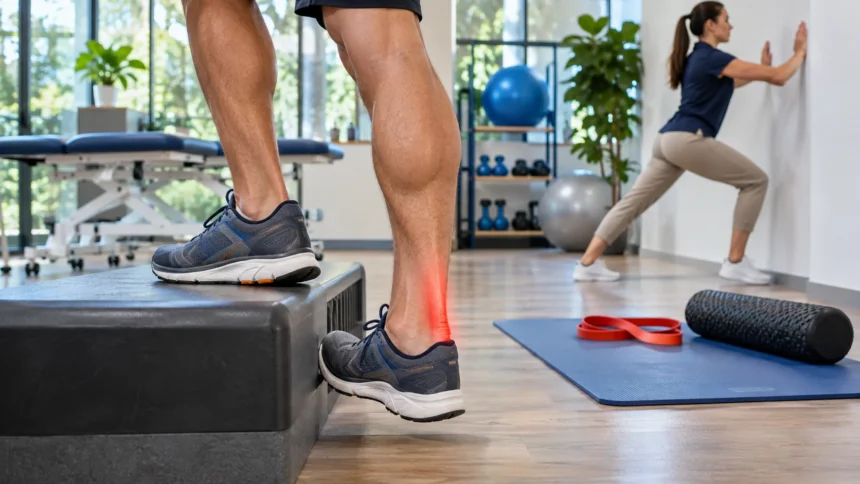
Achilles tendonitis can make walking, running, climbing stairs, and other everyday movements uncomfortable. It affects the Achilles tendon, which connects the calf muscles to the heel bone. When this tendon becomes irritated or overloaded, pain and stiffness may develop around the back of the ankle. Fortunately, suitable exercises can help improve strength, mobility, and normal movement.
The best exercises for Achilles tendonitis focus on gradually strengthening the calf muscles and improving the tendon’s ability to handle physical activity. Controlled heel raises, isometric holds, and gentle ankle movements are commonly included in rehabilitation programs. However, the correct exercises depend on the location of the pain, the severity of symptoms, and individual recovery needs.
This guide explains helpful Achilles tendon exercises, proper techniques, benefits, and important safety precautions. You will learn how to perform common movements, avoid unnecessary strain, and recognize when professional treatment is necessary. With appropriate exercise progression and consistent care, many people can improve tendon function and return to their usual activities.
What Is Achilles Tendonitis?
Achilles tendonitis refers to pain and irritation affecting the Achilles tendon at the back of the lower leg. This strong tendon connects the calf muscles to the heel bone and supports movements such as walking, running, and jumping. It transfers force when the foot pushes against the ground. Repeated loading beyond its current capacity can contribute to discomfort.
The term Achilles tendinopathy is often used for persistent tendon problems because they may involve changes beyond simple inflammation. Symptoms can affect the middle portion of the tendon or the area where it attaches to the heel. These locations may require different exercise modifications. Identifying the affected area is important when developing a rehabilitation program.
Achilles tendon problems commonly develop after sudden changes in physical activity or training intensity. Increasing running distance, introducing hill workouts, or returning to exercise too quickly can place additional stress on the tendon. However, symptoms can also affect people who do not participate in sports. Appropriate care focuses on managing discomfort while gradually rebuilding tendon strength.
Common Causes of Achilles Tendonitis
One common cause of Achilles tendonitis is a sudden increase in physical activity. The tendon may become overloaded when exercise intensity or duration increases faster than the body can adapt. Running, jumping, and repeated climbing activities place substantial demands on the calf muscles. These movements can contribute to symptoms when recovery time is insufficient.
Reduced calf strength and limited ankle mobility may also influence tendon loading. Some people experience discomfort after changing their footwear, training surfaces, or exercise routines. Hill running and high-impact activities can increase demands on the Achilles tendon. However, these factors do not affect everyone equally, and the underlying cause may involve several contributing conditions.
Age-related tendon changes, certain medical conditions, and some medications may increase vulnerability to Achilles tendon problems. Individual movement patterns and previous injuries can also influence symptoms. Understanding these factors helps guide an appropriate rehabilitation approach. A healthcare professional can evaluate persistent pain and identify whether another condition requires attention.
Signs and Symptoms of Achilles Tendonitis
Pain and stiffness around the back of the heel are common symptoms of Achilles tendonitis. Discomfort may appear during walking, running, or climbing stairs. Some people notice stiffness when taking their first steps in the morning. Symptoms may improve temporarily after gentle movement but return after demanding physical activity.
Tenderness or thickening along the Achilles tendon may also develop. The area can feel uncomfortable when touched or when shoes press against the heel. Some people experience difficulty pushing off the affected foot. The location and intensity of these symptoms can vary depending on which part of the tendon is involved.
Sudden severe pain, a popping sensation, or an unexpected inability to push off the foot may indicate an Achilles tendon rupture. This requires urgent medical assessment rather than home exercise. Persistent swelling, worsening weakness, or difficulty walking also deserves professional evaluation. An accurate diagnosis helps ensure rehabilitation exercises are suitable and safe.
Benefits of Exercises for Achilles Tendonitis
One of the main benefits of exercises for Achilles tendonitis is improving the tendon’s ability to tolerate physical activity. Gradual strengthening increases the capacity of the calf muscles and tendon to handle everyday movement. This can improve comfort when walking, climbing stairs, or returning to recreational activities. Progress usually develops through consistent training rather than immediate results.
Strengthening exercises can also help restore muscle function after reduced activity. When tendon pain limits movement, the calf muscles may become weaker over time. A structured rehabilitation program helps rebuild strength while maintaining appropriate tendon loading. Stronger calf muscles can support ankle movement and improve confidence during daily activities.
Another benefit is better long-term activity management. Exercises provide a controlled way to rebuild physical capacity instead of relying entirely on temporary pain relief. However, the program must match individual symptoms and recovery goals. Excessive loading can worsen discomfort, so gradual progression and proper monitoring are essential.
Seated Calf Raises for Beginners
Seated calf raises are a useful starting exercise for people who find standing heel raises uncomfortable. They help activate the calf muscles while allowing the amount of load to be controlled. This movement may be appropriate during early rehabilitation. It can also prepare the lower leg for more demanding strengthening exercises.
To perform seated calf raises, sit upright in a sturdy chair with both feet flat on the floor. Slowly lift your heels while keeping the balls of your feet in contact with the ground. Pause briefly at a comfortable height before lowering your heels. Begin with a small number of smooth, manageable repetitions.
Avoid bouncing or forcing the heels higher than feels comfortable. As symptoms improve, resistance may be increased gradually when appropriate. Some rehabilitation programs add weight across the thighs to strengthen the calf muscles further. A physical therapist can help determine suitable resistance and exercise frequency based on individual recovery.
Standing Heel Raises for Achilles Tendon Strength
Standing heel raises are commonly recommended because they strengthen the calf muscles and load the Achilles tendon. They can improve the strength needed for walking, climbing stairs, and pushing off the ground. Starting with both feet helps distribute body weight during the movement. This makes the exercise more manageable than advanced single-leg variations.
Stand near a sturdy counter or wall with your feet comfortably apart. Use your hands for balance and slowly raise both heels from the floor. Pause briefly before lowering them with control. Perform the exercise on a flat surface and stop if you experience sharp pain or increasing weakness.
Standing heel raises should be introduced gradually according to symptom tolerance. People with insertional Achilles tendinopathy may need to limit ankle bending and avoid lowering the heels below floor level. Increasing repetitions or adding resistance too quickly can aggravate symptoms. Controlled progression helps develop strength while reducing unnecessary tendon irritation.
Isometric Calf Holds for Pain Management
Isometric exercises involve activating muscles while maintaining a relatively fixed position. They can provide a controlled strengthening stimulus without repeated ankle movement. Some people find these exercises easier to tolerate when the tendon is sensitive. However, their pain-relieving effect varies, and they are not guaranteed to provide immediate relief.
To perform an isometric calf hold, stand near a stable support with both feet on the floor. Slowly lift your heels a small distance while keeping your balance. Maintain the position briefly without bouncing or holding your breath. Lower your heels carefully and rest before repeating.
Start with short holds that feel manageable rather than attempting difficult positions immediately. If standing is uncomfortable, a seated variation may be more suitable. The exercise should not cause worsening pain or significant discomfort afterward. A rehabilitation professional can recommend appropriate hold times, resistance, and progression.
Gentle Calf Stretches for Flexibility
Gentle calf stretching may improve ankle flexibility when tight muscles contribute to restricted movement. The calf muscles work closely with the Achilles tendon during walking and standing. However, stretching does not directly repair every tendon problem. Strengthening and appropriate activity modification are often more important for managing persistent Achilles tendinopathy.
To perform a gentle calf stretch, stand facing a wall and place your hands against it. Move the affected leg backward while keeping both feet pointing forward. Lean slightly toward the wall until you feel a comfortable stretch in the calf. Avoid bouncing or forcing the ankle into a painful position.
Stretching should be modified or avoided when it increases symptoms. People with insertional Achilles tendinopathy may experience additional tendon compression during deep ankle bending. A physical therapist can determine whether stretching is appropriate for the affected area. Comfortable movement is more important than achieving an extreme range of motion.
Ankle Mobility Exercises for Better Movement
Ankle mobility exercises help maintain comfortable movement when tendon discomfort limits normal activities. These exercises involve gently moving the foot without heavy resistance. They can be useful during early recovery or after periods of reduced activity. However, mobility exercises alone may not provide enough strengthening for long-term tendon rehabilitation.
Sit comfortably in a chair with the affected leg supported. Slowly point your toes downward and then return your ankle toward a neutral position. You can also move the foot gently from side to side within a comfortable range. Keep the movements smooth and avoid forcing the joint.
Ankle mobility exercises should not cause increasing pain, numbness, or weakness. Begin with a small range of movement if the tendon feels sensitive. Gradually increase movement only when symptoms remain manageable. These exercises work best when combined with suitable strengthening and activity management.
Resistance Band Exercises for Achilles Tendonitis
Resistance band exercises provide a controlled way to strengthen muscles that support ankle movement. They can be useful when standing exercises are difficult or additional resistance is needed. Bands allow users to adjust the amount of effort during each movement. However, they usually provide less tendon loading than progressive weight-bearing calf exercises.
Sit with your leg comfortably extended and loop a light resistance band around the ball of your foot. Hold the band securely while keeping tension manageable. Slowly point your foot away from your body against the resistance. Return to the starting position with controlled movement.
Choose a resistance level that allows smooth movement without increasing tendon discomfort. Avoid jerking the ankle or stretching the band excessively. As strength improves, a clinician may recommend stronger resistance or different exercises. Resistance band training should support a broader rehabilitation plan rather than replace progressive calf strengthening.
Eccentric Heel Raises for Tendon Recovery
Eccentric heel raises involve controlled muscle activity while the calf muscle-tendon unit lengthens. This type of loading has been widely used in Achilles tendinopathy rehabilitation. It can help improve tendon strength and physical function when introduced appropriately. However, eccentric training is not necessarily better than other progressive strengthening methods for every person.
Begin on a flat surface near a sturdy support. Raise both heels slowly and then lower them with controlled movement. Keep your weight distributed comfortably and avoid sudden drops. More demanding versions may involve additional resistance or greater loading on one leg under professional guidance.
Traditional eccentric programs sometimes include lowering the heel below the level of a step. However, this movement may aggravate insertional Achilles tendinopathy because it increases compression near the heel bone. Flat-ground exercises may be more appropriate in these cases. Exercise selection should depend on tendon location and individual symptoms.
Single-Leg Heel Raises for Advanced Strengthening
Single-leg heel raises place greater demand on the calf muscles and Achilles tendon. They are generally introduced after two-leg heel raises become comfortable and manageable. This exercise helps develop the strength required for more demanding activities. It may be useful when preparing to return to running, sports, or prolonged walking.
Stand near a stable counter and transfer your weight onto the affected leg. Use your hands for support while keeping the movement controlled. Slowly lift your heel to a comfortable height before lowering it. Avoid leaning excessively or using momentum to complete the exercise.
Do not begin single-leg heel raises if basic standing exercises still cause substantial discomfort. The tendon needs time to adapt to increasing loads. A physical therapist may recommend additional strengthening before progressing to this variation. Gradual progression helps reduce the risk of recurring symptoms.
Balance Exercises for Ankle Stability
Balance exercises can support ankle coordination and confidence during everyday movement. People with Achilles tendon pain may become less comfortable standing on one leg or walking over uneven ground. Gentle balance training can help restore confidence as tendon symptoms improve. It should complement strengthening rather than replace it.
Stand beside a sturdy counter or wall with both feet on the ground. Gradually shift your weight onto one leg while maintaining support. If comfortable, lift the other foot slightly and hold the position briefly. Return to standing on both feet before repeating.
Begin on a firm surface and avoid unstable equipment during early rehabilitation. Keep a secure support nearby to reduce the risk of falling. If balance training causes increasing tendon pain, return to an easier variation. People with significant weakness or balance difficulties may benefit from supervised rehabilitation.
How Often Should You Do Achilles Tendon Exercises?
The appropriate exercise frequency depends on tendon symptoms, current strength, and the type of movements being performed. Gentle ankle mobility activities may be tolerated more frequently than demanding calf strengthening. Heavier exercises often require recovery time between sessions. A rehabilitation program should account for these differences.
Some Achilles tendinopathy programs include strengthening exercises several times per week. Others use more frequent lower-intensity movements during selected stages of recovery. The correct schedule depends on how the tendon responds. Increasing exercise intensity and frequency at the same time can make symptoms harder to manage.
Monitoring symptoms after exercise is especially important. Increased morning stiffness or noticeably worse pain the following day may indicate excessive loading. Reducing repetitions, resistance, or exercise frequency may help. A physical therapist can provide an individualized schedule and adjust it as recovery progresses.
How to Manage Pain During Achilles Tendon Exercises
Mild, manageable discomfort may occur during tendon rehabilitation, depending on the condition and treatment plan. However, severe or sharp pain should not be ignored. Symptoms should generally remain controlled and should not become significantly worse after exercise. A careful approach helps avoid repeated flare-ups that interrupt recovery.
If discomfort increases, consider reducing the movement range or resistance rather than pushing through pain. Returning temporarily to an easier exercise may help maintain activity while allowing symptoms to settle. For example, seated calf raises may be more comfortable than single-leg heel raises. Progress should depend on tolerance rather than fixed performance targets.
Pay attention to how the tendon feels later in the day and the following morning. Persistent increases in pain, swelling, or weakness suggest that the routine may need adjustment. Sudden severe pain or difficulty pushing off the foot requires urgent assessment. Monitoring symptoms helps make rehabilitation safer and more effective.
Exercises to Avoid With Achilles Tendonitis
High-impact activities can aggravate Achilles tendon symptoms when introduced before the tendon is ready. Sprinting, repeated jumping, and sudden increases in hill running place considerable demands on the lower leg. These activities may need to be reduced temporarily during recovery. They can often be reintroduced gradually when sufficient strength and tolerance return.
Aggressive calf stretching may also cause discomfort, especially when the tendon is irritated near its attachment to the heel. Deep heel drops below a step can increase compression in this area. Such exercises are not appropriate for everyone. Identifying the specific type of Achilles tendinopathy helps prevent unnecessary irritation.
Avoid exercises that repeatedly produce sharp pain, increasing weakness, or prolonged worsening of symptoms. Sudden changes in training volume can also interfere with recovery. A gradual strengthening program is generally more effective than attempting difficult activities too early. Professional guidance is useful when deciding which movements should be modified.
Best Tips for Performing Achilles Tendon Exercises
Proper technique is essential when performing exercises for Achilles tendonitis. Move slowly, maintain comfortable alignment, and avoid bouncing during strengthening activities. Use a stable support whenever balance is uncertain. Controlled movements allow muscles and tendons to experience predictable loading without unnecessary strain.
Progression should happen gradually as the tendon becomes more tolerant of exercise. Start with manageable movements and increase difficulty when symptoms remain stable. Adding weight, repetitions, or more challenging variations may eventually be appropriate. However, increasing several factors simultaneously can make it difficult to identify the cause of a flare-up.
Suitable footwear can also improve comfort during rehabilitation. Supportive shoes may reduce irritation while walking or completing standing exercises. Some people benefit from temporary footwear adjustments recommended by a clinician. Consistency, appropriate rest, and symptom monitoring are more important than completing an intense routine.
How Long Does Achilles Tendonitis Take to Heal?
Recovery time varies depending on the severity and duration of symptoms. Mild Achilles tendon irritation may improve within several weeks after appropriate activity changes. Persistent Achilles tendinopathy often requires several months of rehabilitation. Individual progress depends on tendon condition, physical demands, and response to treatment.
Symptoms may improve gradually rather than disappear completely at once. Morning stiffness might decrease before the tendon becomes ready for running or jumping. Strength and endurance can also take time to rebuild. Measuring recovery through function and exercise tolerance provides a more complete picture than relying only on pain levels.
Consistent strengthening and sensible activity management may support long-term improvement. However, there is no guaranteed recovery timeline that applies to everyone. Continuing pain or worsening symptoms may require further evaluation. A healthcare professional can assess progress and recommend adjustments when rehabilitation is not producing expected results.
When to See a Doctor for Achilles Tendon Pain
Medical assessment is recommended when Achilles tendon pain persists or interferes with daily activities. A healthcare professional can examine the tendon, assess ankle movement, and identify possible contributing factors. Imaging may be appropriate when the diagnosis is uncertain. Early evaluation helps determine whether rehabilitation exercises are suitable.
Seek urgent medical care if you experience a sudden popping sensation, severe pain, or difficulty pushing off the affected foot. These symptoms may indicate an Achilles tendon rupture. Significant weakness or difficulty walking after an injury should also be assessed promptly. Do not attempt strengthening exercises when a serious tendon injury is suspected.
People with recurring symptoms or difficulty progressing through rehabilitation may benefit from a physical therapist or foot and ankle specialist. Professional guidance can help establish suitable exercises and realistic recovery goals. Certain medical conditions and medications may influence tendon health. Individual assessment helps ensure that treatment addresses the underlying problem.
How to Prevent Achilles Tendonitis From Returning
Preventing recurring Achilles tendon problems involves managing activity levels and maintaining appropriate calf strength. Sudden increases in running distance, jumping intensity, or exercise frequency can overload the tendon. Gradual training progression allows the body to adapt. Sufficient recovery between demanding activities also supports long-term tendon health.
Continuing suitable calf strengthening after symptoms improve may help maintain tendon capacity. A balanced fitness routine can include walking, strength training, and other comfortable activities. Exercise intensity should reflect current ability rather than previous performance levels. Consistent conditioning is generally more useful than occasional intense workouts.
Pay attention to early signs of discomfort, including increasing morning stiffness or soreness after physical activity. These symptoms may indicate that training demands need adjustment. Appropriate footwear and activity planning may also improve comfort. A sustainable exercise routine supports healthy movement while reducing unnecessary tendon stress.
Conclusion
The right exercises for Achilles tendonitis can help improve calf strength, ankle mobility, and the tendon’s ability to handle everyday activities. Seated calf raises, standing heel raises, isometric holds, and controlled strengthening exercises are commonly used during rehabilitation. However, exercise selection should match individual symptoms and the affected tendon location.
Successful recovery depends on gradual progression rather than forcing painful movements. Avoid sudden increases in exercise intensity, aggressive stretching, and advanced exercises before the tendon is ready. Monitoring discomfort during and after exercise helps identify when adjustments are necessary. Professional guidance can provide additional support when symptoms remain persistent.
Achilles tendon rehabilitation often requires patience, consistency, and appropriate activity management. Many people can improve their strength and function through a structured program. If pain worsens or serious injury symptoms appear, seek medical assessment rather than continuing exercise. With suitable care, returning to comfortable movement is an achievable goal for many individuals.
Frequently Asked Questions
What is the best exercise for Achilles tendonitis?
Progressive calf strengthening, including controlled heel raises, is commonly recommended for Achilles tendinopathy. The best variation depends on tendon location, symptom severity, and current strength. Exercises should be adjusted to individual tolerance.
Can I walk with Achilles tendonitis?
Walking may be beneficial when it remains comfortable and does not significantly worsen symptoms afterward. Reduce walking distance or intensity if pain increases, and seek medical advice if normal walking becomes difficult.
Should I stretch my Achilles tendon every day?
Gentle stretching may help some people, but daily stretching is not necessary for everyone. Insertional Achilles tendinopathy can worsen with deep ankle bending, so stretching should match the individual condition.
How long should I rest Achilles tendonitis?
Rest requirements depend on symptom severity and the activities causing discomfort. Relative rest from aggravating movements is often more helpful than complete inactivity. Gradual rehabilitation should resume when appropriately tolerated.
Can Achilles tendonitis heal without surgery?
Yes, many people improve through progressive strengthening, activity modification, and appropriate conservative care. Recovery may take several months, particularly with persistent tendinopathy. Surgery is generally reserved for selected cases that do not respond to suitable treatment.