

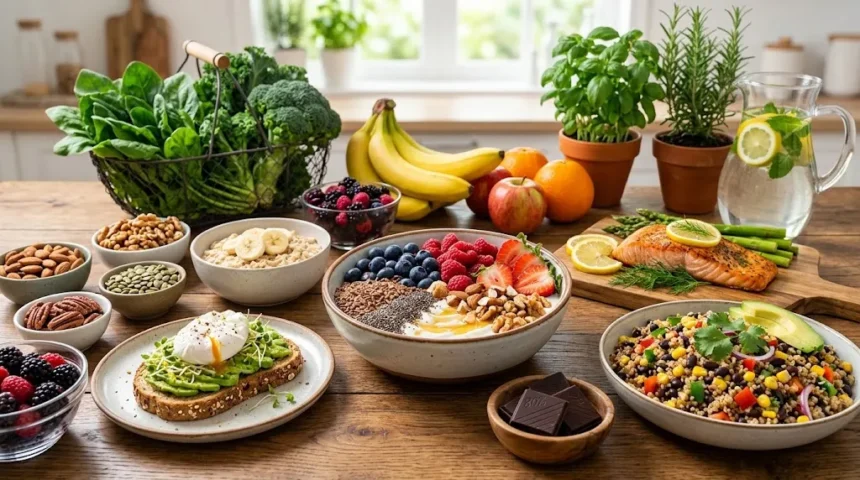
Feeling tired, distracted, or mentally sluggish during the day is not always solved by another cup of coffee or a sugary snack. Your meals can influence how steadily your body receives energy and whether hunger interrupts concentration. Choosing foods that provide protein, fiber, complex carbohydrates, healthy fats, vitamins, minerals, and adequate fluids can support more consistent physical and mental performance.
The best foods for energy and better focus are generally nutritious everyday ingredients rather than special powders or heavily marketed energy products. Oats, eggs, yogurt, fruit, whole grains, nuts, seeds, fish, vegetables, beans, and other minimally processed foods can all contribute. How you combine these foods matters because balanced meals are usually more satisfying than relying on one nutrient alone.
Food also cannot fix every reason you may feel exhausted or unable to concentrate. Poor sleep, dehydration, stress, medication effects, iron deficiency, thyroid problems, and other health conditions can contribute to fatigue. This guide focuses on practical nutrition strategies that can support normal energy and concentration while helping you build a balanced eating pattern that is realistic enough to maintain.
How Food Affects Energy and Concentration
Your body obtains energy from carbohydrates, fats, and protein, although each nutrient performs different roles. Carbohydrates are an important fuel source, while fats provide concentrated energy and protein supports tissues and other biological processes. Meals containing a mixture of nutrients can provide a steadier eating experience than foods made mainly from rapidly digested sugar.
The brain also depends on a consistent supply of energy and adequate nutrition to function normally. Vitamins, minerals, essential fats, amino acids, and fluids all support processes involved in attention and mental performance. However, eating one supposedly brain-boosting food cannot instantly transform concentration if your overall diet, sleep, or stress levels are poor.
Meal composition can influence how hungry and alert you feel throughout the day. Protein and fiber may help meals remain satisfying longer, while highly refined snacks can sometimes leave you hungry again quickly. Building balanced meals is therefore a more useful strategy for sustained energy than chasing individual foods that promise immediate mental sharpness.
Build Balanced Meals for Steadier Energy
A balanced meal usually includes a source of protein, a fiber-rich carbohydrate, vegetables or fruit, and some healthy fat when appropriate. This combination provides different nutrients while helping the meal feel more substantial. Chicken with brown rice and vegetables, for example, offers a different energy profile from eating plain refined crackers or a sugary drink.
Protein can come from eggs, fish, poultry, yogurt, beans, lentils, tofu, or other foods. Whole grains, potatoes, fruit, and legumes can provide carbohydrates, while nuts, seeds, avocado, and olive oil contribute healthy fats. Combining these ingredients can make it easier to stay comfortable and focused between meals without constantly searching for snacks.
You do not need to build every plate according to an exact formula. Some meals will naturally contain more carbohydrates or protein depending on your activity and appetite. Looking at your overall eating pattern across the day is more practical than trying to make every meal nutritionally identical.
Oats Provide Fiber-Rich Morning Energy
Oats are a practical carbohydrate source that also provides soluble fiber and several micronutrients. Their fiber content can make oatmeal more satisfying than many highly refined breakfast products. Pairing oats with protein and healthy fats can create a balanced breakfast that supports morning energy without requiring complicated preparation.
You can prepare oats with milk, soy milk, yogurt, or water, then add fruit, nuts, seeds, or nut butter. Berries provide color and fiber, while banana adds natural sweetness and carbohydrates. Adding Greek yogurt or milk increases protein, helping transform plain oatmeal into a more complete meal.
Overnight oats can be especially helpful when busy mornings make breakfast difficult. Preparing them the night before reduces decisions and makes nutritious food readily available. A convenient breakfast is often more useful for sustained energy than an elaborate meal plan that you rarely have enough time to follow.
Eggs Offer Protein for a Satisfying Start
Eggs provide high-quality protein along with nutrients such as choline, selenium, and vitamin B12. They can be useful at breakfast because they are quick to prepare and pair easily with whole grains, vegetables, or fruit. Protein at the first meal of the day may also help make breakfast more satisfying.
An omelet with spinach, tomatoes, and whole-grain toast provides protein, vegetables, carbohydrates, and fiber in one meal. Boiled eggs can also be prepared ahead for particularly busy mornings. Pairing them with fruit or whole-grain crackers creates a simple combination that requires very little cooking during the day.
Eggs do not need to be eaten daily to support energy or focus. Rotating them with yogurt, tofu, beans, cottage cheese, or other protein sources provides greater variety. The broader goal is regularly including enough nourishing food rather than depending on one specific breakfast ingredient.
Greek Yogurt Combines Protein and Convenience
Greek yogurt can be an excellent choice when you want a high-protein breakfast or snack without cooking. It typically provides more protein than many conventional yogurts and can also contribute calcium. Pairing it with fruit, oats, nuts, or seeds creates a combination of protein, carbohydrates, fiber, and healthy fats.
Berries and banana work particularly well because they add carbohydrates and natural sweetness. Nuts or chia seeds can increase texture and healthy fat content, while oats can make the meal more substantial. This makes yogurt bowls easy to adjust based on whether you need a light snack or a larger breakfast.
If you avoid dairy, consider fortified plant-based alternatives and compare protein content carefully. Soy-based yogurts may provide more protein than some coconut or starch-based products. Choosing an option with enough protein can make the meal more satisfying and useful for maintaining steady energy.
Berries Add Fiber and Useful Carbohydrates
Berries such as strawberries, blueberries, raspberries, and blackberries provide carbohydrates, fiber, vitamin C, and colorful plant compounds. They can be included in breakfast, snacks, or desserts without requiring preparation beyond washing or thawing. Their combination of sweetness and fiber makes them an easy addition to many balanced meals.
Berries pair naturally with Greek yogurt, oatmeal, cottage cheese, or nuts. Combining them with protein helps create a more substantial meal than eating a small serving of fruit alone. Frozen berries are equally convenient for smoothies or oats and often cost less than fresh varieties outside their growing season.
You do not need berries specifically to maintain concentration or energy. Apples, oranges, mangoes, pears, and other fruits also provide carbohydrates, water, fiber, and micronutrients. Variety is more important than believing one particular fruit has unique powers for brain performance.
Bananas Are an Easy Source of Carbohydrates
Bananas are convenient, portable, and naturally rich in carbohydrates, making them useful when you need accessible food before work, study, or exercise. They also provide potassium and some fiber. Their soft texture and natural sweetness make them easy to combine with other foods rather than relying on highly processed energy snacks.
Pairing a banana with peanut butter, yogurt, or a handful of nuts adds protein and healthy fats. This combination can be more satisfying than eating the banana by itself when your next meal is several hours away. Bananas can also be blended into smoothies or sliced into oatmeal.
Athletes may find bananas particularly convenient before or after activity because they require no cooking and are easy to digest for many people. However, everyday energy still depends on total diet quality. A banana can contribute to good nutrition, but it cannot compensate for consistently inadequate meals or poor sleep.
Whole Grains Can Support Longer-Lasting Energy
Whole grains such as brown rice, quinoa, barley, oats, bulgur, and whole wheat provide carbohydrates alongside fiber and micronutrients. Their fiber content can make them more filling than many refined grain products. Including whole grains regularly can help create meals that support both physical activity and mental concentration.
A grain bowl with quinoa, vegetables, beans, and avocado combines carbohydrates, protein, fiber, and healthy fats. Brown rice paired with fish and vegetables can provide another balanced option. These meals illustrate how sustained energy often comes from food combinations rather than a single ingredient marketed as an energy booster.
Refined grains can still fit into a healthy diet, especially in cultural or familiar dishes. You do not need to replace white rice, pasta, or bread completely. Simply choosing higher-fiber grain options more often can gradually improve dietary quality without creating unnecessarily restrictive rules.
Nuts and Seeds Provide Healthy Fats and Protein
Nuts and seeds contain healthy fats, protein, fiber, magnesium, and other micronutrients. Almonds, walnuts, peanuts, pistachios, pumpkin seeds, chia seeds, and sunflower seeds can all fit into meals or snacks. Their nutrient density makes relatively small portions satisfying, which is useful during long work or study periods.
Pairing nuts with fruit creates a balanced snack containing carbohydrates, protein, fat, and fiber. Seeds can be sprinkled over oatmeal, yogurt, salads, or grain bowls. Nut butter can also be spread on whole-grain toast or paired with banana when you need something quick but more substantial than fruit alone.
Because nuts and seeds are energy-dense, very large portions are usually unnecessary. A moderate serving can provide plenty of satisfaction and flavor. Eating them alongside other food groups rather than treating them as the main component of every meal creates better overall balance.
Fatty Fish Supports Overall Brain Nutrition
Fatty fish such as salmon, sardines, trout, and mackerel provide protein along with omega-3 fatty acids. These fats are important components of normal cell membranes, including those in the nervous system. Fish also supplies nutrients such as vitamin B12, selenium, and iodine depending on the species.
A meal containing salmon, whole grains, and vegetables provides a combination of protein, healthy fats, carbohydrates, and micronutrients. Canned sardines or salmon can offer a more affordable and convenient alternative to fresh seafood. These products can be added to sandwiches, salads, pasta, or grain bowls.
Fish should be viewed as part of a nutritious dietary pattern rather than as an instant concentration enhancer. You do not need to eat it every day, and people who avoid seafood can build healthy diets using other protein and fat sources. Variety remains one of the most useful principles for overall nutrition.
Leafy Greens Add Important Micronutrients
Spinach, kale, collard greens, lettuce, and other leafy vegetables provide folate, vitamin K, carotenoids, fiber, and additional micronutrients. Including greens regularly can improve the overall nutrient density of your diet. They are also versatile enough to work in breakfast, lunch, dinner, soups, smoothies, and side dishes.
Add spinach to scrambled eggs, mix greens into soups, or serve them alongside whole grains and protein. Cooked greens often shrink considerably, making them easier to include in larger amounts. Frozen spinach can be particularly convenient because it stores well and requires little preparation for cooked dishes.
No vegetable can directly guarantee better focus, but nutrient-rich foods help support overall health. Eating greens alongside a variety of colorful vegetables is more useful than consuming huge amounts of one type. A diverse plate can provide a broader combination of vitamins, minerals, and plant compounds.
Beans and Lentils Combine Protein and Fiber
Beans and lentils provide plant protein, complex carbohydrates, fiber, iron, folate, potassium, and other nutrients. Their combination of protein and fiber makes them particularly useful for meals designed to keep you satisfied. They are also inexpensive and can be incorporated into many cuisines without requiring specialty ingredients.
Lentil curry with rice and vegetables, chickpeas in a salad, or black beans in a grain bowl can all create balanced meals. Canned beans offer convenience, while dried legumes usually provide excellent value. Preparing a larger batch can give you several meals without needing to cook from scratch each day.
If you do not currently eat many legumes, increase your intake gradually because their fiber may initially cause gas or bloating. Drinking enough fluid and starting with smaller portions can help. Once they become familiar, legumes can be one of the most practical foods for steady everyday energy.
Dark Chocolate Can Fit in Moderation
Dark chocolate can be an enjoyable food that provides carbohydrates, fat, and plant compounds, while also containing small amounts of caffeine and theobromine. Some people find a small portion enjoyable during work or study. However, it should not be treated as a medical or performance-enhancing food for concentration.
Pairing a small amount of dark chocolate with nuts or fruit can create a more balanced snack. This approach provides additional fiber, protein, or healthy fats while allowing you to enjoy something sweet. It can also be more satisfying than eating a large amount of candy when you mainly want a small dessert.
Chocolate products vary considerably in sugar and cocoa content, so choose based on taste rather than chasing a particular percentage as a health rule. Enjoyment matters too. A nutritious diet can comfortably include foods that are eaten partly for pleasure rather than purely for their nutrient profile.
Hydrating Foods and Water Support Mental Performance
Dehydration can contribute to fatigue, headaches, and difficulty concentrating, making hydration an important part of everyday energy. Water is a simple default beverage, but your exact needs depend on activity, climate, diet, body size, and health circumstances. Regular drinking throughout the day is generally more practical than consuming huge amounts at once.
Fruit, vegetables, soups, yogurt, and other moisture-rich foods also contribute to hydration. Watermelon, oranges, cucumber, strawberries, and tomatoes provide water alongside useful nutrients. Including these foods can be particularly helpful during warm weather or when you are physically active.
Do not use water as a substitute for food when you are genuinely hungry. Hydration supports normal function, but it does not provide the same nutrients and energy as a balanced meal. Paying attention to both thirst and hunger helps you respond more appropriately to what your body actually needs.
Coffee and Tea Can Provide a Temporary Alertness Boost
Coffee and tea contain caffeine, which can temporarily improve alertness and reduce feelings of sleepiness for many adults. This makes them popular during work, study, and early mornings. Moderate intake can fit into a healthy diet, but caffeine does not replace adequate sleep or sufficient nutrition.
Individual sensitivity varies considerably. Some people tolerate coffee easily, while others experience anxiety, digestive discomfort, palpitations, or sleep disruption. Drinking caffeine too late in the day can also interfere with nighttime rest, creating a cycle in which poor sleep leads to greater reliance on stimulants the following day.
Sweetened coffees and energy-style drinks can contain large amounts of sugar or added ingredients. You do not have to drink coffee black, but being aware of what is added can help maintain balance. For lasting energy, caffeine works best as an optional beverage rather than the foundation of your daily routine.
Iron and B-Vitamin Foods Matter for Normal Energy
Iron is essential for producing hemoglobin, which transports oxygen through the blood. Low iron levels can contribute to fatigue, particularly in people with increased requirements or blood loss. Meat, shellfish, beans, lentils, fortified cereals, tofu, and certain leafy vegetables can all contribute iron to the diet.
B vitamins also participate in normal energy metabolism, although taking extra amounts does not automatically create more energy when your needs are already met. Eggs, dairy products, whole grains, legumes, meat, fish, and fortified foods can provide different B vitamins. Eating a varied diet is generally more useful than chasing isolated nutrient supplements.
Persistent fatigue deserves attention because nutritional deficiencies are only one possible explanation. Poor sleep, stress, thyroid conditions, medication effects, and other medical issues can also contribute. If tiredness is ongoing, severe, or unexplained, identifying the underlying cause is more useful than repeatedly experimenting with energy products.
Choose Snacks That Combine Protein and Fiber
A good snack can help maintain energy when there is a long gap between meals. Combining protein and fiber is particularly useful because the mixture can provide satisfaction and nutritional variety. Greek yogurt with berries, apples with nut butter, or hummus with vegetables are practical combinations that require little preparation.
Boiled eggs with whole-grain crackers, roasted chickpeas, edamame, or cottage cheese with fruit are additional options. These snacks can provide more lasting nourishment than foods consisting mainly of refined sugar. Keeping several choices available also reduces the likelihood of reaching for whatever is closest when hunger suddenly becomes strong.
Snacks are not mandatory if your regular meals already keep you satisfied. Eat them when they genuinely support your appetite, schedule, or activity. A flexible approach helps snacks serve your nutritional needs rather than turning them into another rule you feel obligated to follow.
Reduce Foods That Frequently Cause Energy Crashes
Foods and drinks high in rapidly absorbed sugar can provide quick energy but may not keep you satisfied for very long. Sugary beverages, candy, sweet pastries, and some highly refined snacks can still fit occasionally, but relying on them repeatedly may create an uneven eating pattern throughout the day.
You can make sweet foods more balanced by pairing them with protein or fiber. A cookie alongside yogurt or chocolate with nuts can provide more satisfaction than eating refined carbohydrates alone. This approach allows enjoyment while reducing the need to label every sugary food as completely forbidden.
Skipping meals can also contribute to low energy and intense hunger later. Maintaining a regular eating pattern that works with your schedule may help you feel more consistent. Balanced meals, adequate hydration, sleep, and sensible caffeine use usually provide a stronger foundation than repeatedly reacting to fatigue with sugar.
Be Cautious With Quick-Fix Alertness Products
Products marketed for instant energy or alertness can seem appealing when you are exhausted, but temporary stimulation is different from proper nourishment. Energy shots, excessive caffeine, and other stimulants may make you feel more awake without addressing why you are tired. Repeated dependence can also interfere with sleep and make the underlying cycle worse.
Some people also encounter unconventional alertness products such as smelling salts, which produce a brief intense sensory response rather than supplying actual dietary energy. They should not be confused with food, hydration, rest, or treatment for persistent fatigue. Understanding the difference helps prevent quick sensations from being mistaken for improved health.
If you frequently feel unable to function without stimulants, examine sleep, meal timing, hydration, stress, and overall health rather than simply increasing stimulation. Persistent exhaustion can sometimes indicate a medical issue. Sustainable energy comes from supporting the underlying needs of your body instead of repeatedly masking fatigue.
Build an Energy-Supporting Eating Routine
Consistency makes nutritious eating much easier. Keeping oats, eggs, yogurt, fruit, whole grains, beans, nuts, vegetables, and simple protein foods available gives you reliable options when hunger develops. A practical kitchen setup reduces dependence on convenience products that may provide quick calories without much lasting satisfaction.
Planning several basic meals can also remove decision fatigue. You might rotate oatmeal, eggs, and yogurt for breakfast, then use grain bowls, soups, sandwiches, or leftovers later in the day. Repeating nutritious meals is perfectly acceptable when your broader weekly diet still includes enough variety.
Pay attention to how your meals affect your own energy and concentration. If breakfast leaves you hungry quickly, add protein or fiber. If large lunches make you uncomfortable, adjust portions or meal composition rather than assuming one universal eating pattern should work equally well for everyone.
Conclusion
The best foods for energy and better focus are generally balanced, nutrient-rich foods rather than quick stimulants. Oats, eggs, yogurt, fruit, whole grains, nuts, fish, vegetables, beans, and lentils can provide carbohydrates, protein, fiber, healthy fats, vitamins, and minerals that support normal physical and mental function.
You do not need to eat every recommended food each day. Focus instead on building balanced meals, staying hydrated, eating regularly enough for your needs, and choosing satisfying snacks when appropriate. These habits can help create steadier energy without requiring extreme diets or expensive products marketed as instant performance boosters.
Remember that persistent fatigue or difficulty concentrating can have causes beyond nutrition. Sleep, stress, medications, deficiencies, and medical conditions may all play a role. Healthy food is an important foundation, but ongoing or severe symptoms deserve appropriate attention rather than being managed only by adding more caffeine or “energy” products.
FAQs
What foods give you the most lasting energy?
Foods combining complex carbohydrates, protein, fiber, and healthy fats tend to be more satisfying. Oats with yogurt, whole grains with beans, or fruit with nuts are practical examples of balanced energy-supporting meals.
What should I eat when I need better focus?
Choose balanced foods such as eggs, yogurt, oats, whole grains, fruit, nuts, fish, or legumes. Staying hydrated and eating enough overall can also help prevent hunger and dehydration from interfering with concentration.
Is coffee good for energy and concentration?
Coffee can temporarily improve alertness because it contains caffeine. However, excessive intake can disrupt sleep or cause anxiety, so it works best in moderation alongside adequate food, hydration, and rest.
What foods help prevent an afternoon energy crash?
A balanced lunch containing protein, vegetables, fiber-rich carbohydrates, and healthy fats may help. If needed, choose a snack such as yogurt with fruit, nuts, eggs, hummus, or roasted chickpeas.
Can vitamins give me more energy?
Vitamins support normal metabolism, but taking extra amounts usually does not create additional energy when your nutritional needs are already met. Persistent fatigue may require evaluation for sleep, dietary, or medical causes.