

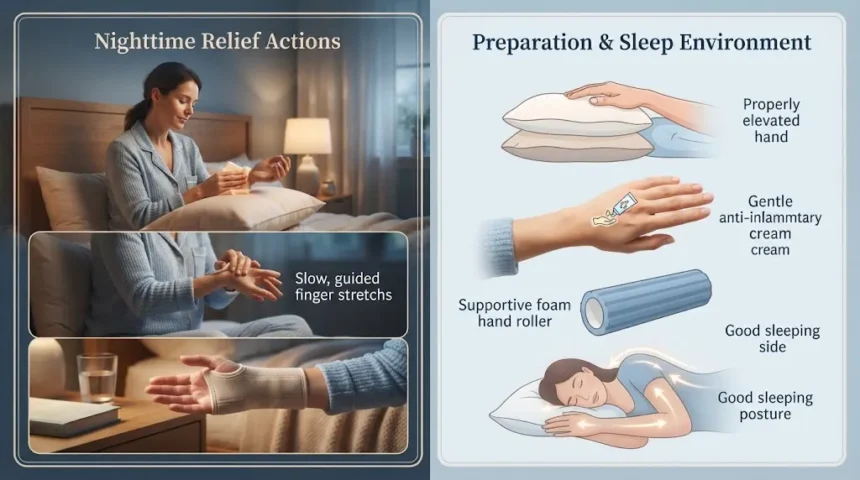
Hand pain can become more noticeable at night because there are fewer distractions and the hand may remain in one position for long periods. Sleeping with the wrist bent, resting your head on your arm, or compressing nerves can increase discomfort. Swelling related to arthritis or repetitive use may also become more noticeable once you settle down.
Nerve-related conditions can be especially troublesome during sleep. Carpal tunnel syndrome, for example, may cause tingling, numbness, burning, or aching in the thumb and nearby fingers when the wrist remains flexed. Other nerve problems involving the neck, elbow, or forearm can also produce symptoms that travel into the hand and become worse in certain sleeping positions.
Nighttime pain may also follow a day of heavy typing, gripping, lifting, gardening, gaming, or manual work. Muscles, tendons, and joints that have been repeatedly stressed can become irritated later in the day. Identifying whether your symptoms involve aching, stiffness, numbness, swelling, or sharp pain can help you choose more appropriate relief strategies.
Adjust Your Sleeping Position to Reduce Pressure
Changing how you position your hands and wrists during sleep is one of the simplest ways to reduce nighttime discomfort. Try keeping the wrist in a comfortable neutral position rather than bending it sharply forward or backward. Avoid placing your hand underneath your pillow, head, or body because prolonged pressure can aggravate sensitive joints and nerves.
Side sleepers should be especially careful not to trap an arm beneath the chest or shoulder. A small pillow can support the forearm and keep the wrist from collapsing into an awkward angle. If both hands hurt, sleeping on your back with your arms relaxed beside you may reduce unnecessary compression and make it easier to maintain neutral wrist alignment.
Your neck and shoulder position also matters because nerves traveling into the hand begin higher in the body. An unsupportive pillow may place the neck in an uncomfortable position and contribute to arm or hand symptoms in some people. Adjust your pillow so your neck feels supported rather than sharply tilted, and notice whether hand symptoms change with different positions.
Consider a Night Wrist Splint for Numbness or Tingling
A wrist splint can be useful when nighttime hand symptoms are associated with carpal tunnel syndrome or repeated wrist bending. The goal is usually to keep the wrist closer to neutral while you sleep, reducing pressure on the median nerve. A simple nighttime brace can prevent unconscious wrist flexion without requiring you to actively control your position.
The splint should feel supportive rather than painfully tight. Straps that compress the wrist excessively may increase discomfort or interfere with circulation, so loosen them if you notice increasing numbness, color changes, or swelling. Your fingers should remain free to move unless a healthcare professional has recommended a different type of brace for a specific injury.
A splint is not appropriate for every cause of hand pain. Arthritis, tendon injuries, fractures, or nerve problems coming from the neck may need different treatment. If wearing a brace consistently makes symptoms worse or provides no benefit after a reasonable trial, seek professional advice instead of simply tightening the splint or wearing it for longer periods.
Use Heat or Cold Based on Your Symptoms
Gentle warmth can be helpful when your hands feel stiff, tight, or achy before bed. A warm compress or warm water soak may relax surrounding muscles and make finger movement feel easier. Keep the temperature comfortably warm rather than hot, especially if you have reduced sensation that could make it difficult to notice excessive heat.
Cold may feel better when the hand is swollen or irritated after repetitive activity. Wrap a cold pack in a towel and apply it for a short period rather than placing ice directly against the skin. Cold can temporarily reduce pain and swelling, but leaving it on too long may make stiffness more noticeable in some people.
There is no universal rule saying everyone should use heat or everyone should use ice. Pay attention to how your symptoms respond and choose the option that provides comfortable temporary relief. Neither method addresses the underlying cause, so persistent nighttime pain still deserves evaluation when home strategies repeatedly provide only brief improvement.
Try Gentle Hand and Wrist Movements Before Bed
Gentle movement before sleep can reduce stiffness and help you notice which motions are comfortable. Slowly open and close your hand several times without forcing a tight fist. You can also move the wrist gently up, down, and from side to side within a comfortable range, keeping the movements slow and controlled.
Finger tendon-gliding exercises may also be useful for some people with stiffness or certain overuse problems. These movements involve changing the fingers through several hand positions rather than repeatedly squeezing a resistance tool. Avoid aggressive stretching if it creates sharp pain, stronger tingling, or increased symptoms that continue after you stop exercising.
More stretching is not always better. Nerve irritation can sometimes worsen when a person forcefully stretches the wrist or fingers because they assume tightness is the main problem. Keep nighttime mobility brief and easy, and consider getting guidance from a physical or occupational therapist if you are unsure which movements fit your symptoms.
Reduce Repetitive Hand Strain During the Day
Nighttime discomfort often reflects what happened to your hands throughout the day. Repetitive typing, phone use, gripping tools, lifting weights, crafting, or manual labor can irritate tendons and joints when performed for long periods without breaks. Changing daytime workload may therefore reduce nighttime symptoms more effectively than treating the hand only immediately before bed.
Take short breaks from repetitive movements and vary your tasks whenever possible. Keep commonly used objects within easy reach so you are not repeatedly twisting the wrist into awkward positions. If you work at a keyboard, adjust your chair, desk, and input devices so your wrists remain relatively neutral instead of constantly resting in a sharply extended position.
Grip pressure also matters. Many people hold phones, tools, pens, or computer mice more tightly than necessary, creating unnecessary muscle tension throughout the forearm and hand. Practice using the lightest grip that still gives you control, and pay attention to whether relaxing your hands during the day reduces aching or tightness by bedtime.
Relieve Arthritis-Related Hand Pain at Night
Arthritis can cause aching, stiffness, swelling, and tenderness that becomes particularly noticeable at night or early in the morning. Osteoarthritis commonly affects finger joints and the base of the thumb, while inflammatory forms of arthritis may involve multiple joints. Warmth, gentle movement, and supportive positioning can sometimes make sleep more comfortable during mild symptom periods.
People with arthritis may also benefit from avoiding prolonged gripping immediately before bed. Activities such as opening tight jars, using heavy tools, or holding a phone for long periods can aggravate sensitive joints. Adaptive equipment with larger handles may reduce strain by allowing you to complete everyday tasks without requiring as much force through painful fingers and thumbs.
Persistent swelling or recurring attacks of intense joint pain should be medically assessed. Different forms of arthritis require different treatment, and joint inflammation can affect areas beyond the hands. Conditions involving uric acid, for example, may cause severe attacks in other joints such as ankle gout, making accurate diagnosis important before assuming all joint pain has the same cause.
What to Do About Tingling and Numb Hands at Night
Tingling or numbness suggests that a nerve may be involved rather than the problem being limited to muscles or joints. Carpal tunnel syndrome often affects the thumb, index, middle, and part of the ring finger. Symptoms may wake you from sleep and sometimes improve temporarily after shaking or changing the position of the hand.
Numbness involving the little finger and part of the ring finger may point toward irritation of the ulnar nerve, which can be compressed around the elbow. Sleeping with the elbow tightly bent for long periods may worsen these symptoms. Try keeping the elbow in a more relaxed position and avoid resting it against hard surfaces throughout the evening.
Nerve symptoms can also originate from the neck or shoulder region. If tingling travels down the arm, is associated with neck pain, or affects grip strength, professional assessment may help identify the source. Persistent weakness, loss of coordination, or continuously numb fingers should not be managed indefinitely with stretching or nighttime braces alone.
Over-the-Counter Pain Relief and Topical Options
Over-the-counter pain medication may provide temporary relief for some types of hand pain. Options can include acetaminophen or anti-inflammatory medicines depending on your health history and the likely cause of symptoms. However, these medications are not appropriate for everyone, especially people with certain kidney, stomach, liver, heart, or bleeding-related conditions.
Topical pain-relief products may be another option for localized joint or muscle discomfort. Some topical anti-inflammatory products can reduce exposure to medication elsewhere in the body compared with oral medicines, although they still have precautions. Follow the label carefully and avoid applying products to damaged skin or using more than the recommended amount.
Medication should support an overall treatment plan rather than becoming the only strategy. If you need pain medicine almost every night to sleep comfortably, the underlying problem deserves evaluation. A healthcare professional can help determine whether the symptoms are coming from arthritis, tendon irritation, nerve compression, injury, or another condition requiring more targeted care.
When Hand Pain at Night Needs Medical Attention
Occasional mild hand discomfort after unusual activity may improve with rest and simple adjustments. Persistent pain that wakes you repeatedly, gradually worsens, or interferes with daily activities should be assessed. Recurring numbness, dropping objects, reduced grip strength, or difficulty performing fine movements may indicate nerve or joint problems that need more than home treatment.
Seek prompt medical attention after a significant injury if the hand looks deformed, becomes extremely swollen, or cannot move normally. Sudden severe pain accompanied by redness, unusual warmth, fever, or rapidly increasing swelling can also require urgent assessment. These symptoms may indicate infection, fracture, serious inflammation, or another condition that should not be treated as routine overuse.
Immediate evaluation is particularly important if hand or arm weakness appears suddenly alongside facial drooping, speech difficulty, dizziness, or other neurological symptoms. Those signs can represent a medical emergency. Similarly, severe swelling with circulation changes, such as blue or very pale fingers, should be evaluated quickly rather than waiting to see whether nighttime pain improves.
Build a Simple Nighttime Hand Pain Routine
Start your evening routine by reducing irritating activities during the hour before bed. Put down heavy tools, limit prolonged phone gripping, and take a break from repetitive keyboard or gaming movements when possible. Give your hands time to settle before sleep instead of moving directly from several hours of demanding activity into a position where they remain still overnight.
Next, use whichever gentle relief method best matches your symptoms. This might include a warm compress for stiffness, a short cold application for swelling, several comfortable mobility exercises, or a neutral wrist splint when nerve compression has been identified. Keep the routine simple enough that you can follow it consistently without turning bedtime into a complicated rehabilitation session.
Finally, track how your hands feel when you wake up. Notice which fingers are affected, whether symptoms involve numbness or joint pain, and whether changing sleep position makes a difference. Keeping a short symptom record for several days can help you recognize patterns and give a healthcare professional more useful information if the problem continues.
Conclusion
Relieving hand pain at night starts with understanding what type of discomfort you are experiencing. Aching joints, numb fingers, tendon irritation, and nerve compression can all become worse during sleep, but they may respond to different strategies. Neutral wrist positioning, better sleep posture, gentle movement, and reducing repetitive daytime strain are practical places to begin.
Heat can help some people with stiffness, while cold may be more comfortable for temporary swelling or irritation. A wrist splint may help certain nerve-related symptoms, especially when wrist bending is the trigger. Whatever approach you choose, avoid forcing painful stretches or relying indefinitely on medication without understanding why the pain keeps returning.
Nighttime hand pain should gradually become easier to manage when the underlying cause is addressed appropriately. If symptoms repeatedly wake you, cause weakness, produce persistent numbness, or continue despite simple changes, seek professional assessment. Early evaluation can help identify nerve compression, arthritis, tendon problems, or other conditions before they interfere more significantly with sleep and daily function.
FAQs
Why do my hands hurt more at night?
Hand pain may feel worse because joints remain still, wrists bend during sleep, or nerves become compressed. Daytime overuse and inflammation can also make discomfort more noticeable once you rest.
What sleeping position is best for hand pain?
Keep your wrist as neutral as possible and avoid sleeping directly on your hand or arm. Supporting the forearm with a pillow may also reduce pressure and uncomfortable wrist bending.
Should I use heat or ice for nighttime hand pain?
Heat may help stiffness and aching, while cold can temporarily reduce swelling or irritation. Choose the option that feels comfortable and avoid extreme temperatures or prolonged application.
Can carpal tunnel cause hand pain only at night?
Yes, carpal tunnel symptoms are often especially noticeable at night. Wrist flexion during sleep can increase pressure on the median nerve, causing tingling, numbness, burning, or aching.
When should I worry about hand pain at night?
Seek medical advice if pain is persistent, worsening, or accompanied by weakness, ongoing numbness, swelling, or loss of hand function. Sudden neurological symptoms or severe injury require urgent evaluation.