

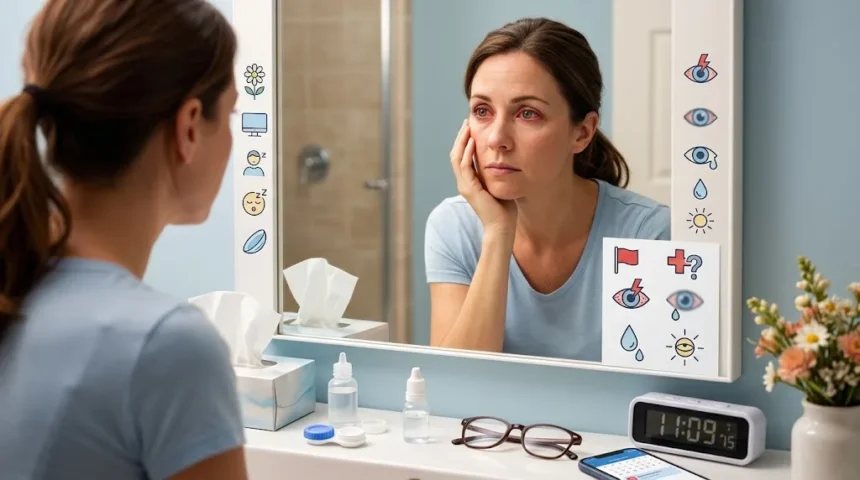
Why Are My Eyes Red? 10 Causes & When to Worry
Red eyes are extremely common and can happen for many reasons, ranging from simple dryness or lack of sleep to infections, allergies, injuries, or more serious eye problems. The redness usually develops when tiny blood vessels on the surface of the eye become enlarged or irritated, making the white part of the eye appear pink or red. Sometimes both eyes are affected, while other conditions cause redness in only one eye. Additional symptoms such as itching, burning, discharge, pain, blurred vision, or sensitivity to light can provide important clues about the cause. Most cases are mild, but certain combinations of symptoms require prompt medical attention.
The appearance of red eyes alone does not reveal the diagnosis because several conditions can look similar at first. Allergies and viral conjunctivitis, for example, can both cause watery red eyes, while dry eye disease can produce burning and redness that resembles irritation from smoke or screens. A bright red patch caused by a small broken blood vessel may look dramatic despite being relatively harmless. In contrast, severe eye pain with redness and vision changes can indicate a potentially sight-threatening problem. Looking at the pattern of symptoms, recent exposures, contact lens use, injuries, and general health can help determine whether home care is reasonable or professional evaluation is needed.
If your eyes are mildly red after a long day at a computer, poor sleep, or exposure to wind, the problem may improve with rest and simple supportive care. However, sudden severe redness should not automatically be treated with over-the-counter drops without understanding what may be happening. Eye problems can progress quickly, and some conditions are difficult to distinguish without an examination. This guide explains 10 common causes of red eyes, including dryness, allergies, conjunctivitis, contact lens irritation, broken blood vessels, and more serious conditions. It also explains what symptoms should make you worry, when to see an eye professional, and what you can safely do in the meantime.
Why Do Eyes Become Red?
The visible white surface of the eye is covered by a thin transparent membrane called the conjunctiva. Beneath this membrane are many small blood vessels that normally are not especially noticeable. When the eye becomes irritated, inflamed, dry, infected, or injured, these vessels can widen and become more visible. The result is the familiar pink or red appearance commonly described as bloodshot eyes. Redness may involve the entire white portion of the eye or only one area. The pattern itself can sometimes provide useful information, although it should always be considered together with symptoms such as pain, discharge, itching, and changes in vision.
Many everyday exposures can temporarily irritate the surface of the eye. Smoke, dust, wind, air conditioning, chlorine, cosmetics, pollution, and prolonged screen use can all contribute. The surface of the eye depends on a stable tear film to remain comfortable and clear. When that tear film becomes disrupted, friction increases and inflammatory signals can develop. This can produce redness, burning, a gritty feeling, or excessive watering. In mild cases, removing the trigger and allowing the eye surface to recover may be enough. Persistent redness, however, suggests that something more than a brief environmental exposure may be involved.
The number of affected eyes can also offer clues. Allergies, dry eye disease, and viral infections frequently affect both eyes, although one eye may become red before the other. An injury, foreign object, or localized infection may initially involve only one eye. A sharply defined red patch on one side of the white part of the eye may represent a subconjunctival hemorrhage rather than general inflammation. However, these patterns are not absolute. People should avoid diagnosing an eye problem solely from whether redness is one-sided or bilateral because several conditions can overlap.
Associated symptoms often matter more than the degree of redness itself. Itching strongly suggests allergy, while thick discharge and eyelids sticking together may occur with some bacterial infections. Burning and a sandy sensation often accompany dry eyes. Significant pain, intense sensitivity to light, halos around lights, severe headache, nausea, or reduced vision deserve more concern. Contact lens wear is another important factor because it increases the risk of certain corneal infections. A red eye in a contact lens wearer should therefore be evaluated more cautiously than mild redness after ordinary fatigue.
Duration also helps determine how seriously redness should be taken. A mild irritated eye that improves within several hours after removing the trigger is different from redness that persists for several days or repeatedly returns. Chronic redness can be associated with ongoing dryness, eyelid inflammation, allergies, or other eye surface disorders. Sudden redness accompanied by significant symptoms may require faster assessment. If you are unsure about the cause, an optometrist, ophthalmologist, or other healthcare professional can examine the eye directly. Because vision is valuable and some conditions worsen quickly, persistent or painful redness should not simply be ignored.
Causes 1 and 2: Dry Eyes and Eye Strain
Dry eye disease is one of the most common explanations for red, irritated eyes. The condition occurs when the eyes do not produce enough tears or when tears evaporate too quickly to maintain a healthy surface. Tears contain more than water; they include oil, mucus, proteins, and other substances that help lubricate and protect the eye. When this protective film becomes unstable, the surface can become inflamed and uncomfortable. Symptoms may include redness, burning, stinging, grittiness, fluctuating blurry vision, or the sensation that something is stuck in the eye. Surprisingly, dry eyes can also cause excessive watering because irritation triggers reflex tear production.
Several factors can contribute to dry eyes. Aging, hormonal changes, certain medications, autoimmune conditions, eyelid problems, contact lens wear, and dry environmental conditions may all play a role. Air conditioning, fans, heating systems, and windy weather can accelerate tear evaporation. Some people develop dryness because oil-producing glands in the eyelids do not function properly. Others simply produce fewer tears than needed. Because causes differ, treatment may range from simple artificial tears and environmental changes to prescription medications or procedures recommended by an eye professional. Persistent dryness should be evaluated when symptoms interfere with daily life or repeatedly cause redness.
Eye strain is another frequent cause of temporary redness, particularly among people who spend many hours looking at computers, phones, or tablets. Digital screens do not directly damage the eyes in the way some people fear, but prolonged concentration can reduce blinking frequency. Less blinking allows the tear film to evaporate more quickly, which can worsen dryness and surface irritation. Eye strain may also cause tired eyes, headaches, difficulty focusing, neck discomfort, and temporary blurry vision. The redness associated with screen use is often related to dryness rather than the screen light itself. Taking regular visual breaks can therefore be more useful than simply changing display brightness.
A practical strategy for screen-related discomfort is the 20-20-20 approach, in which you periodically look away from the screen at something farther away for a short period. Conscious blinking can also help restore the tear film. Positioning the screen slightly below eye level may reduce the amount of exposed eye surface and slow evaporation. Avoid having a fan or air-conditioning vent blow directly toward the face. Lubricating eye drops may provide temporary relief when dryness is mild. If you need drops frequently, choosing preservative-free artificial tears may be worth discussing with an eye professional, particularly if standard drops cause additional irritation.
Redness attributed to dryness or strain should generally improve with rest, lubrication, and reduction of irritating exposures. If one eye becomes intensely red, painful, sensitive to light, or significantly blurred, simple eye strain is less likely to explain the symptoms. The same is true when redness continues despite several days of basic care. People with autoimmune disease, previous eye surgery, or ongoing medication use may have additional reasons for dryness that deserve professional assessment. Chronic dry eye is treatable, but identifying the underlying cause often leads to more effective management than repeatedly using redness-relief drops without addressing why the eyes are irritated.
Causes 3 and 4: Allergies and Conjunctivitis
Eye allergies, also called allergic conjunctivitis, commonly cause red, watery, and intensely itchy eyes. Triggers can include pollen, dust mites, mold, pet dander, and other environmental allergens. When the immune system reacts to these substances, chemicals such as histamine contribute to inflammation of the conjunctiva. Both eyes are often affected, and symptoms may occur alongside sneezing, nasal congestion, or a runny nose. Itching is particularly useful as a clue because it is more strongly associated with allergies than many other causes of red eyes. Rubbing the eyes may provide brief relief but can actually increase irritation and swelling.
Managing allergic red eyes usually begins with reducing exposure to the trigger when possible. Keeping windows closed during high-pollen periods, washing the face after outdoor exposure, changing clothing, and avoiding rubbing can help some people. Cool compresses may reduce itching and swelling. Artificial tears can also wash allergens from the eye surface. Antihistamine or mast-cell-stabilizing eye drops may be useful depending on the situation, but people who need treatment frequently should discuss options with a healthcare professional. Persistent allergies can sometimes coexist with dry eye disease, making symptoms more complicated than simple seasonal irritation.
Conjunctivitis, commonly called pink eye, is another major cause of eye redness. It describes inflammation of the conjunctiva and can result from viruses, bacteria, allergies, irritants, or other causes. Viral conjunctivitis often produces watery discharge and may occur with a respiratory infection, sore throat, or exposure to someone with similar symptoms. One eye may become red first before the condition spreads to the second eye. Viral cases are often highly contagious. Because many viruses cannot be treated with antibiotics, supportive care and good hygiene are commonly important while the infection runs its course.
Bacterial conjunctivitis can cause more noticeable mucus or pus-like discharge, and the eyelids may stick together after sleeping. However, discharge appearance alone cannot always distinguish bacterial from viral infection. Some cases of bacterial conjunctivitis resolve without complications, while others require antibiotic drops depending on severity, age, risk factors, and clinical findings. People should avoid using leftover antibiotic eye drops from a previous illness because the medication may be inappropriate, expired, or contaminated. Sharing drops between household members is also unsafe. If redness is significant or accompanied by pain, light sensitivity, or reduced vision, an examination is more important than trying to identify the infection at home.
Good hygiene matters when infectious conjunctivitis is suspected. Wash hands frequently, avoid touching or rubbing the eyes, and do not share towels, pillowcases, cosmetics, or eye-care products. Contact lenses should generally be removed until the problem has been evaluated and fully resolved. Eye makeup used around the time of infection may also need to be replaced to reduce the chance of contamination. Viral and bacterial conjunctivitis can spread through close contact and contaminated surfaces, although contagiousness varies by cause. If symptoms rapidly worsen, involve a very young infant, or include significant pain or vision changes, seek medical advice promptly rather than assuming it is ordinary pink eye.
Causes 5 and 6: Contact Lens Irritation and Eyelid Inflammation
Contact lenses can cause red eyes when they are worn too long, fit poorly, dry out, or are not cleaned appropriately. Lenses sit directly on the tear film and corneal surface, so anything that disrupts oxygen, moisture, or hygiene can contribute to irritation. Mild problems may produce burning, dryness, redness, or the sensation of a foreign object. Wearing lenses while sleeping can substantially increase the risk of complications unless a specific lens has been prescribed for overnight wear. Even then, risks remain higher than with routine daytime use. A red eye while wearing contacts should never be dismissed automatically as simple tiredness.
Corneal infection is the major concern in contact lens wearers with a painful red eye. Bacteria and other microorganisms can infect the clear front surface of the eye, potentially causing keratitis or a corneal ulcer. Symptoms can include significant pain, light sensitivity, tearing, discharge, worsening redness, and decreased vision. Some infections can progress quickly and threaten sight if treatment is delayed. Anyone who wears contact lenses and develops substantial pain, sensitivity to light, or visual changes should remove the lenses and seek prompt professional evaluation. Do not put the same lenses back in until an eye professional confirms that doing so is safe.
Proper contact lens hygiene reduces risk. Wash and dry your hands before touching lenses, use approved cleaning solutions, and replace lenses and storage cases according to professional instructions. Never clean lenses with tap water or saliva. Swimming or showering while wearing lenses can expose the eye to microorganisms found in water, including organisms capable of causing serious corneal infection. Daily disposable lenses reduce some cleaning-related risks because they are discarded after use, but good hand hygiene still matters. People who repeatedly experience redness with lenses may need a different material, wearing schedule, or treatment for underlying dryness.
Blepharitis is another common cause of red or irritated eyes and involves inflammation along the edges of the eyelids. Symptoms may include burning, itching, crusting around the eyelashes, flaky debris, watery eyes, and a gritty sensation. The eyelid margins themselves may look red or swollen. Blepharitis is often associated with dysfunction of the meibomian glands, which produce the oily component of tears. When these glands do not work properly, tears evaporate more quickly and dry eye symptoms can develop. This explains why eyelid inflammation and dry eye frequently occur together rather than as completely separate problems.
Warm compresses and careful eyelid hygiene can help certain forms of blepharitis, although persistent cases may require additional treatment. An eye professional may recommend specific cleaning techniques, lubricating drops, prescription medications, or treatment for associated skin conditions such as rosacea. Avoid aggressively scrubbing the eyelids or using harsh soaps near the eye. Contact lens use and eye makeup may need to be reduced during active inflammation. Blepharitis tends to be a recurring condition for some people, so long-term management may be more realistic than expecting one treatment to eliminate it permanently. Recurrent red eyes with crusty eyelids deserve an assessment rather than repeated use of whitening drops.
Causes 7 and 8: Subconjunctival Hemorrhage and Eye Injury
A subconjunctival hemorrhage occurs when a tiny blood vessel breaks underneath the transparent conjunctiva covering the white part of the eye. Instead of general pinkness, it usually produces a sharply defined bright red patch that can look dramatic. Despite its appearance, a simple subconjunctival hemorrhage often causes no pain, discharge, or vision loss. Many people first notice it after looking in a mirror because the eye otherwise feels normal. The trapped blood is gradually absorbed by the body, much like a bruise under the skin. Color may change as it heals before the white appearance returns.
These small hemorrhages can occur after coughing, sneezing, straining, vomiting, heavy lifting, or rubbing the eye. Sometimes they happen without an obvious reason. High blood pressure, blood-thinning medications, bleeding disorders, and certain medical conditions can increase the likelihood in some people. A single painless episode is often harmless, but repeated episodes deserve medical evaluation, particularly if bruising or bleeding occurs elsewhere. Checking blood pressure may also be sensible when subconjunctival hemorrhages recur. If the redness followed significant trauma, however, it should not automatically be assumed to be an uncomplicated broken vessel.
Eye injuries can cause redness through several mechanisms. A scratch on the cornea, chemical exposure, blunt trauma, or foreign object can irritate or damage eye tissues. Corneal abrasions often produce significant pain, tearing, blinking discomfort, and sensitivity to light because the cornea contains many sensitive nerve endings. A person may feel as though sand is trapped in the eye even after the original object is gone. Injuries from metal fragments, tools, glass, or high-speed particles require particular caution because material may penetrate deeper than expected. Do not rely solely on how small an object appears.
Chemical exposure requires immediate action. If a cleaning product, industrial chemical, or other irritating substance gets into the eye, begin flushing the eye with plenty of clean water or appropriate eyewash immediately. Continue rinsing while arranging emergency medical advice rather than waiting to determine whether symptoms improve. Contact lenses should be removed if they can be taken out easily during flushing. Certain chemicals can damage the cornea rapidly, making immediate irrigation more important than searching for a specific antidote. After flushing, medical evaluation may still be necessary depending on the substance and symptoms.
Do not attempt to remove an object that appears embedded in the eye or protruding from it. Avoid rubbing the eye after trauma because pressure could worsen an injury. Significant pain, reduced vision, irregular pupil shape, bleeding inside the eye, severe swelling, or inability to open the eye are reasons for urgent assessment. Even apparently minor injuries can become complicated by infection or corneal damage. Protective eyewear is one of the most effective preventive measures when working with tools, chemicals, machinery, or activities that generate flying particles. Eye injuries are easier to prevent than to treat after vision has been affected.
Causes 9 and 10: Corneal Problems and Acute Glaucoma
Keratitis is inflammation of the cornea, the clear dome covering the front of the eye. It can result from infection, injury, contact lens complications, ultraviolet exposure, or other causes. Unlike mild conjunctivitis, corneal inflammation commonly produces noticeable pain, sensitivity to light, tearing, and reduced or hazy vision. The eye may appear intensely red, particularly around the cornea. Infectious keratitis can be caused by bacteria, viruses, fungi, or other microorganisms. Because corneal damage can leave permanent scarring, suspected keratitis deserves prompt evaluation. Contact lens wearers are particularly important to assess quickly when these symptoms appear.
A corneal ulcer is an open sore on the cornea and is generally treated as an urgent eye problem. It may develop when infection damages the surface, although injuries and underlying eye disease can also contribute. Symptoms can include severe pain, redness, excessive tearing, discharge, light sensitivity, and blurred vision. Occasionally a small white or gray spot may be visible on the cornea, but lack of a visible spot does not exclude the condition. Treatment depends on the cause and may involve intensive prescription eye drops. Delaying evaluation can allow infection to spread deeper into the cornea and increase the risk of permanent visual impairment.
Acute angle-closure glaucoma is a much less common cause of red eyes but is particularly important because it can threaten vision rapidly. It occurs when drainage of fluid inside the eye becomes suddenly blocked, causing eye pressure to rise sharply. Symptoms may include severe eye pain, headache, blurred vision, halos around lights, nausea, vomiting, and a very red eye. The pupil may also appear unusual, although this should not be relied upon for diagnosis. The condition requires emergency treatment to lower eye pressure and prevent damage to the optic nerve. It is not something that can be managed safely with ordinary redness-relief drops.
People sometimes assume glaucoma is always a slow, symptomless condition because the common open-angle form usually develops gradually. Acute angle-closure glaucoma is different and can produce sudden dramatic symptoms. Certain people have naturally narrow drainage angles that increase susceptibility, although they may not know this until examined. Some medications can contribute to an attack in predisposed individuals. Sudden severe eye pain with blurred vision, headache, nausea, or halos should therefore be treated as an urgent medical problem. Waiting overnight to see whether the redness clears could allow irreversible damage to develop.
Corneal disease and acute glaucoma illustrate why the intensity of associated symptoms matters so much when evaluating a red eye. Mild irritation without pain or vision loss often has a less dangerous explanation, while severe pain and visual disturbance demand greater caution. There are also other serious causes of red eyes, including inflammation inside the eye called uveitis or scleritis involving deeper tissues. These conditions usually require professional diagnosis and prescription treatment. If your symptoms do not fit a simple pattern or are getting worse rather than better, an eye examination is safer than repeatedly experimenting with over-the-counter products.
When Should You Worry About Red Eyes?
Severe eye pain is one of the most important reasons to seek urgent care for a red eye. Ordinary dryness, mild allergies, and uncomplicated conjunctivitis may feel uncomfortable, itchy, or gritty, but they typically do not cause intense deep pain. Severe pain can occur with corneal infection, acute glaucoma, uveitis, significant injury, and other serious conditions. Pain that wakes you from sleep, prevents you from opening the eye, or rapidly worsens should not be treated as routine irritation. If pain is combined with headache, nausea, or vomiting, emergency evaluation becomes especially important because acute pressure problems may be involved.
Any meaningful change in vision should also raise concern. Blurred vision that clears after blinking can occur with dry eyes, but persistent blurring, new loss of vision, a dark curtain, severe haziness, or difficulty seeing details deserves prompt assessment. Redness combined with sensitivity to light is another warning sign because it may suggest corneal or deeper eye inflammation. Do not drive yourself if your vision is significantly impaired. Emergency services or another safe form of transportation may be necessary depending on severity. Protecting vision often depends on receiving treatment before permanent tissue damage occurs.
Contact lens wearers should use a lower threshold for seeking professional care. A red eye with significant pain, discharge, light sensitivity, or blurred vision can represent a corneal infection that requires rapid treatment. Remove the lenses immediately and do not reuse them while symptoms continue. Taking the lens case and products to the appointment may sometimes help clinicians understand potential contamination. Do not attempt to treat a painful contact lens-related red eye solely with lubricating or redness-relieving drops. Because certain infections progress rapidly, waiting several days can make treatment more difficult.
Trauma and chemical exposures also require caution. Seek urgent assessment after a high-speed object strikes the eye, an object becomes embedded, vision changes after blunt trauma, or significant bleeding is visible. Chemical splashes should be flushed immediately and followed by medical advice rather than waiting for redness to become severe. Redness after recent eye surgery or an eye injection should also be discussed promptly with the treating team when accompanied by increasing pain, discharge, or vision changes. Post-procedure instructions may provide specific warning signs that should take priority over general advice.
Other reasons to contact a healthcare professional include redness that persists, repeatedly returns, or does not respond to basic supportive measures. Newborns and very young infants with red or draining eyes need particularly careful assessment because some infections can be serious. People with weakened immune systems may also require earlier evaluation. If redness is accompanied by fever, facial swelling, severe headache, neurological symptoms, or general illness, consider the broader medical picture rather than assuming the problem is confined to the eye. When symptoms are severe or vision is affected, prompt evaluation is the safest approach.
What Can You Do for Mild Red Eyes at Home?
For mild redness caused by dryness or environmental irritation, lubricating artificial tears can help restore moisture and wash away irritating particles. Preservative-free drops may be useful for people who need lubrication frequently. Resting the eyes, reducing prolonged screen use, blinking more often, and avoiding direct airflow can also improve symptoms. A cool compress over closed eyelids may feel soothing when redness is associated with allergies or general irritation. If one particular activity consistently triggers symptoms, reducing exposure can be more effective than repeatedly treating redness afterward. Mild irritation should generally begin improving once the trigger has been removed.
Avoid rubbing your eyes even when they itch. Rubbing can increase inflammation, damage tiny surface blood vessels, and transfer germs from the hands to the eyes. People with allergies may find a cool compress or appropriate allergy eye drops more helpful. Wash your hands before applying any eye product and avoid touching the bottle tip to the eyelashes or eye surface. Sharing eye drops is not recommended because contamination can spread infection. If you wear contact lenses, remove them when your eyes become unusually red or irritated and wait for complete recovery or professional guidance before resuming use.
Be cautious with drops advertised specifically to “get the red out.” Some contain medications that temporarily constrict surface blood vessels, making the eye look whiter without treating the underlying reason for irritation. Frequent use can sometimes lead to rebound redness when the effect wears off, encouraging repeated application. These drops can also mask symptoms that deserve assessment. Lubricating artificial tears are generally a different type of product and focus on improving the tear film rather than whitening the eye. If you rely on redness-relief drops regularly to make your eyes appear normal, an eye examination may help identify the actual cause.
Good hygiene can help when a mild infectious conjunctivitis is possible. Wash your hands frequently, avoid sharing towels or cosmetics, and clean discharge gently with a clean damp cloth. Avoid eye makeup until symptoms resolve, and consider replacing products that may have become contaminated. Do not put home remedies such as lemon juice, herbal extracts, honey mixtures, or other nonsterile substances directly into the eyes. The eye surface is sensitive and vulnerable to infection. Products intended for skin or food use are not automatically safe for ocular use, regardless of whether they are described as natural.
If home care does not produce improvement within a reasonable period, or symptoms begin worsening, seek professional advice. Mild redness should not gradually progress into increasing pain, stronger light sensitivity, thicker discharge, or worsening vision. Keeping track of when symptoms started and what exposures occurred can be useful at an appointment. Mention contact lens use, medications, allergies, recent illnesses, injuries, or eye procedures. Most red-eye problems are treatable, and many are minor, but the safest approach is to respond to warning signs rather than judging seriousness based solely on how red the eye looks.
Frequently Asked Questions About Red Eyes
Why are my eyes red but not painful?
Painless red eyes can occur with dryness, allergies, mild conjunctivitis, environmental irritation, or a subconjunctival hemorrhage. If redness persists, repeatedly returns, or is accompanied by discharge or vision changes, an eye examination can help determine the cause.
Why did one of my eyes suddenly turn red?
Sudden redness in one eye may result from irritation, infection, a broken surface blood vessel, an injury, or another eye condition. A sharply defined painless red patch is often a subconjunctival hemorrhage, while sudden redness with severe pain or blurred vision requires urgent assessment.
Can lack of sleep cause red eyes?
Yes. Poor sleep can contribute to eye dryness, irritation, and more noticeable surface blood vessels, particularly when combined with prolonged screen use. Rest, hydration, regular blinking, and lubricating drops may help if no concerning symptoms are present.
When is a red eye an emergency?
Seek urgent medical attention when redness occurs with severe eye pain, significant vision loss or persistent blurring, intense light sensitivity, major trauma, chemical exposure, severe headache with nausea, or symptoms suggesting a serious contact lens-related infection.
How long should red eyes last?
Duration depends on the cause, and mild irritation may improve within hours after the trigger is removed. Redness that continues for several days, keeps returning, or progressively worsens should be assessed, especially when accompanied by pain, discharge, light sensitivity, or changes in vision.