

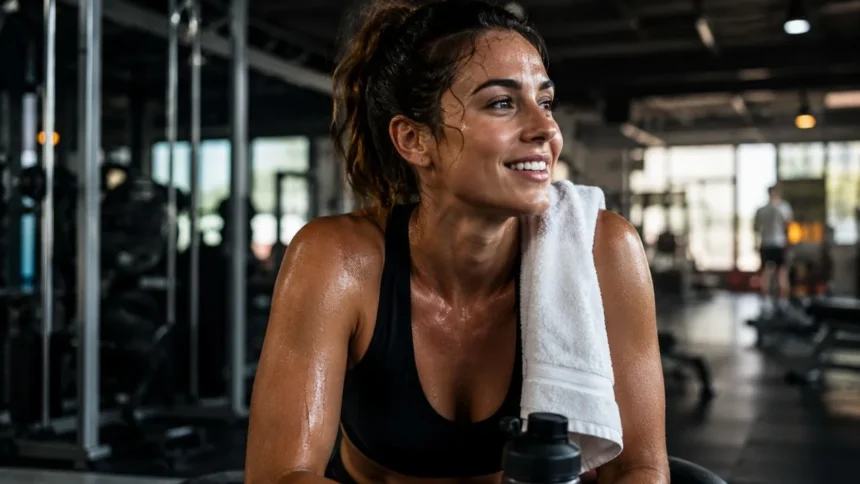
Sweating is often associated with an intense workout, so it is easy to assume that more sweat means more calories burned. After a hot exercise session, your clothes may be soaked and the number on the scale may be lower. However, most of that immediate weight change comes from lost water rather than reduced body fat.
Your body burns calories continuously to support breathing, circulation, digestion, movement and temperature control. Exercise raises energy expenditure because your muscles need fuel to perform physical work. Sweating usually happens alongside this process, but it is mainly a cooling response rather than the reason a meaningful number of calories are burned.
Two people completing the same workout may sweat very different amounts while using similar amounts of energy. Genetics, body size, fitness level, temperature, humidity, clothing and heat adaptation all affect sweat production. This makes perspiration an unreliable way to measure workout quality or calorie expenditure.
This guide explains the relationship between sweating, calories and weight loss. It also covers water weight, fat burning, saunas, sweat suits, exercise intensity, hydration and safe ways to increase daily energy expenditure without treating excessive perspiration as a fitness goal.
Quick Answer: Does Sweating Burn Calories?
Sweating itself does not burn a significant number of calories or directly remove body fat. It is a natural process that helps prevent overheating by releasing fluid onto the skin. When that fluid evaporates, heat moves away from the body and helps control internal temperature.
You may burn many calories during an activity that makes you sweat, but the physical movement is responsible for most of that energy use. Running, cycling, swimming, strength training and sports require your muscles to work. Sweat is simply one possible response to the heat that this work produces.
You can also sweat without performing meaningful exercise. Sitting in a hot room, spending time in a sauna, feeling anxious or wearing heavy clothing may cause strong perspiration. These situations can increase your heart rate slightly, but they do not recreate the calorie expenditure or health benefits of an active workout.
If your weight drops immediately after sweating, the difference mainly represents fluid loss. Drinking water replaces that fluid and usually brings the scale back towards its previous level. Long-term fat loss requires a sustained calorie deficit rather than temporary dehydration.
Why Does the Body Sweat?
Sweating helps the body regulate its internal temperature. When your brain detects rising heat, it signals sweat glands to release fluid onto the surface of your skin. The evaporation of this moisture removes heat and allows the body to cool more effectively.
Exercise produces heat because working muscles are not perfectly efficient. Some of the energy used during movement becomes mechanical work, while a substantial amount becomes heat. Sweating and increased blood flow to the skin help release that excess warmth.
Hot weather, humid conditions, fever, emotional stress and certain foods or medicines can also trigger perspiration. These situations show why sweating cannot be treated as proof of exercise intensity. The body may sweat heavily even when muscle activity and calorie expenditure remain relatively low.
Humidity can make sweating feel especially uncomfortable because the moisture evaporates more slowly. You may become soaked without cooling efficiently. This is one reason exercise in hot, humid conditions can feel harder and carry a greater risk of overheating.
How Does the Body Burn Calories?
A calorie is a unit used to measure energy. Your body needs energy every moment, including when you are resting or asleep. It uses calories to keep your heart beating, maintain body temperature, support brain activity, repair tissue and perform other essential functions.
Your resting metabolism accounts for a large portion of daily energy expenditure. Digestion also requires energy, while physical movement adds another variable amount. Walking, exercise, household work, standing and even small movements contribute to the total number of calories used during the day.
Exercise burns calories because muscles repeatedly contract and require energy. The amount depends on factors such as body size, exercise type, duration, intensity and efficiency. Longer or more demanding activities generally require more energy than shorter or easier sessions.
Sweating may occur as energy expenditure and heat production rise, but it is not the main calorie-burning mechanism. Measuring effort through distance, speed, resistance, duration, heart rate and gradual fitness progress is more useful than judging a workout by the amount of sweat produced.
Does More Sweat Mean More Calories Burned?
More sweat does not automatically mean that you burned more calories. Sweat volume is strongly affected by the environment. A moderate walk outdoors on a humid summer day may soak your clothes, while a demanding indoor workout in an air-conditioned room may produce much less visible perspiration.
People also have different natural sweat responses. One person may begin sweating during a warm-up, while another remains relatively dry until the workout becomes intense. These differences do not necessarily show that one person is fitter or burning significantly more energy.
Clothing can also change how much sweat remains on your body. Thick, tight or non-breathable clothing traps heat and moisture, making you feel sweatier. It may increase physical discomfort without meaningfully improving fat loss or the quality of the exercise session.
Sweat should therefore be viewed as a cooling response rather than a scorecard. A productive workout can leave you drenched, lightly damp or almost dry. What matters more is whether the activity challenges your body appropriately and supports your health or fitness goals.
Why Do You Weigh Less After Sweating?
Sweat contains mostly water along with sodium, chloride and smaller amounts of other substances. When you lose enough fluid during a workout, your body weight can temporarily decrease. This difference can be noticeable after long exercise, hot-weather activity or sauna exposure.
The lower reading does not mean that the equivalent amount of body fat has disappeared. Fat loss involves using stored energy over time, while sweat loss simply reduces the amount of fluid currently inside your body. The two processes should not be confused.
Once you drink water and eat normal meals, your body restores much of the lost fluid. Your scale weight may rise again within hours. This is a healthy recovery response rather than evidence that your workout or weight-loss plan has failed.
Athletes in weight-category sports sometimes manipulate water weight before weigh-ins, but rapid dehydration can be dangerous. It can reduce performance, impair concentration and increase the risk of heat illness. It should not be copied as a routine weight-loss strategy.
Water Weight vs Body-Fat Loss
Water weight can change rapidly because the body continuously adjusts fluid balance. Salt intake, carbohydrate intake, hormones, digestion, exercise and temperature can all influence the number on the scale. A change of fluid does not represent an equal change in stored fat.
Body-fat loss is slower because it requires an ongoing energy deficit. The body must repeatedly use more energy than it receives from food and drink. A balanced nutrition and activity plan creates this process gradually rather than forcing sudden changes through dehydration.
Carbohydrates are stored partly as glycogen in the muscles and liver. Glycogen holds water, so changes in carbohydrate intake and exercise can produce noticeable short-term weight fluctuations. This is one reason early weight loss during a strict diet may be faster than later progress.
Use weekly weight trends, waist measurements, clothing fit and fitness improvements to judge progress. A single weigh-in after sweating can be misleading. Consistent measurements taken under similar conditions provide a more accurate picture of long-term change.
Does Sweating Help You Lose Belly Fat?
Sweating does not specifically remove belly fat. Sweat glands release water onto the skin, but they do not pull fat from the tissue underneath. Wrapping the abdomen, wearing a sweat belt or applying a warming cream cannot selectively melt fat around the waist.
Abdominal fat is reduced through the same overall energy-balance process that affects fat stored elsewhere. Your body decides where it loses fat first based largely on genetics, hormones and individual biology. You cannot reliably control this order through local sweating.
Core exercises strengthen the abdominal muscles and can improve posture, stability and physical function. However, planks, sit-ups and crunches do not guarantee that the fat covering those muscles will disappear. They should be combined with full-body exercise and appropriate nutrition.
A realistic belly-fat plan includes regular aerobic activity, resistance training, daily movement, balanced portions, sufficient sleep and stress management. These habits may produce less dramatic sweating than a heated workout, but they are more important for lasting body-composition changes.
Does Sweating During Exercise Mean the Workout Is Effective?
Sweating can show that your body is dealing with heat, but it does not confirm that the workout is appropriate or productive. A workout should be judged by how it supports endurance, strength, mobility, skill, health or another clearly defined goal.
A gentle yoga class in a hot room may produce more sweat than heavy strength training in a cool gym. The strength session may still place greater demands on your muscles. Each activity can offer benefits, but perspiration alone cannot reveal which burned more calories.
Progressive improvement is a better sign of effective training. You might walk farther, lift more weight, complete extra repetitions, recover more quickly or maintain a faster pace. These changes show that your body is adapting to the exercise programme.
The best workout is not necessarily the one that leaves you exhausted. Training too intensely every day can increase injury risk and make consistency difficult. Effective exercise balances challenge with recovery and fits your health, experience and personal goals.
Do Fit People Sweat More?
Some physically fit people begin sweating earlier during exercise because their bodies have become more efficient at cooling. Regular training and heat adaptation can improve the sweating response, allowing heat to be released before body temperature rises excessively.
This does not mean that every person who sweats quickly is highly trained. Genetics, body size, hormones, anxiety, medicines and medical conditions can also affect perspiration. Sweat rate must be interpreted within the individual’s wider circumstances.
A trained athlete may produce more sweat while performing the same activity as a beginner, yet feel more comfortable and maintain a lower level of effort. Alternatively, a beginner may sweat heavily because the activity is challenging and their body is struggling with the heat.
Fitness should be evaluated through endurance, strength, mobility, recovery and health markers rather than perspiration. Sweating more or less than another person does not provide a complete assessment of physical condition.
Do Heavier People Sweat More?
People with larger bodies may produce more metabolic heat during movement because completing the same activity can require more energy. A larger body surface and greater insulation may also influence heat storage and the need for cooling through sweat.
However, body weight is only one factor. Two people of similar size may sweat differently because of genetics, fitness, hormones, clothing and environmental conditions. It is therefore inaccurate to assume that sweat volume directly reveals someone’s weight or health.
A heavier person may burn more calories than a lighter person while completing the same walking route because moving a larger mass requires more energy. That difference comes from physical work rather than from the additional sweat produced.
Exercise should be selected according to comfort, mobility and current fitness. Walking, cycling, swimming and resistance training can all support health without requiring extreme heat. A safe and consistent routine is more valuable than trying to maximise sweating.
Do Saunas Burn Calories?
Sitting in a sauna may slightly increase heart rate and energy use because the body is working to manage heat. However, this increase is much smaller than the calorie expenditure produced by active exercise. A sauna should not be treated as a substitute for physical activity.
The rapid weight reduction seen after a sauna session mainly comes from sweat loss. Once you replace the missing fluid, much of that weight returns. The sauna has not removed a meaningful amount of body fat during a short session.
Saunas may feel relaxing and can be part of some people’s recovery or wellness routine. Their value should be considered separately from fat loss. Claims that a brief sauna session burns the same calories as a demanding workout are often exaggerated.
Heat exposure can be risky for people with certain medical conditions or those who are dehydrated, pregnant, unwell or using alcohol. Leave immediately if you feel dizzy, weak, nauseated or confused, and seek medical advice when symptoms do not improve.
Does Hot Yoga Burn More Calories?
Hot yoga can increase sweating because the room temperature and humidity place additional heat stress on the body. You may feel that the class is more demanding, but the extra perspiration does not automatically mean substantially greater fat loss.
Calories burned during yoga depend on the style, movement, duration, pace, body size and individual effort. A vigorous flowing class generally requires more energy than a slow stretching session, regardless of how much either environment makes you sweat.
Heat may allow muscles to feel more flexible, which can encourage someone to move beyond a safe range. Warmth does not prevent strains or joint injuries. Technique, controlled movement and honest awareness of your limits remain important.
Drink appropriately before and after class and stop if you develop dizziness, headache, nausea or unusual weakness. Beginners may benefit from becoming comfortable with regular yoga before attempting sessions in a heated room.
Do Sweat Suits Help Burn Fat?
Sweat suits, plastic clothing and waist wraps trap heat close to the body. They cause greater perspiration and may create a rapid drop in scale weight. That reduction mainly represents water and does not provide evidence of increased fat burning.
The trapped heat can make exercise feel harder without allowing you to perform more useful work. You may need to slow down or end the workout early because of discomfort. This could reduce rather than improve the overall quality of the session.
Heavy sweating increases fluid and electrolyte losses. Wearing non-breathable clothing during intense exercise or hot weather can raise the risk of dehydration, heat exhaustion and heatstroke. The danger is not justified by a temporary change in scale weight.
Choose lightweight, breathable clothing suited to the temperature and activity. Exercise performance and consistency should be the priority. You do not need to prove that a workout was successful by leaving your clothes completely soaked.
Can Sweating Detox Your Body?
Sweating removes water, sodium and small amounts of other substances, but it is not the body’s main detoxification system. The liver and kidneys process and remove many waste products through chemical breakdown, urine and other normal functions.
Products that promise to pull toxins through the skin often use vague language without identifying the specific substance involved. A feeling of cleanliness or relaxation after heavy sweating does not prove that harmful materials were removed from the body.
Deliberately dehydrating yourself can place additional strain on normal body functions. Your kidneys need adequate fluid to regulate waste, minerals and water balance. Excessive heat does not improve these processes simply because it produces more perspiration.
Support your body by drinking appropriately, eating a balanced diet, limiting harmful substance exposure and following medical advice. Detox teas, sweat wraps and extreme sauna routines cannot replace evidence-based treatment for poisoning, illness or substance dependence.
How Many Calories Does Sweating Burn?
There is no useful standard number of calories burned per litre of sweat because perspiration is not a direct measure of energy expenditure. The same person may sweat very different amounts while performing identical exercise in cool and hot environments.
Producing and releasing sweat involves some biological work, but its direct calorie cost is small compared with the energy required for muscular movement. It would be misleading to count sweat as a separate fat-burning exercise.
Fitness watches and machines estimate calorie expenditure using information such as heart rate, body size, age, speed and duration. These figures can still be inaccurate, but they are generally more relevant than measuring the wetness of your clothing.
Focus on the activity rather than trying to calculate calories from perspiration. A brisk walk, run, cycle or resistance workout can support energy expenditure whether you finish drenched or only lightly sweaty.
What Actually Determines Calories Burned During Exercise?
Body weight influences energy use because moving a larger mass usually requires more work. Exercise type also matters. Running, swimming, cycling, rowing, climbing and resistance training place different demands on the muscles and cardiovascular system.
Intensity affects how quickly energy is required. Walking uphill usually burns more calories per minute than walking slowly on flat ground. Similarly, cycling against greater resistance requires more work than casually pedalling with very little resistance.
Duration is another major factor. A moderate activity performed for 45 minutes may use more total energy than an intense activity completed for five minutes. The best routine balances intensity and duration in a way that you can repeat safely.
Fitness and movement efficiency can also change calorie use. As you practise an activity, your body may perform it more efficiently. Progressive changes in speed, incline, distance or resistance help maintain an appropriate training challenge.
Best Exercises for Burning Calories
Brisk walking is one of the most accessible options for increasing energy expenditure. It requires little equipment, can be adjusted for different fitness levels and is easier to recover from than many high-impact workouts. Hills and a faster pace can increase the challenge.
Running and cycling can burn substantial energy because they involve continuous movement. Swimming and rowing also engage large muscle groups while building cardiovascular fitness. The best choice is one that suits your joints, preferences, environment and experience.
Strength training may not always produce the highest calorie reading during the session, but it helps maintain or build muscle. Preserving muscle is valuable during weight loss and supports strength, mobility, bone health and long-term physical function.
Sports, dance classes, hiking and active games can also contribute. Enjoyment matters because an activity performed consistently is more effective than a supposedly perfect workout that you quickly abandon.
Can You Burn Calories Without Sweating?
Yes, you burn calories even when you are not visibly sweating. Your resting metabolism requires energy throughout the day and night. Walking in cool weather, completing household tasks and performing light resistance work also use calories without always producing noticeable moisture.
Swimming is a good example because water removes heat from the body and washes sweat away. You may not feel sweaty even after a demanding session, but your muscles and cardiovascular system still performed significant work.
Cold-weather activities can also burn many calories while leaving your clothing relatively dry. The cooler environment helps release heat, reducing the amount of sweat required. The physical movement remains responsible for energy expenditure.
Do not dismiss a workout because you did not sweat. Assess your breathing, muscular effort, duration and performance instead. A dry shirt does not mean the session was useless.
How to Burn More Calories Safely
Increase activity gradually rather than jumping into an extreme programme. Add several minutes to your walks, use a slightly faster pace or include an extra training day when your body is recovering well. Small increases are easier to maintain and carry a lower injury risk.
Use progressive resistance during strength training. You can add weight, repetitions, sets or range of motion over time. Proper form should remain the priority, as lifting more weight with poor control can cause injury.
Increase daily movement outside structured workouts. Walk during telephone calls, use stairs, complete household tasks and take regular breaks from sitting. These activities can make a meaningful contribution when repeated throughout the week.
Avoid using excessive heat to make ordinary exercise feel harder. A hotter environment increases stress but does not guarantee better fitness results. Improve the actual workload through movement, resistance or duration while maintaining safe conditions.
How Exercise Supports Weight Loss
Exercise increases daily energy expenditure, which can help create the calorie deficit required for weight loss. It also improves cardiovascular fitness, strength, mobility, mood and sleep. These benefits remain valuable even when scale weight changes slowly.
Nutrition still has a major influence because it is possible to consume the calories used during a workout very quickly. Sugary drinks, large restaurant meals and frequent snacks can make a deficit difficult to maintain, even when someone exercises regularly.
Combining aerobic activity with strength training provides broad benefits. Cardio supports endurance and energy expenditure, while resistance training helps protect muscle. Daily walking adds movement without requiring intense recovery.
Weight loss should not depend on punishing workouts. A moderate routine that fits your life is more likely to produce lasting results. Consistency over months matters more than one extremely sweaty session.
How to Rehydrate After Sweating
Water is usually sufficient after a short or moderate workout, especially when you will soon eat a normal meal. Food can replace the sodium and other minerals lost through ordinary perspiration.
A sports drink or electrolyte product may be useful after prolonged exercise, heavy sweating or activity in high heat. The need depends on duration, sweat rate and access to food. More electrolytes are not automatically better for every session.
Drink gradually rather than consuming a very large amount at once. Continue monitoring thirst, urine frequency and how you feel. Pale yellow urine can be a practical general sign of hydration, although food, vitamins and medicines may change its colour.
People with kidney disease, heart failure or medical instructions to limit fluid or sodium need personalised guidance. Standard sports hydration advice may not be appropriate for them.
Signs of Dehydration After Heavy Sweating
Early dehydration symptoms can include thirst, dry mouth, headache, tiredness, dizziness and darker urine. You may also urinate less frequently or notice that exercise feels more difficult than expected.
As dehydration worsens, the heart may beat faster and concentration may decline. Muscle cramps, weakness and nausea can occur, particularly during prolonged activity in hot conditions.
Stop exercising, move to a cooler place and begin replacing fluid when symptoms appear. Loosen unnecessary clothing and allow the body to cool. Do not immediately restart the workout after a brief rest if you still feel unwell.
Severe confusion, fainting, inability to drink or very little urine requires urgent medical assessment. The person may need more treatment than oral fluids can provide.
Heat Exhaustion vs Normal Workout Sweating
Normal exercise sweating should occur while you remain mentally alert and able to control your movement. You may feel warm and tired, but symptoms should begin settling when you stop, cool down and drink appropriately.
Heat exhaustion can cause unusually heavy sweating, headache, dizziness, nausea, weakness and a rapid pulse. The skin may feel cool or clammy despite the hot environment. Continuing the activity can allow the condition to become more serious.
Move the person into shade or air conditioning, loosen clothing and cool them with damp cloths. Offer cool fluid only when they are fully awake and able to swallow safely.
Seek medical advice when symptoms worsen or do not begin improving. Vomiting, fainting or increasing confusion requires more urgent attention.
When Sweating May Be a Medical Concern
Some people sweat excessively without heat or physical activity. This may be hyperhidrosis, a condition in which the sweat glands produce more moisture than needed for cooling. It can affect the hands, feet, face, underarms or the entire body.
Sudden changes in perspiration can also be associated with fever, low blood sugar, thyroid problems, hormonal changes, infections, anxiety or medication effects. Sweating alone cannot identify the cause.
Arrange a medical appointment when sweating regularly interrupts sleep, damages your skin, affects daily activities or begins without an obvious explanation. Effective treatments may be available once the underlying pattern is understood.
Seek urgent help when sweating occurs with chest pain, severe shortness of breath, fainting, confusion or other serious symptoms. These signs should not be treated as a normal fitness response.
Common Myths About Sweating and Weight Loss
One myth is that sweat contains melted body fat. Sweat is primarily fluid and electrolytes released by glands in the skin. Fat must be broken down and used through metabolic processes rather than leaking out through pores.
Another myth is that the sweatiest person in a fitness class worked the hardest. Individual sweat responses vary too widely for this comparison. Effort should be judged against the person’s own fitness and performance.
A third myth is that exercising in heavy clothing accelerates fat loss. Extra layers mainly increase heat stress and water loss. They can make a workout more dangerous without producing a meaningful advantage.
Finally, sweating does not guarantee that a workout was healthy. Overheating, dehydration and exercising beyond your ability can produce plenty of perspiration. Safety and appropriate progression remain more important.
Final Answer: Does Sweating Burn Calories?
Sweating does not directly burn a meaningful number of calories. Its main purpose is to regulate body temperature by releasing fluid onto the skin so that heat can escape through evaporation.
Activities that make you sweat can burn calories because your muscles are performing work. Running, cycling, swimming, walking and strength training increase energy expenditure whether the environment makes you sweat heavily or only a little.
Weight lost immediately after perspiring is mainly water weight. It normally returns after you drink and restore normal fluid balance. This temporary change should not be confused with body-fat loss.
For healthy weight loss, focus on regular activity, balanced nutrition, strength training, sleep and sustainable portions. Use sweat as a reminder to manage hydration—not as proof that fat is disappearing.
Frequently Asked Questions
Does sweating help you lose weight?
Sweating can temporarily lower scale weight by reducing body fluid. This weight generally returns after rehydration and should not be confused with lasting fat loss.
Do you burn more calories when you sweat more?
Not necessarily. Temperature, humidity, clothing, genetics and fitness affect sweating, while calorie expenditure depends mainly on physical work, exercise intensity and duration.
Does sweating burn belly fat?
No, sweating does not target belly fat. Reducing abdominal fat requires overall fat loss through a sustainable calorie deficit, regular exercise and healthy lifestyle habits.
Does sitting in a sauna burn calories?
A sauna may slightly increase heart rate and energy use, but most immediate weight loss is water. It cannot replace aerobic exercise, strength training or appropriate nutrition.
Can you burn calories without sweating?
Yes. Your body burns calories at rest and during activities performed in cool environments. Swimming, walking and strength training can use energy even when you notice little sweat.