

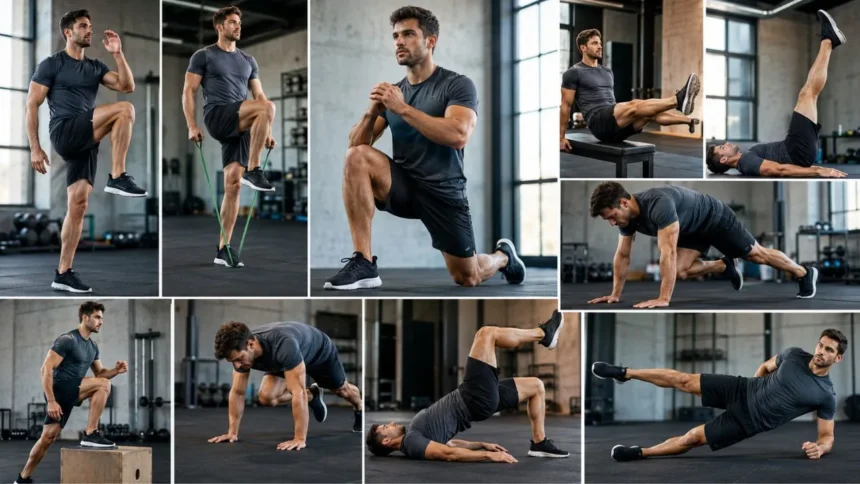
Strong hip flexors help you lift your knees, climb stairs, walk efficiently and move your legs forward while running. They also support many everyday movements, including getting into a car, stepping over an obstacle and rising from a low seat. When these muscles are weak, simple activities may feel slower, less stable or more tiring.
The hip flexors are often described as tight, especially among people who sit for long periods. However, a muscle can feel tight while also being weak or poorly controlled. Stretching may provide temporary relief, but strengthening can improve the muscle’s ability to manage movement and load.
The best hip flexor strengthening exercises use controlled knee lifting without excessive arching of the lower back. Beginners can start with seated marches and supported standing knee raises, while more experienced people can progress to resistance bands, step-ups and hanging knee raises. Exercise quality matters more than speed or heavy resistance.
This guide explains 10 hip flexor exercises for different fitness levels. It also covers technique, repetitions, progression and common mistakes. Stop and seek professional guidance if you have severe hip pain, a recent injury, difficulty bearing weight or symptoms that become worse during exercise.
What Are the Hip Flexor Muscles?
The hip flexors are a group of muscles located around the front of the hip. Their main function is hip flexion, which means bringing the thigh closer to the torso. They work whenever you lift your knee, bend at the hip or move your leg forward.
The iliopsoas is one of the most important hip flexor groups. It consists mainly of the iliacus and psoas major, which work together to lift the thigh. The psoas also connects the spine to the upper leg, giving it an important role in movement and trunk control.
Other muscles contribute to hip flexion, including the rectus femoris, sartorius and tensor fasciae latae. The rectus femoris is also part of the quadriceps and helps straighten the knee. This is why some hip flexor movements also engage the front of the thigh.
These muscles do not work alone. The abdominal muscles, glutes, lower-back muscles and other hip muscles help control the pelvis while the leg moves. Effective hip flexor training should therefore include good core control and balanced lower-body strength.
Why Should You Strengthen Your Hip Flexors?
Strong hip flexors help move the legs efficiently during walking and running. They allow you to lift the foot away from the ground and move the thigh forward for the next step. Weakness may contribute to shorter steps, reduced speed or difficulty lifting the knee.
Hip flexor strength also supports stair climbing and movements requiring single-leg balance. Each time you step upward, the working hip must lift the leg before the foot reaches the next step. Improving this movement can make stairs and hills feel easier.
Athletes use the hip flexors during sprinting, kicking, cycling and rapid changes of direction. Stronger muscles can help control repeated knee drives and high-speed leg movement. Training should still be combined with glute, hamstring and core exercises for balanced performance.
jjj may also improve confidence during everyday movement. However, exercise is not a guaranteed treatment for every type of hip pain. Pain can come from the joint, tendons, muscles, lower back or surrounding structures, so persistent symptoms may require an individual assessment.
How to Prepare for Hip Flexor Exercises
Begin with five to ten minutes of light movement to warm the muscles and joints. Walking, gentle cycling or marching slowly in place can increase circulation without creating heavy fatigue. A warm-up is especially useful before resisted or advanced hip flexor exercises.
Wear comfortable clothing that allows your hips and knees to move freely. Use a stable chair, wall or railing when an exercise requires balance support. The surface should be clear of objects that could cause you to trip.
During each exercise, keep your breathing natural and your trunk controlled. Gently tighten your abdominal muscles to limit excessive movement through the lower back. Avoid holding your breath or forcing your spine into an uncomfortable position.
Start with a small range of motion and light resistance. You can increase repetitions, range or resistance after the movement feels controlled. Progressing too quickly may shift the work away from the hip flexors or irritate sensitive tissues.
1. Seated Hip Flexor March
The seated hip flexor march is a beginner-friendly exercise that teaches you to lift one thigh without leaning backwards. It requires no equipment and can be performed on a stable chair. It is useful for people rebuilding strength or learning to control hip flexion.
Sit upright near the front of the chair with both feet flat on the floor. Keep your chest lifted and gently tighten your abdominal muscles. Raise one knee several inches without allowing your upper body to rock or twist.
Pause briefly at the top before returning the foot slowly to the floor. Repeat with the opposite leg. The movement should come from the hip rather than from pushing through the supporting foot or swinging the upper body.
Begin with two sets of 8 to 12 repetitions on each side. To make the exercise harder, hold the knee slightly higher or pause for three to five seconds. A resistance band around the thighs can be added after the basic version becomes easy.
2. Standing Knee Raise
The standing knee raise strengthens the hip flexors while challenging balance and posture. It resembles the knee-lifting action used during walking and stair climbing. A chair or wall can provide support if you feel unstable.
Stand tall with your feet approximately hip-width apart. Place one hand on a stable surface and shift your weight onto one leg. Lift the opposite knee towards hip height while keeping your pelvis level.
Lower the foot slowly instead of allowing it to drop. Keep the supporting knee soft and avoid leaning backwards to lift the leg higher. A smaller controlled knee raise is more effective than a large movement created through momentum.
Complete two or three sets of 8 to 15 repetitions per side. Progress by reducing hand support or adding a light ankle weight. Stop the movement before your lower back begins to arch or your standing hip moves sideways.
3. Supine March
The supine march strengthens the hip flexors while teaching the core to control the pelvis. Because you are lying down, balance is removed from the movement. This makes it a useful step between seated exercises and more demanding standing variations.
Lie on your back with your knees bent and feet flat on the floor. Keep your spine in a comfortable neutral position and gently tighten your abdominal muscles. Imagine preparing your stomach for a light push without holding your breath.
Lift one foot from the floor until the hip and knee are close to a right angle. Pause briefly, then return the foot slowly without letting the pelvis tilt. Alternate legs while keeping your trunk as still as possible.
Start with two sets of 8 to 10 repetitions on each side. Make the exercise harder by holding each knee up for several seconds. You can later progress to a tabletop march with both feet beginning off the floor.
4. Straight-Leg Raise
The straight-leg raise challenges the hip flexors and quadriceps while the knee remains extended. It requires more effort than a bent-knee march because the long leg creates greater resistance. It should be performed slowly to reduce strain on the lower back.
Lie on your back with one knee bent and its foot planted on the floor. Keep the other leg straight and tighten the thigh muscle of that leg. Gently engage your abdomen before beginning the lift.
Raise the straight leg until it reaches approximately the height of the opposite knee. Pause without locking your breath, then lower it slowly to the floor. Keep your pelvis steady and avoid lifting the leg higher by arching your back.
Perform two sets of 8 to 12 repetitions on each side. Reduce the lifting height if the exercise causes discomfort in the back or front of the hip. An ankle weight can be introduced only after you can complete the unweighted version with good control.
5. Resistance-Band Hip Flexor March
The resistance-band hip flexor march directly challenges the muscles used to lift the knee. It can be performed standing with support or as part of a more athletic marching drill. The band should provide resistance without pulling your body out of position.
Secure a resistance band around a low, stable anchor and place the other end around one foot. Stand facing away from the anchor so the band pulls the working leg backwards. Hold a chair or wall if additional balance is needed.
Drive the working knee forward and upward while keeping your torso tall. Pause near hip height, then return the foot slowly against the band’s pull. Avoid allowing the band to snap your leg backwards.
Complete two or three sets of 8 to 12 controlled repetitions per side. Begin with a light band and increase resistance gradually. More resistance is not useful when it causes leaning, twisting or shortened movement.
6. Banded Psoas March
The banded psoas march is an advanced floor exercise that combines hip flexor strength with core stability. A resistance band is placed around both feet, creating tension as one leg extends and the other remains lifted. The exercise requires good control of the lower back.
Lie on your back and place a small loop band around the middle of both feet. Lift both knees towards your torso so the hips and knees are bent. Gently brace your abdomen and keep your pelvis stable.
Hold one knee in place while slowly extending the opposite leg away from your body. Bring the extended leg back before switching sides. The band makes the raised knee work to resist being pulled away.
Perform two or three sets of 6 to 10 repetitions per side. Shorten the leg extension if your back lifts or arches. People who cannot maintain control should continue with the unbanded supine march before attempting this variation.
7. Step-Up With Knee Drive
The step-up with knee drive strengthens the hip flexors, glutes and thighs in a functional movement. It closely resembles climbing stairs while adding a controlled knee lift at the top. Use a low step until your balance and technique improve.
Place one foot fully on a stable step. Push through that foot to raise your body while bringing the opposite knee towards your chest. Stand tall at the top without leaning backwards or pushing excessively from the lower foot.
Pause briefly during the knee drive, then place the lifted foot back on the floor. Step down carefully and repeat using the same leading leg. Keep the working knee aligned with the foot rather than allowing it to collapse inward.
Begin with two sets of 6 to 10 repetitions per side. Increase the step height only when the lower height feels controlled. You can also hold light weights, but stability and knee alignment should remain the priority.
8. Reverse Lunge to Knee Drive
The reverse lunge to knee drive combines lower-body strength, hip flexor activity and balance. The hip flexors work strongly when the rear leg moves forward into the knee drive. This exercise is best for people who can already perform a comfortable reverse lunge.
Stand tall and step one foot backwards into a controlled lunge. Bend both knees within a pain-free range while keeping the front foot flat. Your torso can lean slightly forward, but the spine should remain controlled.
Push through the front leg and bring the rear knee forward towards hip height. Pause briefly before stepping backwards into the next repetition. Move slowly enough to maintain balance without using the arms to swing the knee upward.
Complete two or three sets of 6 to 10 repetitions on each side. Hold a wall or chair if needed, or practise the reverse lunge without the knee drive first. Adding dumbbells is an advanced progression rather than a starting requirement.
9. Slow Mountain Climber
The slow mountain climber strengthens the hip flexors while engaging the shoulders and abdominal muscles. Performing it slowly removes momentum and makes the knee drive more deliberate. It is more suitable for strength development than rapidly bouncing between legs.
Begin in a high plank with your hands under your shoulders and your body forming a long line. Gently brace your core and press the floor away. Keep your hips from dropping towards the floor.
Bring one knee towards your chest without rounding your back excessively. Pause briefly, return the foot to the starting position and repeat with the other leg. Keep your pelvis as level as possible throughout the movement.
Start with two sets of 6 to 10 repetitions on each side. Perform the exercise with your hands on a bench or wall if a floor plank is too demanding. Stop when fatigue causes your back to sag or your shoulders to lose stability.
10. Hanging Knee Raise
The hanging knee raise is an advanced hip flexor and core exercise. It requires grip strength, shoulder control and the ability to prevent excessive swinging. Beginners should master floor-based marches before attempting it.
Hang from a secure pull-up bar with your arms extended and shoulders active. Keep your legs together and gently tighten your abdomen. Begin from a still position rather than using a swinging start.
Bend your knees and raise them towards your chest in a controlled movement. Pause before lowering them slowly until your body becomes still again. Avoid kicking the legs or using repeated momentum to complete the repetitions.
Start with two sets of 5 to 8 repetitions. A captain’s chair station can provide more support because the forearms and back rest against pads. Stop if you feel shoulder pain, grip failure or pinching in the front of the hip.
How Many Hip Flexor Exercises Should You Do?
You do not need to perform all 10 exercises in one workout. Choose two or three options that match your current ability. A beginner might combine seated marches, supine marches and supported standing knee raises.
Most people can train the hip flexors two or three times per week. Leave recovery time between challenging sessions, especially when using resistance bands or advanced exercises. The muscles should feel worked but not sharply painful.
Begin with two sets per exercise and stay within a comfortable repetition range. You can add a third set when the movement remains controlled from beginning to end. Increasing one variable at a time makes it easier to judge how your body responds.
The ideal programme depends on your health, training history and reason for exercising. A runner, an older adult and someone recovering from an injury may need different movements. A physiotherapist can provide an individual plan when weakness or pain affects daily activity.
A Beginner Hip Flexor Strengthening Routine
Begin the session with five minutes of walking or gentle stationary cycling. Follow the warm-up with seated hip flexor marches for two sets of 10 repetitions per side. Keep the movement small enough to maintain an upright posture.
Next, perform two sets of 8 supine marches on each side. Focus on keeping the pelvis stable while each foot leaves the floor. Rest for approximately 30 to 60 seconds between sets.
Finish with supported standing knee raises for two sets of 10 repetitions on each leg. Use a chair for balance and lower every repetition slowly. This routine can be completed without specialised equipment.
Perform the routine two or three times weekly for several weeks. When it becomes easy, add repetitions or introduce light resistance. Progress to step-up knee drives or banded marches after you can control the beginner movements without pain.
An Intermediate Hip Flexor Workout
An intermediate session can begin with straight-leg raises for two or three sets of 10 repetitions per leg. Move slowly and keep your abdomen engaged. The lower back should remain comfortable throughout each set.
Follow with banded standing hip flexor marches for three sets of 8 to 12 repetitions. Select a band that becomes challenging near the end without changing your posture. Use light hand support when necessary.
Add step-ups with knee drives for two sets of 8 repetitions per side. Choose a stable step and pause at the top. This exercise adds balance and functional lower-body strength to the session.
Finish with slow mountain climbers for two sets of 8 repetitions per leg. Rest between exercises and avoid rushing to make the workout feel harder. Strong, controlled repetitions produce better results than fast movements performed with poor alignment.
How to Progress Hip Flexor Exercises Safely
Progression can come from adding repetitions, resistance, range of motion or balance demands. You do not need to increase everything at once. Choose one change and observe how your hips respond over the next several sessions.
Add repetitions until you reach the top of the recommended range with good technique. You can then introduce a slightly stronger resistance band or light ankle weight. Return to fewer repetitions when resistance increases.
You can also progress from supported to unsupported exercises. A standing knee raise becomes more difficult when you use less hand support, while a basic march becomes harder when performed on one leg or with resistance.
Do not progress when the current version causes pain, pinching or loss of control. Challenging muscle fatigue is expected, but joint pain and worsening symptoms are not. Staying with an easier exercise is more productive than forcing an unsuitable progression.
Common Hip Flexor Exercise Mistakes
One common mistake is arching the lower back while lifting the knee. This often happens when the exercise is too difficult or the hip is lifted too high. Gently bracing the abdomen and reducing the range can improve control.
Another mistake is using momentum. Swinging the leg may allow more repetitions, but it reduces the time the hip flexors spend working under control. Pause briefly at the top and lower the leg more slowly.
Some people increase resistance before mastering the basic movement. A heavy band can pull the pelvis forward or cause the torso to lean backwards. Use enough resistance to feel the muscles working without changing your alignment.
Training only the hip flexors is another limitation. The glutes, hamstrings, core and outer hip muscles also support the pelvis. A balanced programme should include exercises such as bridges, squats, lateral band walks and appropriate trunk-strengthening movements.
Should You Stretch Tight Hip Flexors?
Stretching may help when the front of the hip feels stiff after sitting or repeated activity. A gentle half-kneeling hip flexor stretch can improve comfort and movement temporarily. Stretching should create mild tension rather than sharp pain.
However, tightness does not always mean the muscle is physically shortened. Weakness, fatigue, joint irritation and poor movement control can all create a tight sensation. Stretching alone may not address the reason the area feels uncomfortable.
Combining appropriate strengthening with comfortable mobility work is often more useful than repeatedly stretching throughout the day. Strength helps the muscles manage force, while mobility work allows you to use the available range more comfortably.
Avoid aggressive stretching when the front of the hip feels pinched or painful. Forcing the joint farther into an uncomfortable position may increase irritation. Persistent tightness with pain should be assessed before continuing an intense stretching routine.
When Should You Stop Hip Flexor Exercises?
Stop an exercise if it causes sharp pain, a strong pinching sensation or rapidly increasing discomfort. Muscle effort and mild fatigue are normal, but the movement should not create severe pain. Do not assume that pushing through pain will make the hip stronger.
A small amount of temporary muscle soreness can occur after introducing a new exercise. It should gradually improve and should not prevent normal walking or daily activity. Reduce the next session if soreness is excessive or lasts several days.
Seek medical advice if hip pain follows a fall, sports injury or sudden forceful movement. Bruising, swelling, significant weakness or difficulty walking can indicate a muscle strain or another injury that needs assessment.
Urgent evaluation is appropriate when you cannot bear weight, the hip appears deformed or pain is severe and sudden. Fever, redness, warmth or unexplained swelling also requires medical attention. Exercise should not delay assessment of a potentially serious condition.
Who Should Speak to a Professional First?
People recovering from hip surgery or replacement should follow the programme provided by their medical team. Certain movements may be limited during different recovery stages. A general online routine cannot account for surgical precautions or individual healing.
Anyone with ongoing groin pain, hip impingement, arthritis or repeated hip-flexor strains may benefit from a physiotherapy assessment. The clinician can determine whether weakness, mobility, training load or another structure is contributing to the symptoms.
Pregnant or recently postpartum individuals may need modifications for balance, joint comfort and abdominal control. Exercise can still be beneficial, but the appropriate starting point depends on health, experience and pregnancy-related symptoms.
People with neurological conditions, serious balance difficulties or unexplained leg weakness should also seek individual guidance. Supportive exercises may be appropriate, but safety and movement quality need closer attention.
Final Verdict
Hip flexor strengthening exercises can improve knee-lifting ability, movement control and lower-body performance. The muscles are used during walking, running, stair climbing and many daily activities. Training them can be useful for both active and less active people.
Beginners should start with seated marches, supine marches and supported standing knee raises. Resistance-band marches, step-ups and lunges provide more challenge as strength improves. Mountain climbers and hanging knee raises are advanced options.
The most effective repetitions are slow, controlled and performed without excessive lower-back movement. Train through a comfortable range and progress gradually. More resistance is not helpful when it causes swinging, leaning or pain.
Hip discomfort does not always come from weak hip flexors, so exercise should not replace assessment of persistent symptoms. A balanced programme should also strengthen the glutes, core and surrounding hip muscles. Consistency and good technique produce better results than completing every exercise at once.
Frequently Asked Questions
What is the best exercise for weak hip flexors?
Seated marches and standing knee raises are useful starting exercises. They directly train knee lifting and can be adjusted easily according to strength and balance.
How often should I strengthen my hip flexors?
Most people can perform hip flexor strengthening exercises two or three times weekly. Allow recovery between harder sessions and reduce the workload if soreness affects normal movement.
Can weak hip flexors cause lower-back pain?
Weakness may contribute to poor movement control in some people, but lower-back pain has many possible causes. Persistent pain should be evaluated rather than blamed on one muscle group.
Should I stretch or strengthen tight hip flexors?
Both may be useful, depending on why the area feels tight. Gentle stretching can improve temporary stiffness, while strengthening helps the muscles tolerate movement and load.
How long does it take to strengthen hip flexors?
Many people notice improved control within several weeks of consistent training. Larger strength changes usually require continued progressive exercise over a longer period.