

What Is a Transponder? How It Works & Examples
A transponder is an electronic device that receives a signal and automatically sends back a response, often with identifying or location-related information. The word itself comes from combining the ideas of transmitting and responding, which describes its basic function quite well. Transponders are used in aviation, satellites, vehicles, toll systems, radio-frequency identification, navigation, and many other communication technologies. Some transponders operate over long distances using radio waves, while others work only when they are close to a reader or scanner. The exact design depends on the purpose, frequency, range, and type of information being exchanged. Understanding how a transponder works makes it easier to see why this small piece of technology is so important in modern communication and tracking systems.
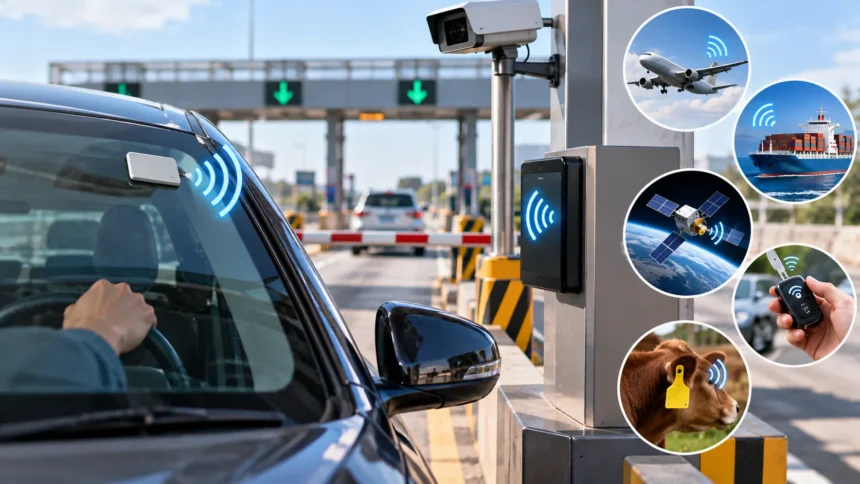
Many people first encounter the term transponder in aviation, where aircraft use radar transponders to send identifying information to air traffic control systems. However, the technology appears in many everyday situations as well. A toll-road tag mounted inside a car may contain a transponder that communicates automatically with roadside equipment as the vehicle passes. Satellite transponders receive signals from Earth, process them, and retransmit them back toward another location. RFID transponders help identify products, access cards, animals, and equipment. Although these systems perform different jobs, they follow the same general idea: receive a signal, recognize or process it, and transmit a useful response.
What Is a Transponder?
A transponder is a communication device designed to respond automatically after receiving a particular signal. It may identify itself, transmit stored information, relay a message, or change and retransmit an incoming signal. Depending on the application, a transponder can be an active electronic device with its own power source or a passive device that receives energy from an external radio-frequency signal. The response may include an identification code, position information, altitude, account details, or another data set. Because of this automatic response capability, transponders are particularly useful in systems where fast recognition or communication is required. They allow machines to exchange information without a person manually entering data each time.
The basic concept behind a transponder is different from a normal transmitter. A transmitter sends a signal whenever it is instructed to do so, while a transponder usually sends information in response to another signal or interrogation. For example, an aircraft transponder responds when radar equipment sends an interrogation signal. An RFID transponder may reply when it enters the electromagnetic field of a compatible reader. A satellite transponder receives one radio-frequency signal and retransmits it on another frequency. These examples show that the response can take different forms. What makes them transponders is their role in receiving and automatically responding to communication.
Transponders can also differ considerably in size and complexity. A satellite may contain multiple powerful transponders designed to handle large amounts of radio communication over thousands of kilometers. An RFID tag attached to a product can contain a tiny chip and antenna measuring only a few millimeters. Aircraft transponders are larger electronic units connected to antennas and other onboard systems. Vehicle transponders used for electronic tolling may fit inside a small plastic tag attached to a windshield. Despite these physical differences, each device supports some form of automatic signal-response communication.
One important feature of transponder technology is identification. Many systems need a reliable way to distinguish one aircraft, vehicle, product, animal, or device from another. A transponder can store a unique code that allows a receiving system to recognize it automatically. This is why transponders are widely used in transportation, logistics, access control, and tracking. Automatic identification can reduce manual work and improve speed, particularly when thousands of objects need to be processed. However, accurate identification also requires compatible readers, appropriate frequencies, and well-designed data systems.
The term transponder is sometimes used differently depending on the industry. In aviation, it usually refers to an aircraft device that responds to radar interrogations and transmits identification or altitude information. In satellite communications, a transponder is a repeater-like system that receives an uplink signal and sends it back on a downlink frequency. In RFID, the transponder is often the tag or chip that responds to a reader. These different meanings are closely related because they all involve receiving and responding. Knowing the context therefore helps determine exactly what type of transponder is being discussed.
How Does a Transponder Work?
A transponder generally begins working when it receives an incoming electromagnetic or radio-frequency signal. This signal may come from radar equipment, a satellite ground station, an RFID reader, a toll-road antenna, or another communication system. The transponder detects the signal through an antenna and passes it to internal electronic components. Depending on the system, the device may simply recognize that a valid interrogation has been received or may analyze data contained within the signal. It then prepares the appropriate response. The entire process can happen extremely quickly, often without the user noticing any communication taking place.
After receiving the signal, the transponder may identify what type of response is required. Simple devices can return a fixed identification number stored in memory. More advanced systems can gather additional information from connected sensors, computers, or navigation equipment. An aircraft transponder, for example, may transmit altitude information received from an onboard altitude encoder. A vehicle transponder may provide an identifier linked to a toll account. Satellite transponders can process complete radio signals rather than simply returning a short identification code. The amount of processing therefore depends on the application.
The response is transmitted through radio waves using an antenna. In many systems, the reply uses a different frequency from the incoming signal so the two transmissions do not interfere with each other. This separation is especially important in radar and satellite communication systems. The receiving equipment then captures the response and interprets the information. Software may compare an identification code with a database or display aircraft information to an air traffic controller. The usefulness of the transponder therefore depends on both the device and the larger system connected to it.
Active transponders have their own power source, usually from a battery or the electrical system of the vehicle, aircraft, or equipment where they are installed. Because they have independent power, active devices can often transmit stronger signals over longer distances. Aviation transponders and many satellite communication systems are examples of active technology. Some RFID systems also use active tags when extended range is required. The disadvantage is that active transponders are usually more expensive and may require maintenance or battery replacement. Power availability therefore influences how the transponder is designed.
Passive transponders work differently because they do not have a conventional internal power source for continuous transmission. Instead, they can use energy received from the radio-frequency field created by a reader. This energy temporarily powers the electronic chip and allows it to send stored information back. Passive RFID tags are a common example and are widely used because they can be inexpensive, compact, and maintenance-free. Their operating range is generally shorter than that of powered devices. Nevertheless, passive transponders are extremely useful for inventory, identification, access control, and other applications where short-range communication is sufficient.
Main Types of Transponders
Radar transponders are commonly associated with aviation and other tracking applications. They respond to interrogation signals sent by radar equipment and transmit information that helps identify and monitor the object carrying the transponder. In civil aviation, aircraft transponders allow air traffic control systems to distinguish aircraft and receive additional flight-related information. Depending on the mode, the response can include a four-digit code, pressure altitude, or more detailed identification data. Modern aviation surveillance systems rely heavily on these responses. Radar transponders improve the quality of tracking compared with relying only on reflected radar energy.
Satellite transponders operate as communication repeaters onboard satellites. A signal from a ground station is transmitted toward the satellite on an uplink frequency. The transponder receives the signal, filters and amplifies it, may convert it to another frequency, and retransmits it back toward Earth. This return transmission is called the downlink. Multiple satellite transponders can operate simultaneously to handle television, internet, telephone, data, and other communications. Their ability to relay signals over enormous distances makes them essential components of satellite communication infrastructure.
RFID transponders are small electronic tags used for automatic identification through radio frequency. An RFID system normally includes a tag, an antenna, and a reader. The tag stores information such as a unique identification number and responds when it communicates with a compatible reader. Passive RFID tags are common in retail inventory, logistics, access cards, libraries, and product tracking. Active RFID tags may be used when greater range or additional sensing capabilities are necessary. RFID transponders allow organizations to identify objects without requiring direct visual contact like a barcode scanner.
Vehicle transponders are frequently used in electronic toll collection and transportation management. Drivers can place a compatible tag inside their vehicles, where roadside equipment detects it automatically as the vehicle passes through a tolling area. The transponder sends an identifier that allows the system to associate the vehicle with an account and charge the appropriate amount. This removes the need to stop at a toll booth and exchange cash manually. Similar technology can be used for parking access, fleet tracking, and restricted vehicle entry. Vehicle transponders therefore help transportation systems process large numbers of vehicles efficiently.
Marine and emergency transponders form another important group. Certain search-and-rescue devices respond to radar or satellite signals to help rescuers locate vessels, aircraft, or individuals in emergencies. Maritime systems can also use identification transmitters and related radio technologies to improve vessel awareness. Some emergency locator devices transmit unique identifiers and location information to search-and-rescue networks. Although not every locator device is technically classified in exactly the same way, the signal-response principle remains central to many of these systems. In safety-critical environments, reliable transponder technology can significantly improve detection and response.
Aircraft Transponders and Their Role in Aviation
Aircraft transponders are among the best-known examples of transponder technology. They help air traffic control identify aircraft and receive information that ordinary radar reflections cannot provide easily. When surveillance radar sends an interrogation signal, the aircraft transponder automatically replies with coded information. Air traffic control systems combine that response with radar data to display useful details about the aircraft. This allows controllers to manage many aircraft within busy airspace more effectively. Accurate identification is especially important when several aircraft are flying close to one another on different routes or altitudes.
One traditional aircraft transponder setting is called Mode A. In this mode, the pilot selects a four-digit code, often called a squawk code, that the transponder sends in response to radar interrogation. Air traffic control can assign different codes to aircraft so they are easier to identify on radar displays. Certain codes are also reserved for specific situations, such as communication problems or emergencies. Mode A provides identification but does not automatically include altitude information. This limitation led to the development of more advanced transponder modes.
Mode C adds pressure-altitude information to the transponder response. The aircraft’s altitude encoder provides this information, allowing air traffic control to see both the aircraft’s identity and approximate altitude. This significantly improves situational awareness because controllers need vertical separation as well as horizontal separation between aircraft. Mode C became an important part of traditional secondary surveillance radar systems. However, newer aviation technology can transmit much more detailed information. Modern aircraft often use Mode S transponders and systems connected with Automatic Dependent Surveillance-Broadcast technology.
Mode S provides selective communication and a unique aircraft address, allowing surveillance systems to interact with individual aircraft more efficiently. Instead of every transponder responding identically to every interrogation, Mode S supports more targeted exchanges of information. It can transmit aircraft identity, altitude, and other data depending on the equipment configuration. Mode S also supports important components of modern collision avoidance and surveillance systems. This technology helps reduce communication congestion in busy airspace. It represents a major improvement over simpler transponder modes.
Transponders also play a role in airborne collision avoidance. Traffic Collision Avoidance System equipment can communicate using transponder information to detect nearby aircraft and calculate potential conflicts. If necessary, pilots may receive traffic advisories or coordinated instructions designed to reduce collision risk. This demonstrates that an aircraft transponder does more than simply tell air traffic control which aircraft is present. It contributes to a broader network of surveillance and safety technologies. Keeping transponder equipment correctly configured and operational is therefore an important responsibility in aviation.
Satellite Transponders and Communication
A satellite transponder acts as a communication link between one location on Earth and another. Ground equipment sends a signal toward the satellite using an uplink frequency. The satellite receives that signal through an antenna and directs it to the appropriate transponder. Inside the transponder, the signal is filtered and amplified so unwanted frequencies or noise can be reduced. The frequency is usually changed before retransmission. The processed signal is then sent back toward Earth through the satellite’s downlink system.
Frequency conversion is important because a satellite must receive and transmit signals at the same time without creating excessive interference. If the downlink used exactly the same frequency as the uplink, the powerful transmitted signal could interfere with the weaker incoming signal. The transponder therefore shifts communication into a designated downlink frequency band. Filters and amplifiers help maintain signal quality as the information passes through the system. The exact frequencies depend on the satellite service and communication band being used. These technical arrangements allow large volumes of information to move reliably through space-based systems.
Satellite transponders are often described according to the amount of bandwidth they provide. A traditional communication satellite can contain many separate transponders, each capable of carrying one or more communication services. Television broadcasters can use transponder capacity to distribute channels to receiving stations or homes. Telecommunications providers may use the same satellite for voice, internet, or private data networks. Broad satellite coverage can connect regions where terrestrial fiber or cellular infrastructure is limited. Transponders therefore play a direct role in making satellite connectivity practical.
Modern high-throughput satellite systems can use more sophisticated architectures than traditional fixed transponders. Spot beams, frequency reuse, digital processing, and flexible payload technologies can allow satellite capacity to be allocated more efficiently. Some newer satellites can change how bandwidth or beams are assigned after launch, improving adaptability as demand changes. These developments show how transponder technology continues to evolve rather than remaining a simple analog repeater. Digital processing can also help route or manage signals more intelligently. Even so, the fundamental job remains receiving communication and retransmitting it toward a destination.
Satellite transponders are important in television broadcasting, maritime communication, aviation connectivity, emergency networks, military communication, and remote internet access. Their greatest advantage is the ability to cover large geographic areas without requiring continuous physical cables between every location. However, satellite communication can involve signal delay, weather-related interference at certain frequencies, limited bandwidth, and significant infrastructure costs. Engineers must carefully manage power, frequencies, antennas, and coverage areas. Each transponder represents a valuable portion of the satellite’s communication capacity. Reliable design is critical because replacing equipment in orbit is extremely difficult.
RFID Transponders and Everyday Applications
RFID stands for radio-frequency identification, and RFID transponders are commonly known as tags. Each tag usually contains a small integrated circuit and an antenna. The chip stores information that can be transmitted when the tag interacts with a compatible RFID reader. Unlike a printed barcode, an RFID tag does not always need to be directly visible to the reader. This allows products or objects to be identified inside packaging or from different orientations. RFID technology is widely used because it can automate identification in environments where scanning every item manually would take too much time.
Retailers can use RFID transponders to improve inventory visibility. A tag attached to clothing, electronics, or another product can carry a unique identification code. Employees can scan groups of items much more quickly than checking individual barcodes. Inventory software can then compare detected products with expected stock levels. This helps businesses identify missing products, replenish shelves, and reduce inventory errors. RFID can also support warehouse receiving and shipping processes by confirming which products enter or leave a facility.
Access-control cards are another familiar example of transponder technology. An employee may hold a card or key fob near a reader located beside a secure door. The reader energizes or communicates with the transponder, which returns an identification code. The access-control system checks whether that identifier is authorized to enter the area. If permission is valid, the system unlocks the door automatically. Similar technology is used in hotels, parking facilities, campuses, offices, and residential buildings.
Animal identification is another important RFID application. Small passive transponders can be implanted under the skin of pets or livestock. When a compatible scanner is moved near the tag, it reads a unique identification number. Veterinary clinics or animal shelters can use that number to help identify a registered animal. Livestock systems can also use RFID to manage records related to individual animals. The tag itself usually stores only limited identifying information, while detailed records are maintained in an external database.
RFID transponders are also used in libraries, manufacturing, healthcare, logistics, and asset management. Hospitals may use tags to identify equipment or supplies, while factories can track parts as they move through production. Logistics companies can use RFID to improve visibility of containers, pallets, and shipments. The technology is particularly valuable when organizations need to identify large numbers of objects quickly. However, range, cost, metal surfaces, liquids, privacy concerns, and reader compatibility can affect performance. Choosing the right RFID frequency and tag design is therefore important for successful implementation.
Vehicle Transponders and Electronic Toll Systems
Electronic toll collection is one of the most visible examples of vehicle transponder technology. A driver receives a tag linked to a toll account and places it in or on the vehicle according to the system’s instructions. As the vehicle approaches a tolling point, roadside antennas communicate with the transponder. The system receives an identifier and matches it with account information stored in a database. The correct toll can then be charged automatically. This process allows vehicles to continue moving instead of stopping to pay manually.
Automatic tolling can reduce queues and improve traffic flow on busy roads. Traditional toll booths require every driver to slow down or stop while a payment is collected. Electronic systems can process vehicles much more rapidly, especially when toll lanes are designed for higher-speed travel. Reduced stopping can also decrease fuel use and vehicle emissions associated with repeated acceleration. Toll agencies benefit from faster transaction processing and less cash handling. However, they must maintain accurate account and vehicle information to avoid incorrect charges.
Some electronic toll systems combine transponders with cameras. If a vehicle passes without a recognized transponder, cameras may record the license plate so the toll can be processed through another billing method. Combining identification technologies helps reduce missed transactions. Cameras can also verify the vehicle associated with a transponder in certain systems. These arrangements illustrate that transponders often function as one component within a larger automated transportation platform. Databases, payment processing, networking, and enforcement systems all work together behind the scenes.
Vehicle transponders are not limited to toll roads. Parking facilities can use them to identify authorized vehicles automatically at gates. Businesses can use transponder-based systems to control entry into secure premises or manage company fleets. Some motorsport events also use vehicle transponders for timing because they can identify when a specific competitor crosses a detection point. Similar principles are used in racing, logistics, and traffic management. Each application relies on automatic identification to reduce the need for manual observation.
Privacy and security are important considerations with vehicle transponder systems. Because the technology can record when a particular identifier passes a specific location, transportation organizations need clear policies for handling travel and account information. Users also need secure account systems to prevent unauthorized access. Technical protections can help reduce cloning, fraud, or accidental misidentification. Regulations and privacy requirements differ by location. As intelligent transportation systems become more connected, responsible data management becomes increasingly important alongside the convenience of automatic tolling.
Transponders in Navigation, Tracking and Safety
Transponders are extremely valuable in navigation because they allow objects to identify themselves to surveillance or tracking systems. Aircraft provide one of the clearest examples, but similar concepts appear in marine navigation and asset tracking. When a device transmits a unique identity, other systems can connect that identity with location or movement information. This helps operators monitor traffic and reduce uncertainty about what is nearby. In crowded transportation environments, reliable identification can improve coordination and safety. The usefulness becomes even greater when transponder data is combined with satellite positioning or radar information.
Search-and-rescue applications also depend on technologies that share the signal-response principles of transponders. Specialized emergency devices can help rescuers locate ships, aircraft, life rafts, or individuals. Some radar-based rescue transponders activate when they detect a compatible radar signal and send a response that appears on the search vessel’s display. Other emergency beacons transmit distress information through satellite networks rather than waiting for a nearby interrogation. These technologies are not all identical, but they share the goal of making a distressed person or vessel easier to detect. Reliable radio communication can significantly reduce search time.
Motorsports and athletic events can use transponders for accurate timing. A small transponder attached to a race car, motorcycle, bicycle, or participant sends an identifying signal when it passes a timing loop or detection point. Software records the exact crossing time and associates it with the correct competitor. This is much more accurate than relying entirely on manual observation, especially when many participants cross close together. Multiple timing points can provide lap times, sector times, and race positions. Automatic timing has therefore become standard in many competitive events.
Asset tracking systems may use active RFID transponders or related radio devices to monitor valuable equipment. Warehouses, hospitals, construction sites, and industrial facilities can place tags on tools, machinery, containers, or other assets. Readers positioned around the facility detect the devices and update their approximate locations. Employees can then find equipment more quickly and identify when something moves into an unauthorized area. This can reduce lost time and improve asset utilization. More advanced systems can combine location tracking with sensors that monitor temperature, movement, or environmental conditions.
Transponder technology is also relevant to security because automatic identification can help determine whether a device, person, or vehicle is authorized. Access systems can recognize approved identification tags without requiring manual entry. Aircraft surveillance can distinguish legitimate responses from unidentified radar targets. Logistics systems can verify that the expected shipment has reached a checkpoint. However, no identification technology should automatically be assumed secure simply because it uses radio communication. Strong systems may require encryption, authentication, access controls, and monitoring to protect the data exchanged by transponders.
Advantages and Limitations of Transponder Technology
One major advantage of transponders is speed. They can exchange identification or communication data automatically without requiring someone to stop and manually enter information. This is why toll roads can process large numbers of vehicles and warehouses can scan groups of RFID-tagged products efficiently. Aviation systems can also track numerous aircraft simultaneously because responses are processed electronically. Automatic communication becomes especially valuable as the number of objects being monitored increases. The resulting reduction in manual effort can improve operational efficiency and reduce delays.
Accuracy is another important benefit when transponder systems are properly designed. A unique identifier can help distinguish one object from another more reliably than visual observation. Air traffic control systems can associate coded replies with specific aircraft, while timing systems can distinguish competitors separated by very small time differences. Inventory systems can identify individual products through digital records. This precision can reduce errors caused by manual data entry or observation. However, the system must still maintain accurate databases because a correct transponder code linked to incorrect account information can produce the wrong result.
Transponders can also improve safety by giving systems additional information about nearby objects. Aircraft transponders help air traffic controllers monitor altitude and identity, while collision avoidance systems use related information to warn pilots about traffic conflicts. Emergency transponders can help rescuers locate vessels or individuals more quickly. Industrial systems can identify equipment moving through controlled areas. These applications demonstrate that automatic communication is not only about convenience. In many environments, it contributes directly to risk reduction and situational awareness.
One limitation is that transponders depend on compatible infrastructure. An RFID tag is not useful unless a reader operating with the correct frequency and protocol is available. A satellite transponder requires ground stations, antennas, and communication equipment capable of accessing the satellite. Aircraft transponders depend on surveillance systems and appropriate onboard installation. Vehicle toll tags work only where transportation infrastructure supports them. This means the complete cost of a transponder system includes readers, networks, software, databases, and maintenance rather than only the tag or transmitter itself.
Interference, signal obstruction, range, power, and cybersecurity can also create challenges. Radio waves behave differently depending on frequency and environment, and materials such as metal or liquids can reduce the performance of some RFID systems. Powered devices can fail when batteries or electrical systems stop working. Incorrect configuration can lead to identification problems. Connected systems may also become targets for unauthorized tracking, signal manipulation, or data theft. Engineers must therefore balance range, reliability, power consumption, cost, privacy, and security when designing transponder-based technology.
Frequently Asked Questions About Transponders
What is a transponder in simple terms?
A transponder is an electronic device that receives a signal and automatically sends back a response. The response may contain identification, location, altitude, account, or communication information.
What does the word transponder mean?
The term is derived from the ideas of transmitting and responding. It describes a device that responds automatically after receiving a compatible signal.
How does a transponder work?
A transponder receives a radio or electromagnetic signal through an antenna, processes or recognizes the request, and sends an appropriate response. The exact information returned depends on the application.
What is an example of a transponder?
An aircraft radar transponder is a common example. Electronic toll tags, RFID tags, satellite transponders, and race timing devices are other examples.
What is an aircraft transponder?
An aircraft transponder responds to surveillance interrogations and provides identification and other flight information to compatible systems. Depending on the mode, it may transmit a code, altitude, aircraft identity, and additional data.
Why do airplanes need transponders?
Transponders help air traffic control identify and monitor aircraft more accurately. They also support modern surveillance and collision-avoidance technologies.
What is a squawk code?
A squawk code is a four-digit code selected on an aircraft transponder, usually as directed by air traffic control. It helps controllers identify and manage aircraft on radar displays.
What is a satellite transponder?
A satellite transponder receives an uplink signal from Earth, processes and amplifies it, and retransmits it toward Earth on a downlink frequency. It is widely used for television, internet, data, and telecommunications.
What is an RFID transponder?
An RFID transponder is an electronic tag that communicates with a radio-frequency reader. It can store and transmit identification information about a product, card, animal, asset, or other object.
What is a car transponder?
A car transponder is a radio-frequency device used to identify a vehicle automatically. Electronic toll tags and some parking access devices are common examples.
Do transponders need batteries?
Some do and some do not. Active transponders use a power source, while passive RFID transponders can draw energy from the radio field created by a reader.
What is the difference between a transponder and a transmitter?
A transmitter sends signals, while a transponder is specifically designed to receive a signal and respond to it. A transponder therefore combines receiving and transmitting functions.
Can transponders be tracked?
Some transponder systems can help identify when a device passes a reader or can be combined with location systems for tracking. The level of tracking depends on the technology, infrastructure, and range involved.
Are transponders secure?
Security depends on the specific system. More advanced transponder technologies can use authentication, encryption, restricted access, and other protections, while simple tags may provide limited security.
Where are transponders used?
Transponders are used in aviation, satellite communication, electronic toll collection, RFID systems, access control, racing, logistics, asset tracking, navigation, and search-and-rescue technologies.