

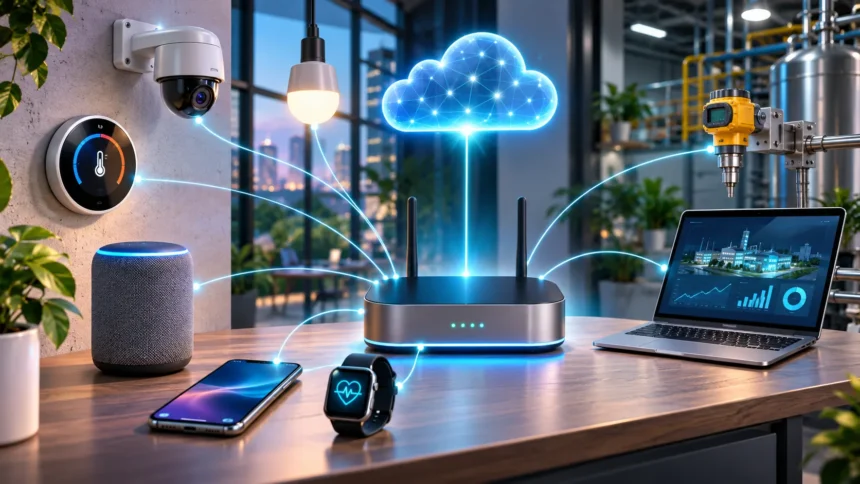
What Is an IoT Gateway?
An IoT gateway is a hardware device or software-based system that connects smart devices, sensors, and machines to other networks. It acts as a communication bridge between connected equipment and cloud platforms or local applications. By collecting and transferring information, an IoT gateway helps devices exchange data even when they use different communication technologies or network protocols.
In the Internet of Things ecosystem, devices often generate information continuously through sensors and automated systems. Some devices cannot communicate directly with cloud services because they have limited processing power or use specialized wireless connections. An IoT gateway solves this problem by receiving device information, processing it when necessary, and forwarding relevant data to the appropriate destination.
Understanding how an IoT gateway works is important for businesses and individuals building connected environments. These systems support smart homes, industrial automation, healthcare equipment, and agricultural monitoring applications. They can also improve communication reliability and simplify device management. However, their capabilities depend on the hardware, supported protocols, network infrastructure, and software configuration used in each deployment.
Why Smart Devices Need an IoT Gateway
Smart devices rely on reliable communication to exchange information and perform automated tasks. However, connected equipment does not always use the same network technology. Some sensors communicate through Bluetooth, Zigbee, or other low-power wireless protocols, while cloud platforms generally require internet-based communication. An IoT gateway helps bridge these different environments and enables compatible devices to work together.
Another reason gateways matter is that many small IoT sensors have limited computing resources. Sending every measurement directly to the cloud may consume unnecessary network bandwidth or battery power. A gateway can collect information from multiple devices and filter it before transmission. This approach reduces some communication demands and can help connected systems operate more efficiently.
Not every smart device requires a separate IoT gateway because some products connect directly through Wi-Fi or cellular networks. Nevertheless, gateways become useful when multiple communication protocols, centralized management, or local processing capabilities are required. They help organize connected infrastructure and improve interoperability. This makes them particularly valuable in complex environments containing many different sensors, controllers, and intelligent machines.
How Does an IoT Gateway Work?
An IoT gateway begins by receiving data from connected sensors, controllers, or other smart devices. Depending on the deployment, these devices may send temperature readings, movement information, equipment status, or energy consumption measurements. The gateway communicates through supported wired or wireless connections. Once the information arrives, it can prepare the data for further processing or transmission.
The next stage often involves processing and translating incoming information. Different devices may use communication formats that cloud applications cannot interpret directly. A gateway can convert supported messages into compatible formats and combine selected measurements when appropriate. It may also remove unnecessary information or check readings against predefined rules before sending the processed data to another system.
Finally, the gateway forwards relevant information to cloud platforms, local servers, or other connected applications. Some gateways also receive instructions and deliver them to compatible devices. For example, a building management system might request changes to a connected heating controller. This two-way communication enables monitoring, automation, and remote management across smart environments when the necessary connections remain available.
Key Components of an IoT Gateway
A typical IoT gateway contains processing hardware responsible for handling device communication and data operations. Its processor executes software that collects measurements, manages connected devices, and performs local calculations. Memory and storage support operating functions, configuration settings, and temporary data retention. The required processing capacity depends on the number of connected devices and the complexity of their workloads.
Communication interfaces are another essential component of gateway architecture. These interfaces may include Ethernet, Wi-Fi, Bluetooth, cellular connectivity, or specialized industrial connections. Some gateways support additional wireless technologies through integrated radios or expansion modules. Having multiple compatible interfaces allows a single gateway to communicate with different categories of equipment and connect them to larger network environments.
Gateway software provides the functions needed to manage communication and system behavior. It may include an operating system, protocol adapters, security features, monitoring tools, and device management applications. Some platforms also support remote configuration and automated software updates. Together, these components determine how efficiently a gateway operates and how easily administrators can maintain connected infrastructure over time.
IoT Gateway Communication Protocols Explained
Communication protocols define how smart devices exchange information with gateways and other systems. Wi-Fi provides familiar wireless network access, while Bluetooth Low Energy supports short-range communication with relatively low power requirements. Zigbee and Thread are commonly associated with low-power connected device networks. The right technology depends on device compatibility, communication range, energy requirements, and environmental conditions.
Industrial IoT gateways may support protocols such as Modbus and OPC UA to communicate with automation equipment. Long-range applications can use technologies such as LoRaWAN for transmitting small amounts of sensor information across considerable distances. In these systems, gateways help connect field devices with broader network infrastructure. Protocol support must match the actual devices and application requirements.
After collecting device data, gateways commonly communicate with applications through internet-based protocols such as MQTT or HTTP. MQTT is useful for lightweight publish-and-subscribe messaging, while HTTP supports familiar web-based communication patterns. Different protocols operate at different layers and serve different purposes. Understanding these distinctions helps organizations select gateway technology that supports reliable integration without unnecessary complexity.
The Role of Edge Computing in IoT Gateways
Edge computing involves processing information close to the devices that generate it instead of sending every operation to a distant cloud server. An IoT gateway can serve as an edge computing device when it has suitable processing capabilities. This arrangement allows certain decisions to happen locally. It can be useful when applications require quick responses or have limited internet connectivity.
For example, an industrial gateway might examine machinery temperature readings and identify when measurements exceed an established threshold. Instead of waiting for a cloud application to analyze every reading, the gateway can trigger a local notification. This reduces dependence on continuous external communication. However, the accuracy and usefulness of such alerts depend on properly configured rules and reliable sensor measurements.
Edge processing can also reduce the volume of information transmitted across networks. A gateway might summarize measurements, remove duplicates, or send only information needed by an application. This can lower bandwidth usage and reduce cloud processing demands. However, local processing requires appropriate computing resources, software maintenance, and security controls to prevent performance problems as connected systems grow.
Connecting IoT Gateways to Cloud Platforms
Cloud integration allows businesses to access IoT information through centralized applications and monitoring dashboards. An IoT gateway collects data from connected devices and sends it to compatible cloud services through an available network connection. These platforms can store measurements, display trends, and support automated workflows. Users may then monitor equipment or environmental conditions without visiting every physical device.
Cloud-connected gateways are especially useful when organizations operate across multiple buildings or geographic locations. A company can collect information from different sites and review it through a shared management platform. This approach supports centralized reporting and operational analysis. However, access to current information depends on connectivity, platform availability, and the gateway’s ability to transmit data successfully.
Some gateways support local data buffering when internet connections become temporarily unavailable. Stored information may be transmitted after connectivity returns, depending on available storage and software configuration. Certain local automation functions can also continue independently of the cloud. Organizations should evaluate these capabilities carefully because offline operation and recovery behavior vary considerably between gateway products and systems.
IoT Gateway Security and Data Protection
Security is essential because IoT gateways often connect devices that collect operational, environmental, or potentially sensitive information. An improperly protected gateway may expose connected systems to unauthorized access. Strong authentication, encrypted communication, and appropriate network permissions help reduce these risks. Security planning should cover the gateway itself, connected devices, local networks, and applications receiving transmitted information.
Software updates also play an important role in protecting connected infrastructure. Manufacturers may release security patches to address vulnerabilities discovered after deployment. Organizations should choose gateways that support reliable updates and maintain clear maintenance procedures. Default passwords should be replaced, unnecessary services disabled, and administrative privileges restricted to authorized users who genuinely need access.
Network segmentation can provide another layer of protection by separating IoT equipment from other important business systems. Administrators should also monitor unusual activity and maintain records of configuration changes. Where applicable, privacy requirements must be considered when collecting personal information. A secure IoT gateway depends on continuing oversight rather than a single protective feature installed during setup.
Different Types of IoT Gateways
Industrial IoT gateways are designed for environments such as factories, warehouses, utilities, and production facilities. These devices may support industrial communication protocols, rugged enclosures, and specialized operating conditions. Some models tolerate wider temperature ranges or electrical disturbances than ordinary consumer equipment. Their primary purpose is to connect operational technology with monitoring, automation, and management systems.
Smart home gateways focus on connecting compatible household devices such as lights, sensors, thermostats, and automated controls. These systems often support wireless technologies used by consumer smart home products. Some operate as dedicated hubs, while others are integrated into larger home automation platforms. Their usefulness depends on device compatibility and support for the automation features users want.
Other categories include cellular gateways, edge computing gateways, and specialized healthcare or transportation gateways. Cellular models provide connectivity through supported mobile networks, which can be useful at remote locations. Edge gateways emphasize local processing, while specialized systems address particular industry requirements. These categories can overlap because one gateway may combine several communication and processing capabilities within a single device.
Real-World Applications of IoT Gateways
Smart homes provide familiar examples of IoT gateway applications. A compatible gateway can connect motion sensors, door contacts, lighting systems, and temperature controllers through a shared automation platform. Users may create routines that activate lights when movement is detected or adjust heating according to predefined schedules. These functions depend on supported devices, reliable configuration, and the available automation system.
Industrial environments use IoT gateways to monitor machines, production equipment, and operating conditions. Connected sensors may report vibration, temperature, pressure, or energy consumption measurements. Gateways collect this information and deliver it to maintenance or analytics applications. Businesses can use these measurements to identify unusual operating patterns, support preventive maintenance, and improve visibility into equipment performance.
Agriculture, transportation, and healthcare also benefit from connected gateway technology. Agricultural systems can monitor soil moisture and environmental conditions, while transportation applications track selected vehicle or equipment information. Healthcare facilities may use approved connected systems to collect information from compatible monitoring devices. Each application requires appropriate connectivity, dependable operation, and security measures suited to its specific environment.
Benefits of Using an IoT Gateway
One significant benefit of an IoT gateway is improved communication between devices using different technologies. Rather than requiring every sensor to connect directly to the internet, compatible equipment can exchange information through a shared communication point. This simplifies certain network designs and supports interoperability. It can also make device integration more manageable when organizations use equipment from multiple manufacturers.
IoT gateways can improve operational efficiency by supporting automated monitoring and local data processing. Businesses may use collected measurements to detect equipment problems, understand energy consumption, or identify inefficient processes. Filtering unnecessary information can also reduce network traffic. These improvements depend on the quality of the data, the suitability of the gateway, and how effectively applications use the information.
Another benefit is more centralized control over connected infrastructure. Administrators may monitor device connections, adjust configurations, and manage selected software updates through supported gateway management tools. This can reduce the effort required to maintain large IoT deployments. However, organizations still need clear ownership, maintenance schedules, and security procedures to keep connected systems dependable as their requirements change.
Common IoT Gateway Challenges and Solutions
Device compatibility is a common challenge when selecting and implementing an IoT gateway. Different manufacturers may use proprietary communication methods, specific protocol versions, or unique configuration requirements. A gateway that supports a general wireless technology may not automatically work with every device using that technology. Compatibility testing and careful review of manufacturer specifications help prevent costly integration problems.
Connectivity problems can also affect gateway performance, especially in buildings with thick walls, heavy machinery, or large distances between sensors. Wireless interference and unstable internet access may interrupt communication or delay information updates. Suitable antenna placement, network planning, and signal testing can improve reliability. Where appropriate, local buffering and redundant connectivity provide additional protection against temporary disruptions.
Managing expanding IoT networks introduces further challenges involving performance, cybersecurity, and maintenance. A gateway designed for a small number of devices may struggle when additional sensors generate more information. Organizations should evaluate processing capacity, device limits, and available management features before deployment. Regular updates, monitoring, and realistic capacity planning help maintain consistent performance as connected infrastructure becomes more complex.
How to Choose and Set Up the Right IoT Gateway
Choosing an IoT gateway begins with identifying the devices and applications that need to communicate. List the required protocols, expected number of connections, installation environment, and available internet infrastructure. Consider whether applications need local processing or continuous cloud access. These requirements help narrow the available options and prevent purchasing equipment with unnecessary features or missing capabilities.
Security, scalability, and ongoing support should also influence the selection process. Look for devices that provide encrypted communication, manageable access controls, reliable software updates, and clear technical documentation. Evaluate hardware durability, processing resources, and expected operating costs. Comparing these factors alongside the purchase price gives a more realistic understanding of long-term value and maintenance responsibilities.
Once a gateway has been selected, installation should follow the manufacturer’s instructions and the organization’s network security policies. Configure communication settings, establish authorized device connections, and test information exchange with intended applications. Verify offline behavior, monitoring functions, and update procedures before wider deployment. Documenting the configuration makes future troubleshooting, maintenance, and expansion easier for the people responsible for managing the system.
Conclusion
An IoT gateway plays an important role in connecting smart devices, sensors, and applications across different communication environments. It helps collect information, translate supported protocols, and transfer data to local systems or cloud platforms. Some gateways also provide edge computing and device management capabilities. These functions make gateways useful in connected homes, industrial facilities, and many other technology applications.
The benefits of an IoT gateway depend on choosing technology that matches the actual deployment requirements. Communication compatibility, processing capacity, security features, and reliable connectivity all influence performance. Organizations should also consider maintenance demands and future expansion plans. Careful evaluation helps avoid unnecessary technical complexity while improving the reliability and usefulness of connected infrastructure.
As the Internet of Things continues to support more everyday activities and business operations, dependable communication remains essential. IoT gateways provide one practical way to connect diverse devices and organize their information. Understanding how these systems work makes technology decisions easier. With suitable planning, configuration, and maintenance, businesses and individuals can build more efficient and manageable smart device networks.
Frequently Asked Questions (FAQs)
What is the main purpose of an IoT gateway?
An IoT gateway connects compatible smart devices to networks, applications, or cloud platforms. It can collect data, translate communication protocols, process information locally, and support centralized management across connected environments.
What is the difference between an IoT gateway and a router?
A router primarily directs network traffic between connected networks. An IoT gateway may also translate device protocols, process sensor data, and support specialized device management functions that ordinary routers do not provide.
Can IoT devices work without a gateway?
Yes. Some IoT devices connect directly to the internet using Wi-Fi or cellular networks. A separate gateway becomes useful when devices require protocol translation, centralized management, or local processing.
Are IoT gateways secure?
IoT gateways can support secure communication through encryption, authentication, updates, and access controls. However, actual security depends on product design, configuration, ongoing maintenance, and the protection of connected devices and networks.
Where are IoT gateways commonly used?
IoT gateways are commonly used in smart homes, factories, agriculture, transportation, building automation, and healthcare systems. They help compatible devices exchange information and support monitoring, automation, and connected operations.