

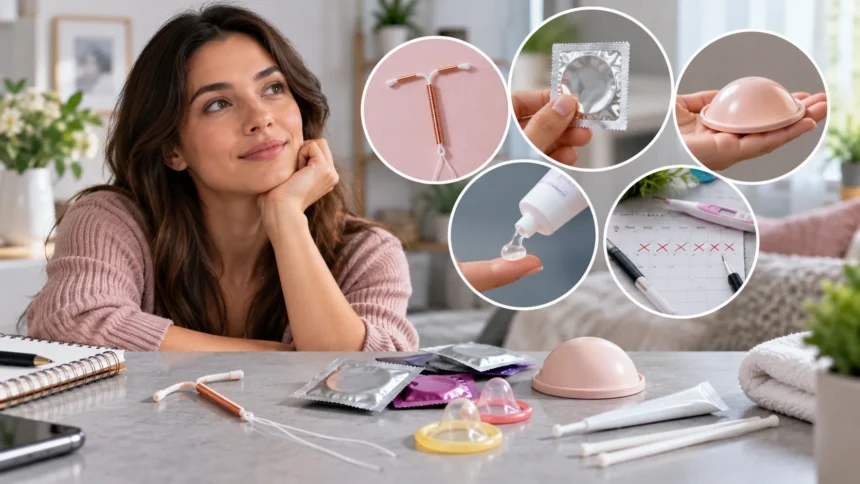
Nonhormonal Birth Control: Best Options Compared
Nonhormonal birth control offers pregnancy prevention without using estrogen, progestin, or other contraceptive hormones. Options range from highly effective long-term methods such as the copper IUD to condoms, diaphragms, fertility-awareness methods, contraceptive gels, spermicide, withdrawal, and permanent contraception. People may prefer hormone-free contraception because of personal preference, previous hormonal side effects, medical considerations, breastfeeding plans, or simply wanting a method they can control differently. However, nonhormonal does not automatically mean side-effect-free or equally effective. Every method has its own advantages, limitations, and level of effort required. Choosing the best option means comparing effectiveness with convenience, reversibility, comfort, sexual health needs, and future pregnancy plans.
Some nonhormonal methods work continuously after they are put in place, while others must be used correctly every time sex occurs. The copper intrauterine device, for example, provides years of contraception with very little daily attention, whereas condoms must be used properly during every sexual encounter. Fertility-awareness methods require consistent cycle tracking and avoiding unprotected sex during fertile days. Barrier methods can be especially attractive because they are hormone-free and immediately reversible, and condoms also reduce the risk of many sexually transmitted infections. Understanding these differences helps prevent unrealistic expectations about any particular method. The best nonhormonal birth control is ultimately the method that provides acceptable effectiveness while fitting comfortably into a person’s health, relationships, and lifestyle.
What Is Nonhormonal Birth Control and How Does It Work?
Nonhormonal birth control refers to contraceptive methods that prevent pregnancy without releasing synthetic reproductive hormones into the body. Hormonal birth control methods such as combination pills, progestin-only pills, hormonal IUDs, implants, injections, patches, and vaginal rings work partly by changing ovulation, cervical mucus, or the uterine environment. Nonhormonal contraceptives use different mechanisms, depending on the method selected. Some physically block sperm from reaching the cervix, while others create conditions that interfere with sperm movement or survival. Fertility-awareness methods attempt to identify fertile days so intercourse can be avoided or protected during that period. Permanent methods prevent sperm and egg from meeting through surgical or procedural changes to the reproductive tract.
The term hormone-free birth control covers a surprisingly broad range of products and techniques. The copper IUD is a long-acting reversible contraceptive placed inside the uterus, whereas condoms form a temporary barrier during sex. Diaphragms and cervical caps cover the cervix and are normally used with spermicide according to product instructions. Vaginal contraceptive gels can alter the vaginal environment in ways that reduce sperm activity, while traditional spermicides contain chemicals that immobilize or damage sperm. Fertility-awareness methods rely on biological signs such as cycle length, cervical mucus, and basal body temperature. Because these options work differently, their effectiveness and user requirements vary considerably.
People sometimes assume that choosing nonhormonal contraception means avoiding every possible physical effect associated with birth control. That is not necessarily true because a contraceptive can create side effects without containing hormones. A copper IUD may increase menstrual bleeding or cramping, particularly during the first months after insertion. Spermicides and some vaginal gels can cause irritation, burning, or discomfort in certain users. Condoms may cause problems for people sensitive to latex, although non-latex alternatives are available. Barrier devices can also feel inconvenient or uncomfortable if sizing or placement is not suitable. Hormone-free therefore describes how contraception works rather than guaranteeing that a person will experience no unwanted effects.
Effectiveness is another important distinction because nonhormonal contraceptive methods range from extremely reliable to highly dependent on consistent use. Long-acting and permanent methods generally provide the strongest pregnancy prevention because there is little opportunity for day-to-day user error. Methods such as condoms, diaphragms, contraceptive gels, and fertility tracking require correct action at specific times. Missing a fertile day, using a condom incorrectly, or forgetting spermicide can significantly reduce protection. This difference is often described as perfect use compared with typical use. Typical-use effectiveness better reflects what happens in everyday life, where people sometimes make mistakes, delay actions, or use contraception inconsistently.
Nonhormonal contraception can also be combined strategically when additional protection is desired. Someone using fertility awareness may choose condoms during fertile days rather than avoiding sex completely. A person with a copper IUD may still use condoms because the IUD does not protect against sexually transmitted infections. Barrier methods are sometimes combined with spermicides when recommended for that particular product. Using two compatible methods can reduce pregnancy risk when one method has a relatively high typical-use failure rate. However, products should be combined only when their instructions allow it, because certain combinations can damage materials or increase irritation. Understanding each method first makes combined contraception safer and more effective.
Best Nonhormonal Birth Control Options Compared
The copper IUD is generally the strongest reversible nonhormonal option for people who want very high pregnancy prevention without taking action during every sexual encounter. Its effectiveness is greater than 99 percent, meaning fewer than one pregnancy occurs per 100 users during a year of use. Once correctly inserted by a trained healthcare professional, the device can provide contraception for several years depending on the specific product and local approval. Fertility generally returns quickly after removal because there are no contraceptive hormones that need to leave the body. The main trade-off is that menstrual bleeding and cramps may become heavier, especially during early months. It also requires an insertion procedure rather than something users can start entirely on their own.
Condoms are among the most accessible nonhormonal contraceptives and have an advantage that most other pregnancy-prevention methods do not provide. External and internal condoms can reduce the risk of many sexually transmitted infections when used correctly and consistently. Pregnancy prevention is lower with typical condom use than with an IUD because condoms can occasionally break, slip, leak, or simply not be used throughout the entire sexual encounter. Correct technique significantly improves their reliability, making storage, expiration dates, lubrication, and proper application important. Condoms are inexpensive in many locations and fertility returns immediately because nothing remains in the body afterward. They can also be combined with many other contraceptive methods for additional protection.
Diaphragms, cervical caps, and contraceptive sponges provide hormone-free barrier contraception without requiring a device inside the uterus. These methods are placed in the vagina to cover or block the cervix so sperm have greater difficulty entering the uterus. Depending on the particular product, spermicide is often required as part of correct use. Effectiveness varies because successful contraception depends on proper placement, timing, and continued use according to instructions after intercourse. Some devices require professional fitting, while availability differs significantly between countries. They can appeal to people who want contraception only when needed rather than continuous protection. However, they generally provide less dependable pregnancy prevention than a correctly placed copper IUD.
Vaginal contraceptive gel and spermicide are additional nonhormonal options that work by interfering with sperm activity rather than changing hormone levels. Prescription vaginal pH-modulating gel is available in some markets and is inserted shortly before vaginal intercourse. Traditional spermicide may come as gels, creams, films, foams, suppositories, or products used with barrier methods. These options give users direct control and do not require a long-term device, but their typical-use pregnancy protection is lower than long-acting contraception. They may also cause vaginal or penile irritation in some people. Availability and product instructions vary, making it important to follow the specific directions rather than assuming all vaginal contraceptives work identically.
Fertility-awareness methods and withdrawal are also hormone-free, but they require considerably more user participation than long-acting contraception. Modern fertility-awareness approaches may track cervical mucus, basal body temperature, cycle length, or multiple biological signs together to estimate fertile days. Effectiveness varies greatly depending on the specific method, cycle predictability, training, and how consistently couples avoid or protect intercourse during fertile periods. Withdrawal requires the penis to be removed before ejaculation every time and is more vulnerable to timing errors. These approaches have no medication-related side effects and cost little once someone understands the technique. People for whom pregnancy prevention is extremely important may prefer combining these methods with a more reliable barrier option.
Copper IUD: The Most Effective Reversible Hormone-Free Option
A copper IUD is a small contraceptive device containing copper that is placed inside the uterus by a qualified healthcare professional. Copper interferes with sperm function and creates an environment that makes fertilization highly unlikely. Unlike hormonal IUDs, a copper device does not release progestin, making it one of the most effective options for people specifically seeking hormone-free contraception. Protection begins very quickly after appropriate insertion and continues without requiring daily pills, monthly refills, or action immediately before sex. Depending on the particular device available in a country, protection can last for many years. Its combination of effectiveness and low maintenance makes the copper IUD an important option to discuss when long-term reversible contraception is desired.
The copper IUD is also notable because certain copper intrauterine devices can be used as highly effective emergency contraception when inserted within an appropriate timeframe after unprotected intercourse. Clinical timing and eligibility should be discussed promptly with a healthcare professional because emergency contraception works best when care is not delayed. Once inserted, the same device can continue providing ongoing pregnancy prevention afterward. This offers a very different option from emergency contraceptive pills, which provide protection for one previous exposure rather than long-term contraception. Copper IUD availability and specific recommendations vary by healthcare system and product. Anyone considering it for emergency contraception should contact a clinician or reproductive health service promptly rather than trying to determine timing alone.
The most common disadvantage is its effect on menstruation, particularly during the first several months. Periods may become heavier, longer, or more painful, which can be especially relevant for people who already experience heavy menstrual bleeding or significant cramps. These changes often improve with time, but some users continue experiencing heavier periods while the device remains in place. A clinician can discuss whether existing anemia, menstrual problems, uterine abnormalities, or other health conditions affect suitability. Because the device contains no hormones, it will not provide the period-lightening benefits associated with some hormonal contraceptives. The decision therefore involves balancing excellent pregnancy prevention against possible menstrual changes.
Insertion is a short clinical procedure, but experiences vary significantly from one person to another. Some people experience only brief cramping, while others report more substantial discomfort during and immediately after placement. Discussing pain-control options beforehand can make the process more manageable and allows the clinician to explain what to expect. Mild cramping and spotting can occur after insertion, while severe or worsening pain deserves medical attention. Rare complications include expulsion, infection related to the insertion period, or perforation of the uterine wall. These events are uncommon, but understanding warning signs helps users know when follow-up care is appropriate rather than simply tolerating unusual symptoms.
A copper IUD does not protect against sexually transmitted infections, so condoms may still be important for people with new or multiple partners or whenever STI exposure is possible. Users should also remember that no contraceptive method is completely perfect, even when effectiveness exceeds 99 percent. A missed period or pregnancy symptoms while an IUD is in place should be evaluated because pregnancy with an IUD requires prompt medical assessment. The device can be removed whenever pregnancy is desired or when the user wants to change methods. Fertility generally returns rapidly after removal. For people comfortable with an insertion procedure and potentially heavier periods, the copper IUD provides one of the strongest combinations of reversibility, convenience, and hormone-free contraception.
Condoms, Diaphragms, Cervical Caps, and Other Barrier Methods
External condoms create a physical barrier over the penis that collects semen and reduces the chance that sperm enter the vagina. They are widely used because they are immediately reversible, require no medical procedure, and are available without a prescription in many locations. Latex condoms also reduce transmission of many sexually transmitted infections when used correctly throughout sexual activity. People with latex sensitivity can choose certain non-latex options, although materials differ in their level of STI protection. Condoms should be placed before genital contact that could expose a partner to semen or pre-ejaculate. Using a new condom for every sexual encounter is essential because these products are designed for single use.
Correct condom use has a major effect on real-world effectiveness. The package should be checked for damage and expiration before opening, and sharp objects should not be used to tear the wrapper. The condom needs to be placed in the correct direction, with space at the tip when appropriate, and rolled fully down the erect penis. After ejaculation, the base should be held while withdrawing so the condom is less likely to slip or spill. Appropriate lubrication can reduce friction and lower the chance of breakage. Oil-based products should generally not be used with latex condoms because oils can weaken latex, while water-based or compatible silicone-based lubricants are usually better choices.
Internal condoms are another barrier option and are worn inside the vagina rather than over the penis. They provide pregnancy protection while also reducing exposure to many sexually transmitted infections when used correctly. The inner ring helps position the condom inside the vagina, while the outer portion remains outside and covers part of the external genital area. Internal and external condoms should not normally be used together because friction between them may increase slipping or breakage. Availability may be more limited than external condoms, and some users need practice before insertion feels comfortable. For people who want the receptive partner to have more control over barrier contraception, internal condoms can provide a useful alternative.
A diaphragm is a reusable dome-shaped barrier placed inside the vagina so it covers the cervix during intercourse. Depending on the specific product, it is generally used with spermicide and must remain in position for the required period after sex. Some diaphragms require fitting or instruction from a healthcare professional, while newer designs may have broader sizing options. Proper placement is crucial because pregnancy protection decreases when the cervix is not completely covered. Diaphragms do not offer dependable STI protection, so condoms may still be appropriate when infection prevention matters. Some users appreciate the ability to reuse the device, while others dislike needing preparation around the time of sexual activity.
Cervical caps and contraceptive sponges work through related barrier principles but have their own instructions and effectiveness profiles. A cervical cap fits directly over the cervix and is generally combined with spermicide, while a contraceptive sponge contains spermicide and is positioned against the cervix. Effectiveness can vary depending on factors such as previous childbirth and whether the device is used precisely as directed. These methods must remain in place for a specified period after intercourse but should not be left longer than product guidance allows. Availability differs considerably between countries and may change over time. Anyone choosing a reusable or internally placed barrier should learn correct insertion, removal, cleaning, and replacement before relying on it for contraception.
Vaginal Contraceptive Gel and Spermicide: What to Know
Vaginal contraceptive gels provide an on-demand alternative for people who want pregnancy prevention without hormones or a long-term device. One type of prescription gel works by maintaining an acidic vaginal environment that makes it more difficult for sperm to function effectively. It is inserted into the vagina before intercourse and must be used again according to instructions for each additional episode of vaginal sex. Because protection depends on correct use at the right time, its typical-use effectiveness is lower than that of the copper IUD. It does not remain active for days or weeks after application. Availability can also be limited by country, prescription requirements, insurance coverage, and local reproductive healthcare systems.
Some people prefer vaginal contraceptive gel because they use contraception only when they expect to have sex. There is no daily pill to remember, no device placed in the uterus, and no hormone-related contraceptive exposure. This control can be appealing for people who have relatively infrequent intercourse or who prefer methods used only around sexual activity. However, needing an application before every episode can also interrupt spontaneity or create missed doses in everyday use. The method does not provide reliable protection against sexually transmitted infections. Condoms may therefore be used alongside compatible vaginal contraception when STI protection or additional pregnancy prevention is desired.
Side effects from vaginal pH-modulating contraceptive gel can include burning, itching, discomfort, vaginal irritation, discharge, or urinary symptoms. A partner may occasionally experience local discomfort as well. People with repeated urinary tract infections or certain urinary tract problems may need particular caution and should discuss suitability with a healthcare professional. Severe pain, fever, significant urinary symptoms, or persistent irritation should not simply be attributed to normal contraceptive use. Product instructions should be followed carefully because applying more gel than recommended does not necessarily improve effectiveness. A method is most useful when the user can tolerate it comfortably enough to apply it consistently.
Traditional spermicides work differently and commonly contain a substance that damages or immobilizes sperm. Products may be available as gels, creams, foams, films, suppositories, or as ingredients used with certain barrier devices. Spermicide used alone provides less reliable pregnancy prevention than long-acting contraception, so many people prefer combining it with a diaphragm or another compatible barrier. Timing instructions differ by formulation, and some products require waiting after insertion or reapplying before repeated intercourse. Users should never assume that one spermicide product follows the same directions as another. Reading the package carefully is especially important because incorrect timing can substantially reduce contraceptive protection.
Frequent spermicide use may irritate vaginal or penile tissue in some individuals, particularly products containing nonoxynol-9. Irritated tissue can make sexual activity uncomfortable and may affect the natural protective barrier of genital skin. Spermicide should not be considered protection against sexually transmitted infections, and frequent exposure to certain spermicides may actually be undesirable for people at higher risk of HIV exposure. Condoms remain the more appropriate nonhormonal choice when STI prevention is an important goal. People who develop repeated burning or irritation should consider another contraceptive option instead of simply continuing the same product. Comfort, effectiveness, and infection prevention should all be considered when deciding whether vaginal contraception fits an individual’s needs.
Fertility-Awareness Methods and Withdrawal
Fertility-awareness methods attempt to identify the days during a menstrual cycle when pregnancy is most likely. Rather than changing hormones or physically blocking sperm every day, users observe fertility signs and avoid unprotected vaginal intercourse during the fertile window. Different methods rely on calendar calculations, cervical mucus changes, basal body temperature, or combinations of several biological indicators. The symptothermal approach, for example, uses more than one fertility signal rather than relying only on cycle dates. Accurate education is important because ovulation does not always occur on the same calendar day each month. Simply using an ordinary period-tracking app without understanding fertility signs should not automatically be considered a reliable contraceptive method.
Fertility awareness requires daily attention and cooperation from both partners when intercourse is avoided or protected during fertile days. Some users appreciate learning more about their menstrual cycles and avoiding medications, devices, or ongoing contraceptive expenses. Others find the amount of tracking difficult to maintain consistently, especially during travel, illness, disrupted sleep, or changing schedules. Basal body temperature can be affected by fever, alcohol, sleep disruption, and other factors. Cervical mucus interpretation also takes practice before patterns become familiar. Effectiveness therefore varies substantially between different fertility-awareness methods and between perfect use and ordinary real-world use.
Irregular menstrual cycles can make some calendar-based approaches less practical, but irregular cycles do not necessarily prevent every form of fertility awareness. Methods that rely on multiple current biological signs may provide more information than predicting ovulation solely from past cycle length. Postpartum changes, breastfeeding, approaching menopause, recently stopping hormonal contraception, and certain health conditions can also make fertility patterns harder to interpret. People who strongly wish to avoid pregnancy may benefit from professional instruction rather than learning only through social media or a generic application. An experienced fertility-awareness educator or healthcare professional can explain method-specific rules. The level of acceptable pregnancy risk should guide how much reliance is placed on cycle tracking.
Withdrawal, also called the pull-out method or coitus interruptus, involves removing the penis completely from the vagina before ejaculation. It contains no hormones, requires no device, and costs nothing, which explains why many couples use it at least occasionally. However, successful use depends on recognizing ejaculation early enough and withdrawing correctly every single time. Sperm may also be present in pre-ejaculatory fluid under some circumstances, particularly when sperm remains in the urethra after a previous ejaculation. Typical-use pregnancy protection is therefore lower than that of a copper IUD and many more structured contraceptive methods. Withdrawal also provides no meaningful protection against sexually transmitted infections.
Fertility awareness and withdrawal can sometimes be incorporated into a broader pregnancy-prevention strategy rather than used alone. A couple might track fertile days and use condoms whenever pregnancy risk is highest, creating additional protection without hormones. Another person may use withdrawal as backup even when a condom is already being used correctly. Combining methods can be especially useful when pregnancy would be very difficult to manage but long-acting contraception is not desired. However, any combined strategy should still be realistic enough to follow consistently. A complicated method that repeatedly breaks down in everyday life may ultimately provide less protection than a simpler option that both partners use correctly every time.
Permanent Nonhormonal Birth Control Options
Permanent contraception can provide very high pregnancy prevention for people who are confident they do not want future biological pregnancies. Vasectomy is a procedure that interrupts the tubes carrying sperm from the testicles so sperm no longer enter semen after successful treatment and follow-up. The procedure is usually simpler and less invasive than permanent contraception performed on the fallopian tubes. Importantly, vasectomy does not work immediately because sperm can remain in the reproductive tract for a period after the procedure. Another contraceptive method must be used until follow-up semen testing confirms that the procedure has achieved the intended result. Once appropriately confirmed, vasectomy is one of the most effective hormone-free contraceptive options available.
Vasectomy does not remove the testicles or significantly change testosterone production, erections, orgasm, or the ability to ejaculate. Semen continues to be produced because sperm make up only a small portion of its total volume. Most people therefore notice little or no visible difference in ejaculation after recovery. Temporary soreness, bruising, or swelling can occur following the procedure, while serious complications are uncommon. Although reversal procedures exist, they are expensive, technically complicated, and cannot guarantee restored fertility. Anyone considering vasectomy should therefore approach it as permanent rather than relying on the possibility of future reversal.
Permanent contraception for someone with fallopian tubes usually involves blocking, removing, or otherwise preventing the tubes from allowing sperm and egg to meet. Complete removal of both fallopian tubes, called bilateral salpingectomy, is increasingly used in some settings because it provides permanent contraception and may also reduce the risk of certain ovarian cancers. Other surgical approaches may still be offered depending on healthcare setting, patient history, and local practice. These procedures require more invasive care than vasectomy and may involve anesthesia and a longer recovery period. They do not contain hormones and do not directly stop the ovaries from producing natural reproductive hormones. Menstrual cycles generally continue unless another procedure affects the uterus or ovaries.
The decision to choose permanent contraception should involve careful consideration of future life changes. Relationship status, finances, health, personal goals, and feelings about parenthood can evolve even when a person currently feels certain. Younger age at sterilization has been associated with a greater likelihood of later regret for some people, although age alone should not determine an individual’s reproductive choices. Clinicians generally discuss permanence, alternatives, procedure risks, and the possibility that reversal may not succeed. People who want long-term contraception but are uncertain about permanent infertility may find the copper IUD more suitable. It offers years of highly effective hormone-free contraception while remaining reversible.
Neither vasectomy nor fallopian tube sterilization protects against sexually transmitted infections. Condoms may still be appropriate when infection exposure is possible, even when pregnancy prevention has been permanently addressed. STI testing and communication between partners remain separate parts of sexual healthcare. Permanent contraception should also never be chosen under pressure from a partner, family member, clinician, or financial situation without genuine informed consent. The strongest reason to select sterilization is a person’s own clear preference for permanent pregnancy prevention. For those who are certain, permanent methods can eliminate the recurring contraception decisions required by condoms, fertility tracking, spermicide, or other short-term options.
How to Choose the Best Nonhormonal Birth Control for You
The first question when choosing nonhormonal birth control is how strongly you want to prevent pregnancy. Someone for whom pregnancy would pose a serious medical, personal, or financial problem may prefer a method with very high typical-use effectiveness, such as a copper IUD or confirmed permanent contraception. Someone comfortable accepting a somewhat higher chance of pregnancy may prefer condoms, diaphragms, fertility awareness, or another user-controlled method. Looking only at perfect-use statistics can create unrealistic expectations because everyday mistakes influence many contraceptive methods. Typical-use effectiveness often provides a more practical comparison. The right level of protection depends on individual circumstances rather than on what another person considers acceptable.
Your preference for daily, occasional, or long-term contraception is another major factor. A copper IUD requires an insertion procedure but very little ongoing action afterward. Condoms and vaginal contraceptive products need to be available and used around every episode of vaginal intercourse. Fertility-awareness methods require regular tracking even on days when sex is not planned. Reusable barriers such as diaphragms involve preparation, cleaning, and correct storage. People who frequently forget contraceptive steps may benefit from a method that removes repeated decision-making, while those who value direct control may prefer methods they can start and stop themselves.
Sexually transmitted infection protection should be considered separately from pregnancy prevention. The copper IUD, diaphragm, fertility tracking, withdrawal, spermicides, and permanent contraception do not provide meaningful STI protection. Condoms are the principal nonhormonal contraceptive method that also reduces transmission of many sexually transmitted infections when used correctly. Someone with a new partner or multiple partners may therefore decide to use condoms even if another highly effective contraceptive method is already in place. STI testing may also be appropriate depending on individual exposure and relationship circumstances. Pregnancy prevention and infection prevention overlap, but they are not the same sexual health goal.
Menstrual patterns and existing health concerns can influence which hormone-free method feels most suitable. Someone who already experiences very heavy or painful periods may find the possibility of increased bleeding with a copper IUD unattractive. A person who develops recurrent irritation from spermicides or vaginal gels may prefer condoms or another barrier method. People with certain anatomical conditions may find some internal barriers difficult to fit correctly. Medical history can also affect whether a particular IUD or permanent procedure is appropriate. Discussing health conditions, medications, previous pregnancies, menstrual symptoms, and reproductive plans with a qualified clinician can make the comparison more individualized.
The best nonhormonal birth control does not have to be the method with the highest effectiveness on paper if it is unacceptable or impossible for someone to use consistently. A highly effective method that causes intolerable side effects may ultimately be discontinued, while a less effective method used carefully every time may fit a person’s life better. Couples should also discuss responsibility rather than assuming contraception belongs entirely to one partner. Condoms, vasectomy, fertility awareness, and shared preparation can distribute contraceptive responsibility in different ways. Preferences can also change over time as relationships, health, and pregnancy plans evolve. Reassessing contraception periodically helps ensure the chosen method still matches current priorities.
Frequently Asked Questions About Nonhormonal Birth Control
What is the most effective nonhormonal birth control?
The copper IUD is one of the most effective reversible nonhormonal contraceptive methods, with effectiveness greater than 99 percent. Permanent options such as vasectomy and fallopian tube sterilization are also highly effective but should be considered permanent.
What nonhormonal birth control has the fewest side effects?
There is no single option with the fewest side effects for everyone. Condoms avoid systemic medication exposure, while fertility-awareness methods have no medication-related effects, but both require consistent use and generally provide less pregnancy protection than a copper IUD.
Does nonhormonal birth control cause weight gain?
Nonhormonal contraceptives do not contain the reproductive hormones used in hormonal birth control and are not expected to cause hormone-related weight changes. Individual body weight can still change for many unrelated reasons while someone happens to be using a nonhormonal method.
Can I use nonhormonal birth control if I cannot take estrogen?
Yes, several contraceptive options do not contain estrogen, including the copper IUD, condoms, diaphragms, fertility-awareness methods, vaginal contraceptive products, and permanent contraception. Some hormonal methods also contain no estrogen, so a healthcare professional can compare both hormonal and hormone-free alternatives when estrogen specifically is the concern.
Which nonhormonal birth control also protects against STIs?
External and internal condoms can reduce the risk of many sexually transmitted infections while also helping prevent pregnancy. Other nonhormonal methods such as the copper IUD, spermicide, fertility awareness, withdrawal, and sterilization do not provide reliable STI protection.