

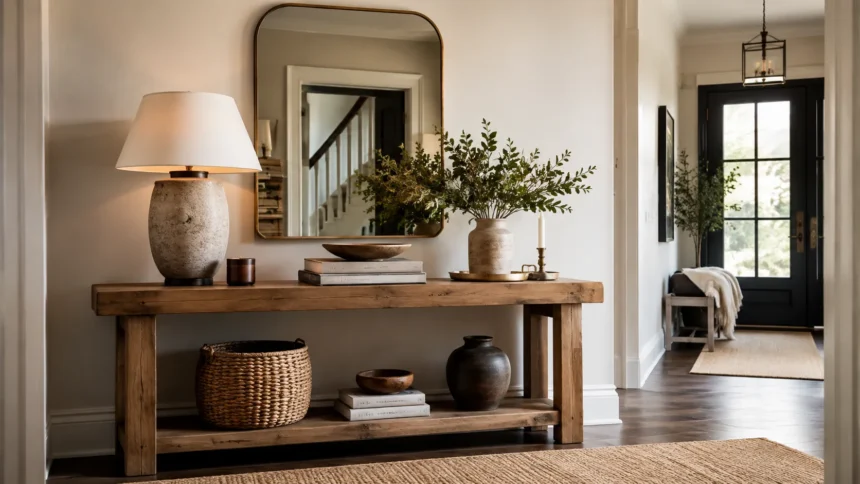
How to Style a Console Table for a Beautiful and Welcoming Entryway
Your entryway gives visitors their first impression of your home, and a thoughtfully decorated console table can instantly make that space feel more welcoming. Even when the hallway is small, the right arrangement can introduce personality, warmth, and visual balance without taking up much floor space. The most effective console table decor ideas combine decorative pieces with practical items that support everyday routines. A beautiful lamp, mirror, storage tray, and a touch of greenery can transform a simple table into a polished focal point. The goal is to create an entrance that looks intentional while still working comfortably for daily life.
A stylish console table does not need to be crowded with decorative accessories. In fact, some of the most sophisticated entryway console table decor uses only a handful of carefully selected pieces. The secret lies in varying heights, shapes, textures, and visual weight while maintaining enough negative space for each object to stand out. One tall lamp can balance a lower stack of books, while a vase or decorative bowl adds softness. These small differences create depth and movement, making the arrangement feel professionally designed rather than randomly assembled.
Function should also influence how you decorate an entryway table. Because this area is often where keys, sunglasses, mail, bags, and other daily essentials naturally land, providing designated storage helps prevent clutter. Decorative bowls, catchall trays, boxes, and baskets can keep necessary items organized without sacrificing style. When storage is thoughtfully incorporated into the display, the console becomes more useful while retaining its polished appearance. This balance between beauty and practicality is especially important in busy households where the entrance must handle frequent movement.
Your home’s interior style should guide the materials and accessories you choose. A modern entryway might feature a sleek console, abstract artwork, sculptural accessories, and a streamlined lamp, while a farmhouse entrance may feel more natural with warm wood, pottery, greenery, and woven baskets. Minimalist homes often benefit from fewer objects with strong shapes, while traditional interiors can comfortably support layered lamps, framed art, books, and decorative boxes. Rather than copying an arrangement exactly, select ideas that naturally complement your furniture, colors, and architectural details.
Most importantly, your console table should reflect your personality rather than appearing like a furniture showroom. Family photographs, books you enjoy, travel finds, handmade pottery, or a meaningful decorative object can introduce individuality to the space. When personal items are combined with good proportions and intentional styling, the result feels collected instead of overly staged. The following console table decorating ideas will help you create an entryway that feels stylish, organized, welcoming, and uniquely connected to the rest of your home.
Start With the Right Console Table for Your Entryway
Before decorating, consider whether your console table fits the scale of the surrounding entryway. A table that is too large can make a narrow hall feel crowded, while a tiny console may look visually lost against a wide wall. The ideal piece should leave comfortable walking space while offering enough surface area for both functional and decorative items. Measure your hallway before choosing furniture and consider how frequently people move through the entrance. Proper proportions create a stronger foundation for every styling decision that follows.
Console table depth becomes particularly important in compact entrances. Slim console tables are excellent for narrow hallways because they provide storage and display space without projecting too far into the walking path. In larger foyers, deeper tables can support larger lamps, decorative bowls, substantial flower arrangements, and additional accessories. However, bigger does not always mean better. Your entryway furniture should feel appropriately scaled to the wall, doorway, and nearby architectural elements rather than simply filling available space.
Height also affects how comfortable and attractive the arrangement feels. Most console tables are designed at a convenient standing height, which makes them suitable for placing keys or mail when entering the home. Wall decor positioned above the table should visually relate to this height rather than floating too far away. Mirrors and artwork often look best when placed close enough to connect with the furniture beneath them. Creating this visual relationship makes the table and wall display appear like one complete composition instead of separate decorative elements.
The material of the console table can establish the mood of the entire entryway. Natural wood creates warmth and suits traditional, farmhouse, rustic, Scandinavian, and organic-modern interiors. Glass or metal tables can feel lighter in visually compact spaces and are often effective in contemporary homes. Painted consoles offer opportunities to introduce subtle or bold color, while stone and marble surfaces can create an elevated appearance. Choose materials that complement nearby flooring, walls, and furniture without making every finish exactly the same.
Storage requirements should also influence your furniture choice. A console with drawers is useful for hiding keys, chargers, dog leads, and other small necessities, while an open lower shelf can accommodate baskets or decorative objects. If the table has no built-in storage, attractive boxes and trays can provide organization on the surface. Thinking about practical needs before decoration prevents the entryway from becoming cluttered later. The strongest console table styling ideas begin with furniture that supports both the appearance and daily function of the home.
Create a Strong Focal Point With a Mirror or Artwork
One of the easiest ways to anchor a console table is to place a mirror or piece of artwork above it. Without something substantial on the wall, even beautifully arranged accessories can appear disconnected or visually unfinished. A large mirror creates an immediate focal point and can also help bounce light around a darker hallway. Artwork provides another opportunity to introduce color, personality, and style. Whichever option you choose, make sure it feels proportionate to the width and height of the table underneath.
A mirror above a console table works especially well in entryways because it serves both decorative and practical purposes. It gives you a convenient place for a quick appearance check before leaving home while making the surrounding area feel brighter and more open. Round mirrors can soften the straight lines of rectangular furniture, while arched mirrors introduce architectural interest. Rectangular mirrors offer a classic structured look. Select a frame that complements your broader interior palette through wood, black metal, brass, or another finish already appearing nearby.
Artwork creates a different mood and allows greater personal expression. One oversized painting or print can make a bold statement, while a carefully arranged collection of smaller frames creates a layered gallery effect. For a calmer appearance, choose artwork containing colors already present in your rug, accessories, or surrounding rooms. You do not need to match colors exactly; subtle repetition is usually enough. Entryway wall decor should connect visually with the console table without making the overall arrangement feel overly coordinated or predictable.
Whether you hang a mirror or artwork, positioning matters. Wall pieces that are placed too high can appear disconnected from the furniture beneath them, leaving an awkward blank area in between. Keeping the lower edge relatively close to the console creates a stronger relationship between both elements. The exact spacing depends on the size of your wall decor and table, so step back and assess the composition from the entrance. Your eye should interpret the furniture and wall piece as part of the same decorative zone.
You can also layer smaller artwork directly on the console rather than hanging everything. Leaning a framed print against the wall behind a lamp, vase, or decorative object creates a relaxed and contemporary feeling. This approach is useful for renters or people who enjoy changing their decor frequently. Several frames of different sizes can overlap slightly for additional depth. However, avoid creating too many competing focal points. Whether you choose a mirror, large artwork, or layered frames, one dominant visual anchor usually gives the entryway a more polished appearance.
Use Lamps to Add Warmth and Visual Height
Lighting plays an important role in creating a welcoming entrance, particularly when the entryway does not receive much natural light. A table lamp can introduce both practical illumination and decorative height while making the area feel softer in the evening. Instead of relying entirely on bright overhead lighting, a lamp creates a warm pool of light that immediately makes the entrance feel more comfortable. It can also serve as one of the tallest elements within your console table decor, helping establish visual hierarchy.
When selecting a lamp, consider its scale in relation to the console and wall decor. A very small lamp may look insignificant on a wide table, while an oversized base can dominate a narrow surface. Substantial lamps often work particularly well on longer consoles because they provide visual weight and anchor one side of the display. Slender designs suit smaller tables where surface space is limited. The shade should also feel proportional to both the base and surrounding accessories so the lighting fixture appears integrated rather than oversized.
Lamp materials provide an easy way to introduce texture and contrast. Ceramic bases bring softness and craftsmanship, while metal lamps offer a cleaner, more contemporary appearance. Glass can visually lighten an arrangement, and stone or textured plaster can suit organic-modern interiors. A woven or linen shade adds another layer of texture while diffusing light pleasantly. When building modern console table decor, mixing the lamp material with contrasting wood, stone, ceramics, or greenery can help the arrangement feel layered rather than excessively matched.
Depending on the width of the table, you can use one or two lamps. A single lamp positioned to one side creates asymmetry and leaves room for artwork, books, or flowers on the other. Two matching lamps produce a more formal, symmetrical appearance and are particularly effective on longer consoles or traditional entryways. Neither approach is inherently better. The right option depends on whether your interior feels casual and collected or structured and elegant. The visual balance should complement the overall character of the space.
If electrical outlets are unavailable, rechargeable decorative lamps can provide similar atmosphere without visible cables. Battery-powered accent lighting has become useful for narrow halls and furniture positioned away from wall sockets. Regardless of the source, use warm, comfortable lighting rather than very harsh illumination whenever possible. Your entrance should feel inviting when someone walks through the door. Thoughtful entryway lighting ideas can make inexpensive accessories look more refined while adding function during darker mornings and evenings.
Add Greenery and Flowers for a Fresh, Natural Look
Plants and flowers can instantly soften hard furniture lines and make an entryway feel more alive. A vase of leafy branches can create impressive height, while a compact houseplant introduces color without overwhelming the surface. Fresh flowers bring seasonal personality and are particularly effective when the rest of the console arrangement uses neutral tones. You do not need elaborate bouquets to create impact. Sometimes a few stems in a beautiful ceramic or glass vase produce a more refined appearance than a large, tightly arranged floral display.
Scale is important when choosing console table greenery. Tall branches look striking beneath high ceilings or beside large mirrors, but they may overwhelm a very narrow hallway. In smaller spaces, use shorter stems, compact plants, or a modest vase. Consider sightlines as well, particularly if the table is positioned near a doorway or opening into another room. Plants should enhance the composition without becoming an obstacle. Choosing greenery according to the dimensions of the space creates a more natural relationship between decor and architecture.
The vase itself can become a decorative feature even when it is empty. Textured pottery, glass vessels, sculptural ceramics, and stoneware add shape and material variation to the console. If your arrangement already contains several decorative objects, a simple vase may be enough. In minimalist entryways, a statement vase with one or two branches can function almost like sculpture. The vessel does not need to match every accessory nearby. Contrasting materials usually create greater depth and make the display appear intentionally collected.
Fresh greenery is not the only option. Dried branches, preserved eucalyptus, grasses, and realistic artificial stems can provide a low-maintenance alternative. These choices are particularly practical in entryways without natural light, where many live plants may struggle. The key is selecting arrangements that suit the season and surrounding interior rather than using greenery simply to fill empty space. Natural-looking shapes and muted tones tend to remain visually appealing longer than heavily artificial floral arrangements that compete with the rest of the room.
Plants can also connect the entryway with greenery used elsewhere in the home. Repeating similar foliage in the living room, kitchen, or nearby hallway creates visual continuity between spaces. This is especially useful in open-plan homes where several rooms are visible from the entrance. You do not need identical plants in every area. Simply repeating natural textures and fresh green tones can make the interior feel cohesive. Entryway decor with plants works particularly well because it immediately communicates warmth and life as soon as someone enters.
Style Books, Bowls, Trays, and Decorative Objects in Layers
Layering is one of the simplest ways to give a console table a professionally styled appearance. Instead of placing every item directly on the surface, use books, trays, boxes, and overlapping objects to create varying heights and visual relationships. A stack of two or three books can elevate a small sculpture or candle, making it more noticeable. A decorative tray can gather several smaller objects into one organized zone. These subtle differences in elevation help the eye move naturally through the arrangement rather than seeing a flat row of accessories.
Decorative books for console tables can also reveal personal interests. Interior design, art, photography, fashion, architecture, travel, and nature books often have visually appealing covers while giving guests something interesting to browse. Choose titles because they genuinely appeal to you rather than solely because their colors match the room. When styling them, place larger books at the bottom and smaller ones above. One small decorative object on top is usually enough to complete the stack without making it appear overly staged.
Bowls and catchall dishes combine beauty with practical storage. Position one near the end of the table where keys and small everyday items can be dropped conveniently. Ceramic, stone, wood, brass, and glass bowls can all work depending on your interior style. If the bowl has an interesting sculptural shape, it can remain empty and function purely as decoration. Functional accessories are particularly valuable in the entryway because they make it easier to keep clutter under control without removing the items you use regularly.
Decorative trays provide another useful organizing tool. A tray can contain candles, small boxes, bowls, or other accessories and visually turn several separate items into one intentional grouping. This is especially useful on wider tables where small pieces might otherwise feel scattered. Choose a tray that contrasts slightly with the console surface. A wooden tray can warm up marble, while metal can create contrast on wood. Woven materials bring softness to modern furniture and work especially well in relaxed, natural interiors.
Sculptural objects should be used sparingly but can add personality and visual interest. A handmade ceramic piece, decorative knot, carved object, vintage find, or travel souvenir can become a memorable element within the arrangement. Avoid filling every gap with another ornament, because negative space helps individual pieces stand out. The most successful console table accessories usually look like they were collected gradually rather than purchased as one matching set. Variety in shape and material creates a richer, more individual display.
Use Baskets and Hidden Storage to Keep the Entryway Organized
A stylish entrance quickly loses its appeal when shoes, bags, mail, and other daily items pile up around the console. Baskets offer one of the easiest ways to create storage while adding warmth and texture. If your console table has an open lower section, slide one or two substantial baskets underneath. They can hold shoes, scarves, pet supplies, children’s items, or reusable shopping bags. Choosing attractive storage means practical necessities can remain accessible without making the entrance feel messy or unfinished.
Woven baskets are particularly useful because their natural texture contrasts nicely with harder surfaces such as painted wood, metal, stone, and glass. Seagrass, rattan, jute, and similar materials can make a modern entryway feel warmer and more relaxed. In more formal interiors, structured fabric bins or decorative storage boxes may be a better fit. Whatever material you choose, the basket should look appropriately sized beneath the table. Very small containers can appear lost, while oversized baskets can make the console area feel crowded.
Drawers provide even more discreet entryway storage. If your console includes them, assign different categories to each area rather than allowing random objects to accumulate. One drawer might hold keys and chargers, while another stores sunglasses, gloves, or pet accessories. Small organizers inside the drawers can prevent items from becoming tangled or difficult to find. The benefit is visual simplicity: the surface remains beautifully styled while everyday essentials stay nearby but hidden from view.
Mail is another common source of entryway clutter. Instead of leaving letters and paperwork scattered across the console, establish a simple system. A slim decorative box, wall organizer, or drawer can temporarily hold incoming mail until you process it. Keep only items that genuinely need attention rather than allowing paperwork to become a permanent decorative feature. A clear routine reduces visual noise and protects the styling effort you have already invested. Organization is an important part of maintaining an elegant entryway over time.
The best storage solutions disappear naturally into the overall decorating scheme. Baskets, boxes, and trays should look intentional rather than purely utilitarian. Repeat materials already present elsewhere in the entrance to create continuity, such as woven storage beneath the console paired with a natural fiber rug. Similarly, wooden boxes can echo a mirror frame or nearby furniture. When entryway organization ideas complement your decor, the space feels both practical and carefully considered, which is ultimately more useful than an arrangement designed only for photographs.
Decorate a Small or Narrow Entryway Without Making It Feel Crowded
Small hallways require a more restrained approach because every object has a greater visual impact. Begin with a slim console that provides useful surface space without restricting movement. Wall-mounted or floating consoles can be excellent options when floor space is particularly limited. Once the furniture is in place, use fewer but more substantial accessories rather than covering the table with many tiny objects. A mirror, small lamp, bowl, and simple vase may be everything necessary to create a polished small entryway decor arrangement.
Mirrors are especially valuable in narrow spaces because they reflect light and visually expand the hallway. A large round or arched mirror can create softness while becoming the dominant decorative feature, reducing the need for additional wall accessories. If natural light enters from a nearby room or window, positioning the mirror strategically may help brighten darker areas. Choose a frame that does not feel excessively heavy for the narrow wall. Slim frames or frameless styles can maintain a lighter visual appearance.
Vertical styling can also help maximize a compact entryway. Rather than spreading numerous accessories horizontally across the console, use one tall lamp, vase, or artwork to draw the eye upward. Height creates interest without consuming additional floor space. Wall hooks, shelves, and narrow vertical storage may also provide function without crowding the table itself. Keeping the arrangement visually clean ensures the entryway remains comfortable to move through while still feeling decorated and complete.
Color choices can influence how spacious the area appears. Light walls and furniture can create an airy feeling, although darker shades can also work beautifully when intentionally designed. The key is limiting visual fragmentation. Too many contrasting colors, patterns, and small decorative objects may make a tiny hallway feel busier. A cohesive palette with several textures often works better. Soft woods, pottery, glass, metal, and greenery can create depth while staying within a relatively controlled color scheme.
Most importantly, avoid decorating simply because an empty section appears available. Negative space is valuable in a small entrance because it prevents both the console and hallway from feeling overloaded. Leave some surface visible and keep the floor around the table clear whenever possible. Every item should either serve a practical purpose or make a meaningful visual contribution. Narrow entryway console table ideas work best when they prioritize comfortable movement, simple organization, and a few carefully chosen details instead of maximum decoration.
Choose Console Table Decor That Matches Your Interior Style
A modern entryway often benefits from clean shapes, simple materials, and carefully selected statement pieces. Consider a streamlined console paired with a large abstract artwork, sculptural lamp, ceramic vase, and a small decorative tray. Keep unnecessary accessories to a minimum so each object has room to stand out. Black, warm neutrals, stone, glass, and metal finishes can all work effectively. Modern console table decor does not necessarily mean cold or sparse; natural materials and greenery can introduce enough warmth to keep the entrance inviting.
For farmhouse interiors, prioritize warmth, texture, and relaxed character. A natural or weathered wood console can be styled with ceramic vessels, framed artwork, woven baskets, stacked books, and leafy branches. Avoid relying too heavily on obvious themed signage or excessively distressed decorative items, which can make the space feel dated. Instead, choose timeless natural materials and simple forms. Combining old and new pieces creates a more authentic farmhouse look and helps the entryway feel collected rather than overly coordinated.
Minimalist console styling depends on careful editing. Select one strong focal point such as a large mirror, then add perhaps a lamp, bowl, and branch-filled vase. Neutral colors, clean silhouettes, and substantial negative space allow materials and proportions to become more noticeable. Instead of decorating with many small pieces, invest visual attention in fewer objects with beautiful shapes or textures. Minimalist entryway decor feels most successful when it is intentionally simple rather than simply empty.
Traditional entryways can support more symmetry and decorative layering. Two lamps, framed art, classic ceramics, decorative boxes, and fresh flowers can create an elegant arrangement. Rich wood finishes, brass details, patterned rugs, and framed artwork complement this style particularly well. You can still keep the surface organized by grouping smaller items into trays and limiting unnecessary ornaments. Traditional does not have to mean formal or crowded. A carefully edited arrangement can preserve classic character while feeling fresh and comfortable.
Organic-modern and Scandinavian interiors work especially well with wood, stone, handmade pottery, woven textures, and restrained greenery. Choose objects with imperfect natural shapes rather than highly polished matching accessories. Warm whites, beige, soft gray, muted brown, and green create a calming palette. A textured lamp beside a sculptural ceramic vase can be enough to create visual interest. When matching console table decor styles to the rest of your interior, focus on repeating materials and mood rather than following strict decorating rules.
Refresh Your Console Table Decor With the Seasons
Seasonal decorating can keep your entryway feeling fresh without requiring a completely new arrangement every few months. Start by choosing foundational pieces that remain throughout the year, such as your mirror, lamp, tray, and favorite decorative bowl. Then change smaller elements such as flowers, stems, candles, books, or textiles according to the season. This method keeps decorating manageable and prevents unnecessary purchases. Small updates are often enough to change the mood of the entrance while maintaining a consistent overall style.
Spring entryway decor can feel lighter through fresh greenery, flowering branches, soft ceramics, and pale accessories. Tulips, daffodils, eucalyptus, and leafy stems can instantly introduce a sense of renewal. You might also swap dark books or accessories for softer neutrals and muted colors. Keep the arrangement airy rather than filling the console with obvious seasonal decorations. A few subtle changes usually look more sophisticated and remain appropriate throughout the entire season rather than only for a particular holiday.
During summer, natural materials work particularly well. Woven trays, light wood, clear glass, organic pottery, and fresh foliage can make the entryway feel casual and relaxed. If your home has coastal influences, gentle blue or sandy tones can be introduced through books or small accessories without creating an obvious beach theme. Keep greenery loose and natural, and allow plenty of open surface. Summer console table decor often looks best when it feels simple, bright, and slightly less layered than winter arrangements.
Autumn allows you to introduce deeper tones and richer textures. Amber glass, warm wood, rust-colored branches, textured ceramics, and candles can make the entrance feel cozy. Instead of filling the table with pumpkins or themed pieces, consider using one subtle seasonal object combined with natural materials. Dried leaves and branches can create height while maintaining a sophisticated appearance. The aim is to capture the colors and feeling of autumn rather than creating a display that must be removed immediately after one holiday.
Winter decor can include warm lighting, candles, deeper greenery, and understated metallic accents. Evergreen branches in a favorite vase create seasonal atmosphere without requiring an elaborate display. During the holidays, a few ornaments, a small wreath, or decorative greenery may be enough. After celebrations end, remove obvious holiday pieces while retaining candles and natural branches for the remainder of winter. Seasonal entryway console table styling feels most timeless when changes are subtle, easy to maintain, and connected to your existing interior.
Common Console Table Decorating Mistakes to Avoid
One of the most common mistakes is placing too many small objects across the console. Small frames, candles, bowls, figurines, and decorative accessories can quickly create visual clutter when each item is positioned separately. Rather than removing personality altogether, combine smaller pieces into intentional groups using books or trays. Then introduce a few larger items to create visual anchors. This difference in scale gives the arrangement greater clarity and helps individual accessories appear more significant rather than getting lost among numerous competing objects.
Another frequent mistake is using accessories that are all the same height. A row of similarly sized frames, vases, or candles creates a flat silhouette and makes the table less visually interesting. Add variation by including a taller lamp or vase, medium-height frame, and lower decorative bowl. Books can also elevate smaller pieces to create additional levels. Designers often rely on these height differences because they naturally guide the eye around the arrangement and help create an attractive sense of movement.
Ignoring the wall above the console can leave the display looking unfinished. Even a well-styled tabletop may feel visually disconnected if a large blank wall remains behind it. Mirrors, artwork, framed photographs, or a carefully arranged gallery can provide the necessary visual anchor. However, the opposite problem can also occur. Too many small frames or wall objects can compete with tabletop decor. Aim for a clear hierarchy where the wall piece acts as the main focal point and smaller accessories support it.
Overmatching is another issue that can reduce visual character. A mirror, lamp, tray, vase, and bowl in exactly the same finish may technically coordinate but can appear overly manufactured. Mixing materials creates greater depth. Pair warm wood with ceramic, metal with greenery, or glass with woven storage. You can maintain cohesion by repeating colors or finishes subtly rather than making every object identical. The most attractive stylish entryway decor often includes pieces that relate to one another without appearing as though they came from the same collection.
Finally, do not sacrifice function for appearance. If every inch of the console is decorated, there may be nowhere to set down keys or mail when entering the home. If baskets block the walkway or fragile accessories are easily knocked over, the arrangement will quickly become frustrating. Leave enough open space for everyday activities and choose storage based on how your household actually uses the entrance. A designer-looking entryway should improve your experience of the home rather than requiring constant rearranging and maintenance.
How to Make a Console Table Look Expensive on a Budget
Creating an elevated entryway does not require expensive furniture or designer accessories. Start by reducing clutter because an edited arrangement often looks more luxurious than a table filled with inexpensive decorative pieces. Choose a few substantial objects rather than many tiny items. A large mirror, simple lamp, ceramic vase, stack of books, and attractive bowl can create an impressive display. By focusing on scale and visual balance, even affordable accessories can appear more intentional and sophisticated.
Natural materials can also help inexpensive decor feel higher quality. Wood, ceramic, stone, linen, glass, and woven fibers typically have more visual depth than lightweight plastic accessories. You do not need genuine marble or rare handmade pottery to achieve this effect. Look for pieces with interesting texture and simple shapes rather than obvious imitation finishes. Thrift stores, vintage shops, local markets, and items already in your home can provide distinctive objects that make budget entryway decor feel personal and collected.
Secondhand pieces can be particularly effective because they introduce character that mass-produced accessories sometimes lack. An old ceramic vase, framed artwork, vintage bowl, or wooden box can become a statement piece when combined with modern items. Mixing periods often creates the layered appearance found in professionally decorated interiors. Focus on shape and condition rather than brand names. Even a simple object can look special when placed thoughtfully beside books, greenery, or warm lighting.
Updating the wall above the console can also make a significant difference. Instead of purchasing numerous tabletop decorations, invest your attention in one large mirror or statement artwork. A strong wall focal point reduces the amount of additional decor you need. You can also frame affordable prints or personal photographs using matching or complementary frames. The combination of one substantial anchor and several smaller supporting objects creates visual confidence, which often makes a space feel more expensive regardless of the actual cost.
Lighting provides the final layer of atmosphere. A warm lamp can make both the console and surrounding accessories appear richer, particularly in the evening. Avoid relying solely on harsh overhead lighting when possible. A pleasant glow brings out wood grain, ceramics, metal, and textured materials while making the entrance more inviting. Ultimately, luxury console table decor ideas are less about spending heavily and more about thoughtful proportions, carefully selected materials, organization, and restraint.
Conclusion: Create an Entryway That Feels Stylish and Personal
A beautifully styled console table can transform even a simple hallway into an inviting introduction to your home. Begin with furniture that fits comfortably within the available space, then establish a focal point using a mirror, artwork, or another substantial wall element. From there, layer accessories gradually rather than filling the surface immediately. A lamp, vase, bowl, tray, books, and greenery provide plenty of possibilities for creating an arrangement with varied height, shape, and texture.
Remember that negative space is part of good design. Leaving areas of the console visible prevents the arrangement from feeling cluttered and provides practical room for everyday activities. Use baskets, trays, drawers, and decorative boxes to manage keys, mail, shoes, and other necessities. Thoughtful organization allows your carefully chosen accessories to remain visible rather than disappearing beneath household clutter. The result is an entrance that looks appealing not only in photographs but also during ordinary daily life.
Your interior style can help narrow down accessory choices without becoming a strict rulebook. Modern spaces may benefit from sculptural objects and streamlined materials, while traditional rooms can support greater layering and symmetry. Farmhouse, Scandinavian, minimalist, and organic-modern interiors each have different visual characteristics, but all rely on proportion and balance. Choose pieces that relate to the broader character of your home while introducing enough variation to keep the display interesting.
Personal items are what ultimately prevent a console table from looking generic. Add a favorite book, meaningful photograph, travel object, handmade piece, or another detail that tells part of your story. These objects do not need to dominate the arrangement. Even one personal item surrounded by simpler decor can make the space feel more authentic. A beautiful home should reflect the people who live there rather than reproducing a perfectly staged furniture catalog.
The best console table decor ideas for a stylish entryway combine beauty, organization, and personality. Focus on one strong focal point, vary accessory heights, mix textures, incorporate practical storage, and keep enough open space for the table to function comfortably. You can refresh smaller pieces with the seasons while keeping your foundational decor consistent. With thoughtful editing and a few well-chosen details, your console table can become one of the most welcoming and memorable features in your home.
Frequently Asked Questions
What should I put on an entryway console table?
Use a balanced combination of a lamp, mirror or artwork, vase, greenery, decorative bowl, books, and a catchall tray. Choose fewer substantial pieces instead of filling the table with many small accessories.
How do you decorate a console table without making it look cluttered?
Group smaller items on trays or books, vary accessory heights, and leave visible negative space between arrangements. Keeping some of the tabletop clear makes the display feel more polished and practical.
Should you put a mirror or artwork above a console table?
Both can work beautifully. A mirror adds light and practical function, while artwork introduces color and personality, so choose whichever option better suits your entryway and interior style.
How do you style the bottom of an entryway console table?
Place one or two woven baskets, storage boxes, stools, or decorative objects underneath the table. Keep enough empty space around them so the lower section feels intentional rather than crowded.
How can I make my entryway console table look expensive?
Use fewer high-impact accessories, mix natural-looking materials, add warm lighting, and create a strong focal point with a large mirror or artwork. Thoughtful proportions and uncluttered styling matter more than expensive decor.