

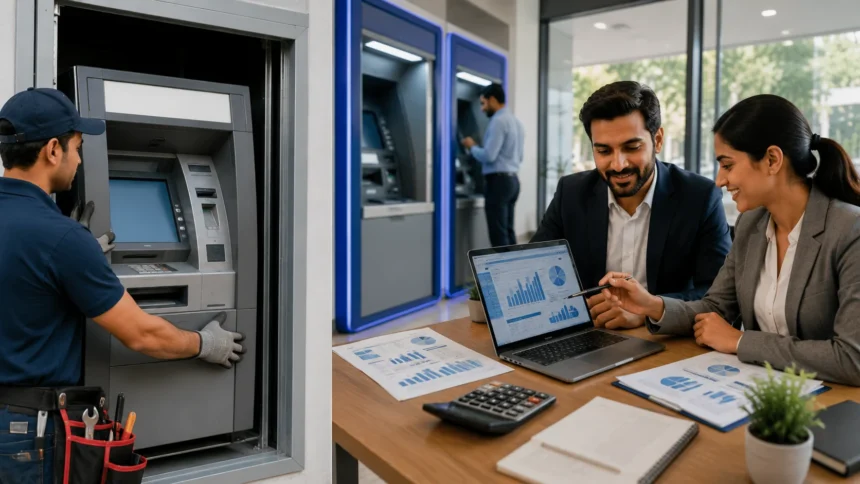
How to Start an ATM Business
Learning how to start an ATM business can be an attractive way to build a relatively simple service business around locations where customers regularly need access to cash. Independent ATM owners typically place machines inside convenience stores, bars, restaurants, entertainment venues, laundromats, hotels, shopping centers, and other businesses, then earn income when customers complete surcharge-paying withdrawals.
The basic model sounds straightforward, but successful ATM ownership involves considerably more than buying a machine and plugging it into a wall. You need a suitable business structure, a reliable ATM processor, banking relationships, secure cash-loading procedures, appropriate equipment, written location agreements, insurance, transaction monitoring, maintenance, and enough working capital to keep each machine stocked with cash.
Location quality is particularly important. An ATM in a high-traffic business where customers frequently use cash may complete many profitable transactions every month, while an identical machine placed in the wrong location may barely cover its operating costs. Successful operators therefore spend significant time finding and retaining strong locations rather than simply accumulating machines.
The best way to enter the ATM business is usually to begin with one or a small number of machines, understand how transactions and settlements work, measure real profitability, and expand only after developing repeatable systems. This guide covers the process from choosing your business model and ATM locations to understanding surcharge revenue, cash management, security, processing, and long-term growth.
Understand How an ATM Business Works
An independent ATM business generally earns money by making cash conveniently available to customers at locations that do not have enough nearby bank-owned ATMs. When a customer completes a withdrawal, the machine may charge an ATM surcharge that is disclosed to the customer before the transaction is completed.
A transaction passes through electronic networks and your ATM processor before reaching the customer’s financial institution for authorization. If the withdrawal is approved, the ATM dispenses cash while the electronic transaction is recorded for settlement.
The physical money inside the ATM is therefore only one part of the process. Behind every withdrawal is a combination of ATM hardware, software, telecommunications, processing networks, settlement accounts, customer banks, security procedures, and transaction records.
As the ATM owner, your responsibilities can include providing the machine, establishing the location agreement, arranging processing, maintaining appropriate cash levels, monitoring transactions, fixing equipment problems, and ensuring that the machine continues operating reliably.
Decide What Type of ATM Business You Want
There are several ways to participate in the ATM industry. Some entrepreneurs purchase their own machines, secure their own locations, and manage cash replenishment themselves. This approach gives the owner greater control but also requires more capital and operational involvement.
Another model involves owning machines while using a professional cash-loading or armored service. This can reduce the amount of physical cash the owner handles personally, although additional service expenses can reduce profit margins.
Some operators focus primarily on securing ATM locations and partnering with other providers for equipment, processing, or cash management. Others build vertically integrated businesses that control almost every part of the operation.
Your ideal model depends on available capital, geographic area, risk tolerance, time, transportation, security preferences, and growth plans. Understanding these tradeoffs before purchasing equipment can prevent you from building an operation that becomes difficult to manage.
Research Your Local ATM Market
Before buying a machine, study where people still regularly use cash in your market. Some businesses naturally generate stronger ATM demand than others because customers either prefer cash or benefit from having immediate access to it.
Visit convenience stores, bars, nightclubs, restaurants, barber shops, salons, laundromats, entertainment venues, flea markets, independent retailers, smoke shops where lawful, event facilities, hotels, and other businesses that might benefit from an ATM.
Look at existing machines as well. Pay attention to where ATMs are already installed, how prominently they are positioned, whether customers appear to use them, and which businesses operate without convenient cash access.
Your goal is not simply finding a business without an ATM. You need a location where customer traffic and cash demand are strong enough to generate consistent transactions. A busy business can still be a weak ATM location if nearly every customer pays electronically.
Create an ATM Business Plan
An ATM business plan helps you understand how many transactions you need before a machine becomes worthwhile. Start by defining the number of machines you want to operate initially, the geographic area you will cover, and the types of businesses you will target.
Estimate your startup costs. These may include ATM equipment, installation, connectivity, processing setup, business registration, insurance, signage, transportation, security equipment, location payments, and the cash required to stock each machine.
Then estimate ongoing expenses. You may face processing charges, wireless or internet connectivity, maintenance, receipt paper, replacement components, location commissions, insurance, bank expenses, cash transportation, and other operational costs.
Finally, create realistic transaction scenarios. Calculate what happens if a location completes 50, 150, 300, or more withdrawals per month instead of assuming every machine will immediately become highly active. Conservative projections make investment decisions safer.
Choose a Business Structure
Your ATM company needs an appropriate legal structure just like other businesses. Depending on your location and circumstances, options may include a sole proprietorship, limited liability company, partnership, or corporation.
Many entrepreneurs evaluate an LLC because they want to establish a formal business entity and keep business activity clearly separated from personal activity. However, forming an LLC does not eliminate the need for proper insurance, banking, contracts, or operational controls.
Your structure also affects taxes, bookkeeping, ownership arrangements, and administrative requirements. If you plan to have partners or outside investors, these considerations become even more important.
Choose the structure based on the actual business rather than simply following a generic online recommendation. When significant cash, liability, or multiple owners are involved, professional legal or tax advice can be valuable.
Register Your ATM Business
After choosing the business structure, complete the registrations required in your state and local jurisdiction. Requirements can vary based on where the company is organized and where it conducts business.
A formal business may need state formation documents, an assumed business name, local licenses, tax registrations, or other permits depending on the location and business activities.
Do not assume that buying an ATM automatically authorizes you to operate anywhere. General business registration, location-specific rules, contractual requirements, and financial-industry compliance are separate considerations.
Keep all registration documents organized. ATM processors, banks, insurers, property owners, and other partners may request information verifying the identity and ownership of your business.
Obtain an EIN and Build a Separate Financial Identity
U.S. businesses commonly obtain an Employer Identification Number from the IRS when required for federal tax and administrative purposes. Even businesses without traditional employees may find an EIN useful for banking and other commercial relationships depending on their structure.
Use your legal business information consistently across processor applications, banking documents, contracts, insurance, and tax records. Inconsistencies can delay account verification or create unnecessary compliance questions.
Avoid operating a growing ATM company entirely through personal accounts. Cash-intensive businesses already receive additional attention from financial institutions, so clean documentation is especially important.
Treat the ATM company as a real financial operation from the beginning. Proper formation, identification, bookkeeping, and transaction documentation can make banking and future expansion significantly easier.
Open an ATM Business Bank Account
Banking is one of the most important aspects of running an independent ATM business. You generally need an account through which transaction settlement and other business activity can be managed appropriately.
Be transparent with financial institutions about the nature of your operation. Independent ATM businesses involve significant cash movement, and banks may have specific due-diligence procedures or account requirements for ATM operators.
Ask potential banks about ATM-related business accounts before moving large amounts of cash through an ordinary small-business account. A bank that understands independent ATM operations can be easier to work with as transaction volume grows.
Keep ATM settlement activity, operating expenses, owner compensation, and personal finances appropriately separated. Clean bank records make reconciliation, taxes, fraud detection, and profitability analysis much easier.
Understand Banking Due Diligence for ATM Operators
Banks may want to understand how an independent ATM business operates before opening or maintaining an account. This can include questions about machine locations, ownership, processors, cash sources, transaction volume, and business structure.
Do not view these questions as an inconvenience to work around. Financial institutions have responsibilities around understanding customers and identifying unusual financial activity.
Maintain records showing where your machines are located and how the cash used in them is obtained. Your processor reports and bank deposits should make economic sense when viewed alongside your actual business.
An operator who can clearly explain where money comes from and where it goes is in a much stronger position than someone moving large amounts of unexplained cash between unrelated accounts.
Understand Whether Money Services Business Rules Apply
A conventional independent ATM that primarily allows customers to access existing accounts for ordinary transactions is not automatically the same as a money transmission business. However, adding other financial services can change the regulatory analysis.
For example, businesses that exchange currency, transmit money, provide certain virtual-currency services, or engage in other regulated financial activities may face requirements beyond those of an ordinary cash-dispensing ATM operation.
This distinction matters because ATM operators sometimes attempt to expand into additional financial services without realizing that the compliance requirements may change substantially.
Keep the initial business model simple unless you understand the regulatory consequences of additional services. If your ATM operation goes beyond ordinary account access and cash dispensing, obtain appropriate compliance advice.
Find a Reliable ATM Processor
An ATM processor connects the machine to the financial networks that allow customers’ withdrawal requests to be authorized. Choosing a processor is therefore one of your most important vendor decisions.
Compare more than price. Ask about network compatibility, settlement procedures, monitoring tools, technical support, reporting, contract length, termination conditions, equipment compatibility, and available remote-management features.
Good support matters because ATM downtime immediately stops surcharge revenue. If a machine experiences communication or transaction problems, you need access to people or systems capable of helping you restore service quickly.
Understand every fee before signing. Some providers advertise inexpensive processing but recover revenue through equipment, contractual commitments, or other service charges. Compare the entire economic arrangement rather than one headline number.
Understand How ATM Processing Works
When someone inserts or taps a supported card and requests a withdrawal, the ATM communicates transaction information through the processor and relevant payment networks.
The customer’s financial institution determines whether sufficient funds are available and whether the requested transaction should be approved.
Once approved, the ATM receives authorization and dispenses the corresponding amount of cash. Transaction records allow the financial system to account for the electronic movement associated with the physical cash dispensed.
As an operator, you should understand this workflow well enough to investigate settlement differences, failed transactions, reversals, and customer disputes. You do not need to become a network engineer, but you should understand how your revenue is created.
Understand ATM Settlement
ATM settlement is the process through which money associated with completed withdrawals reaches the appropriate business account according to your processor and banking arrangement.
Suppose an ATM dispenses thousands of dollars in customer withdrawals over several days. The electronic settlement process replenishes the corresponding value through the banking system, subject to timing, adjustments, and the terms of your processor.
This is why ATM cash is sometimes described as working capital rather than an ordinary operating expense. The cash physically moves from your machine to customers while the corresponding electronic funds are settled back through your account.
Careful reconciliation is still essential. Compare cash loads, withdrawals, settlement reports, fees, and remaining machine balances regularly so discrepancies are detected quickly.
Decide How Much Money You Need to Start
The amount required to start an ATM business depends heavily on machine prices and the amount of cash required to keep each location stocked.
Your ATM purchase is only one expense. If you install several machines simultaneously, you may need substantial additional working capital simply to fund the cash inside them.
For example, a busy location can require frequent replenishment. Even when that money cycles back through settlement, you still need enough liquidity to keep the machine operational between loading and settlement activity.
Beginners often underestimate this part of the business. Buying ten machines is not useful if you have enough available cash to keep only two of them reliably stocked.
Buy a New or Used ATM?
New ATMs generally cost more but may offer current hardware, modern security features, manufacturer support, warranties, and better compatibility with current processing requirements.
Used machines can reduce startup costs, but the lowest purchase price is not always a bargain. Older equipment may require upgrades, replacement parts, or additional maintenance before it can operate reliably.
Before buying a used ATM, confirm processor compatibility and ensure the machine meets the technical and security requirements needed for your intended deployment.
Buying obsolete equipment can be expensive even if the initial price is extremely low. Your processor or experienced ATM service provider should be able to help verify whether a particular model remains suitable.
Choose the Right ATM Machine
ATM models differ in capacity, security, size, appearance, connectivity, user interface, and intended location.
A small convenience store may need a relatively straightforward indoor machine, while a high-volume venue may benefit from greater cash capacity and stronger physical security.
Think about cassette capacity because it determines how frequently you need to replenish cash. A machine requiring daily service can consume considerable time when the location is far from your operating base.
Also consider accessibility, software support, spare parts, remote monitoring, and technician availability. A machine that is inexpensive but difficult to service can become costly after installation.
Understand EMV and Modern Card Security
Modern ATMs should support current card-security standards, including chip-based transaction technology where required by networks and processors.
Outdated equipment can create additional fraud exposure, processing limitations, or liability concerns. Never assume that a machine is suitable simply because it powers on and dispenses cash.
Ask your processor which hardware and software standards are currently required before purchasing machines.
Security standards evolve over time, making ongoing updates part of the ATM business. Equipment should be viewed as technology infrastructure rather than a permanent asset that never needs modernization.
Consider Contactless ATM Capabilities
Some modern ATM equipment can support contactless card or mobile-wallet interactions depending on hardware, software, processors, and participating financial institutions.
Contactless features can improve convenience for customers who increasingly use phones and digital wallets rather than relying exclusively on physical cards.
However, do not purchase equipment solely because a sales representative promises advanced features. Verify exactly what the processor and networks support in your intended configuration.
Focus first on reliability, security, accessibility, and transaction volume. Advanced features are valuable only when customers can actually use them.
Understand ATM Accessibility Requirements
ATM accessibility should be considered before installation, not after a complaint occurs. U.S. accessibility rules include technical requirements affecting ATMs in covered environments.
Requirements can involve reach ranges, clear floor space, operable controls, display characteristics, speech output, privacy, and other features intended to make machines usable by people with disabilities.
Modern compliant equipment can make implementation easier, but the machine itself is only part of accessibility. Installation height and surrounding physical space also matter.
Before deploying an ATM in a public-facing location, confirm that the equipment and installation satisfy applicable accessibility standards. This is another reason extremely old used machines can become problematic.
Understand ATM Surcharges
The ATM surcharge is one of the main sources of revenue for an independent operator. It is the amount an ATM user agrees to pay the machine operator for completing the transaction.
The ideal surcharge varies by location, local competition, customer expectations, and contractual arrangements. A high surcharge can produce more revenue per transaction but may discourage some customers from using the machine.
Customers must receive the required fee disclosure before being committed to a fee-charging electronic transfer. Your processor and machine configuration should support the applicable disclosure process.
Do not change fees casually without considering both customer experience and your location agreement. The most profitable surcharge is not necessarily the highest amount you can technically configure.
How Does an ATM Business Make Money?
Imagine your ATM charges a $3 surcharge and completes 200 surcharge-paying withdrawals during a month. Gross surcharge revenue would be $600 before accounting for commissions, processing expenses, maintenance, and other costs.
If the location owner receives part of each surcharge, your share decreases accordingly. Processing arrangements and other vendor fees can further reduce the amount you keep.
This is why transaction volume matters so much. A machine with a moderate surcharge and strong volume can be much more valuable than one charging a high fee but completing very few withdrawals.
Operators should measure net ATM revenue rather than celebrating gross surcharge income. Your real goal is profit after every cost associated with acquiring, placing, stocking, and servicing the machine.
Calculate Revenue Per ATM Transaction
Begin with the surcharge paid by the customer. Then subtract the location commission if you have agreed to share revenue with the business owner.
Next, account for processing expenses, communications, maintenance reserves, paper, cash-management expenses, transportation, insurance, and other applicable costs.
Some expenses happen per transaction, while others are fixed monthly or annual costs. Converting those fixed expenses into an estimated cost per transaction can make location comparisons easier.
Once you know net revenue per withdrawal, you can calculate how many monthly transactions a machine needs to generate your target return.
Find Profitable ATM Locations
Location selection is arguably the most important part of learning how to start an ATM business. An excellent machine cannot compensate for a location with little customer demand.
Look for businesses with steady foot traffic, extended operating hours, and reasons for customers to use cash. Venues that already have cash-only or cash-preferred transactions can be particularly attractive.
Accessibility and visibility within the business matter too. A machine hidden behind merchandise or positioned where customers cannot comfortably reach it may underperform even when the business receives strong traffic.
Before signing an agreement, spend time understanding actual customer behavior. Ask the owner how many customers request cashback or ask where the nearest ATM is, and evaluate whether another machine operates nearby.
Good Locations for an ATM Business
Convenience stores can be attractive because customers frequently make small purchases and may want immediate access to cash.
Bars and nightlife venues can also generate demand where cash tips, cover charges, gaming activities where lawful, or other cash transactions are common.
Laundromats, entertainment facilities, independent retailers, hotels, event venues, barber shops, salons, and certain service businesses may also provide opportunities depending on customer behavior.
The category itself does not guarantee success. One small neighborhood bar can outperform a much larger restaurant if its customers use substantially more cash.
Evaluate Foot Traffic Before Installing an ATM
Ask the location owner about average daily customer counts, peak hours, seasonal changes, and whether customers frequently ask for cash.
Visit the business during several periods rather than relying entirely on the owner’s estimate.
Look at checkout behavior. If most customers use cards and mobile wallets even for very small purchases, ATM demand may be limited.
Use a conservative expected conversion rate when estimating transactions. Avoid purchasing a machine based on the assumption that every person entering the building will use the ATM.
Look for Cash-Dependent Customer Behavior
The strongest ATM locations usually provide a clear reason for someone to withdraw cash.
A customer may need cash for a service, tipping, vending, an event, an on-site merchant, or another purchase that cannot conveniently be completed electronically.
When customers can complete every transaction easily with a card, phone, or contactless payment, ATM use may be lower even in a busy location.
Think about the entire customer journey. Ask why someone standing inside that business would pay a surcharge to obtain cash right now.
Approach Businesses About Installing an ATM
Start with independent businesses where you can speak directly with an owner or decision-maker.
Explain the benefit to the merchant rather than simply telling them you need somewhere to place a machine. An ATM can provide customers with convenient access to cash and may reduce the need for the merchant to offer cashback.
If you offer a commission, explain how it works clearly. Some merchants prefer a percentage or amount per surcharge transaction, while others may accept a different commercial arrangement.
Bring a simple professional proposal showing the machine, expected responsibilities, installation requirements, cash-loading arrangement, and support process.
Create an ATM Placement Agreement
Never rely entirely on a handshake when placing expensive equipment and cash inside another person’s business.
A written ATM placement agreement can define who owns the machine, how long it will remain at the location, how surcharge revenue is shared, who supplies electricity or connectivity, and who is responsible for damage.
The agreement should also explain access rights, relocation, termination, exclusivity, security responsibilities, and what happens if the business changes ownership.
Strong contracts become increasingly important as you build a portfolio. An ATM location can become valuable, and unclear agreements can create disputes once the machine begins generating meaningful revenue.
Decide How Much Commission to Give Location Owners
Some merchants will allow ATM placement because the machine benefits their customers. Others expect a share of surcharge revenue.
The appropriate commission depends on location quality and negotiating power. A high-volume venue may justify a larger share because the location itself creates substantial economic value.
Do not offer so much commission that the machine becomes unprofitable. Calculate your expected transaction volume and operating costs before making promises.
A profitable long-term relationship should benefit both parties. Merchants are more likely to protect and promote a machine when they can see value from having it onsite.
Consider ATM Location Exclusivity
An exclusivity clause can prevent the merchant from allowing a competing ATM to be installed nearby during your agreement.
This can protect the transaction volume that justified your equipment investment.
However, exclusivity needs to be reasonable and clearly drafted. Business owners may resist overly restrictive terms, particularly if your machine repeatedly runs out of cash or experiences downtime.
Exclusivity works best when combined with performance. If you expect a merchant to reject competitors, you should maintain reliable service and cash availability.
Install the ATM in the Right Position
Position the machine somewhere visible but physically secure. Customers should be able to find it easily without blocking normal business operations.
Avoid locations where customers feel exposed while entering a PIN or receiving cash. Privacy and personal safety influence whether people feel comfortable using the machine.
The ATM should also be accessible for servicing and cash replenishment without requiring you to move merchandise or disrupt the business.
Discuss electrical and connectivity requirements before installation. Arriving with a machine only to discover that the chosen location lacks suitable infrastructure can delay the launch.
Secure the ATM Physically
ATMs contain cash, making physical security essential. Machines should generally be appropriately secured according to the equipment and installation environment.
Bolting or otherwise professionally securing an indoor unit can reduce theft risk. Location owners should understand that moving the machine casually can create both security and equipment problems.
Higher-risk locations may justify additional surveillance, alarms, stronger enclosures, or other controls.
Evaluate security before placing cash into the machine. A location that generates excellent transaction volume is not automatically worth accepting if theft risk is unreasonably high.
Use Surveillance Strategically
Positioning an ATM within view of existing business security cameras can provide additional protection and useful evidence if suspicious activity occurs.
Cameras should cover the general machine area without compromising PIN privacy or capturing sensitive information improperly.
Discuss footage retention with location management if surveillance is an important part of your security strategy.
Security measures should work together. Cameras are valuable, but they do not replace secure installation, good machine design, transaction monitoring, and careful cash-management procedures.
Decide Who Will Load Cash Into the ATM
One of the biggest operational decisions is whether you will personally replenish the machine or use another cash-loading arrangement.
Self-loading can preserve more revenue but requires you to transport and handle substantial amounts of physical currency.
Professional cash services may improve security and save time, particularly as the number of locations grows, but they add operating expenses.
Your choice should consider transaction volume, geography, personal safety, insurance, available cash, and how frequently machines require replenishment.
Understand ATM Vault Cash
The money physically loaded into an ATM is often called vault cash.
This money should be treated as operating capital dedicated to ATM withdrawals rather than ordinary profit available for business purchases.
The amount needed depends on transaction volume, average withdrawal amount, cassette configuration, and how often you can replenish the machine.
Track vault cash carefully by location. You should always be able to reconcile how much money was loaded, how much was dispensed, and how much should remain in the ATM.
Determine How Much Cash to Load
Do not fill every ATM with the maximum amount of cash simply because the machine can hold it.
Estimate expected withdrawals and refill frequency. A low-volume machine may require only a modest amount, while a busy weekend venue can need substantially more.
Carrying excessive idle cash reduces capital efficiency and increases the amount potentially exposed to theft.
Carrying too little creates the opposite problem. An empty ATM earns no surcharge revenue and can frustrate both customers and location owners.
Avoid Letting the ATM Run Out of Cash
Running out of cash is one of the easiest ways to lose profitable transactions.
Use monitoring software to track remaining cash and withdrawal activity remotely whenever your processor and equipment support it.
Plan around weekends, holidays, paydays, events, and seasonal periods that may increase withdrawals unexpectedly.
A merchant with a high-performing location will quickly become frustrated if customers repeatedly see an out-of-service or cash-empty screen. Reliability helps protect valuable placement agreements.
Develop Safe Cash-Loading Procedures
Avoid creating predictable public routines when carrying cash.
Vary servicing times where practical and remain aware of the environment before approaching a machine.
Do not count or expose large amounts of money unnecessarily in public areas.
As your ATM portfolio grows, review whether continuing to personally transport increasing amounts of cash remains sensible. Growth can eventually justify more professional cash-management arrangements.
Monitor Every ATM Remotely
Remote ATM monitoring can show transaction activity, cash levels, communication status, errors, and other useful operational information.
This reduces unnecessary trips because you do not need to physically inspect every machine simply to know whether it is functioning.
Set alerts for problems that need quick attention. A machine that goes offline on Friday evening at a busy nightlife venue could lose an entire weekend of revenue if nobody notices until Monday.
Centralized monitoring becomes increasingly valuable as your portfolio grows from a few nearby machines to dozens of geographically distributed locations.
Maintain Your ATM Regularly
ATMs are mechanical and electronic devices that require maintenance.
Receipt printers can jam, card readers can malfunction, screens can fail, dispensers can experience errors, and communications equipment can stop working.
Keep basic consumables and commonly needed service items available so minor problems do not cause lengthy downtime.
Establish relationships with technicians capable of servicing your machine models. Knowing who to call before the first serious failure is far better than searching for help while a high-volume ATM remains offline.
Keep Receipt Paper Available
Receipt paper is inexpensive compared with the revenue lost when a poorly maintained machine creates a bad customer experience.
Monitor paper levels and replace rolls before they run out.
Keep compatible spare rolls in your service vehicle or storage area.
Small maintenance tasks may seem unimportant individually, but reliable operations depend on completing many of them consistently.
Keep ATM Software Updated
ATM software and processor configurations can require updates for security, functionality, or network requirements.
Ignoring updates can create compatibility issues and potentially increase security exposure.
Work with your processor or qualified service provider rather than installing unverified software or modifications.
Keep records of upgrades and equipment changes. Documentation becomes particularly useful when several machine models are operating across multiple locations.
Protect Against ATM Skimming
Skimming involves criminals attempting to capture card information through unauthorized hardware or other methods.
Inspect card readers and surrounding areas when servicing your machine. Look for components that appear loose, altered, or inconsistent with the equipment.
Newer security technology and transaction monitoring can reduce certain risks, but physical inspections remain valuable.
Train location staff to contact you immediately if they see someone tampering with the machine or attaching unfamiliar equipment.
Understand ATM Fraud Risk
Fraud can involve stolen cards, compromised credentials, physical tampering, transaction disputes, or other schemes.
Monitor unusual transaction patterns rather than assuming every approved transaction is automatically legitimate.
Your processor may provide tools and support for identifying suspicious activity or investigating transaction issues.
Keep machine security, software, surveillance, and cash controls current. Fraud prevention should be treated as an ongoing operational responsibility.
Understand ATM Fee Disclosure Requirements
When an ATM operator imposes a fee on a consumer for initiating certain transactions, applicable federal disclosure requirements need to be satisfied.
The customer should be informed of the fee and given the opportunity to make an informed decision before being committed to paying it.
Modern machine software and processor configurations generally help present required on-screen disclosures, but the operator remains responsible for using compliant equipment and configuration.
Do not attempt to hide surcharges. Transparent fees create a better customer experience and reduce unnecessary disputes.
Consider Business Insurance
ATM owners can face risks involving equipment damage, theft, property claims, cash loss, cyber incidents, and other business events.
Insurance needs depend on whether you personally load cash, how many machines you own, where they are installed, and whether you employ others.
Ask insurers specifically about ATM operations rather than purchasing generic coverage without describing the actual business.
Read exclusions carefully. A policy that covers equipment may not automatically cover all cash losses, employee theft, transit exposure, or other situations relevant to your operation.
Track ATM Revenue and Expenses Separately
Good bookkeeping allows you to understand which locations actually generate profit.
Track surcharge revenue, merchant commissions, processor charges, maintenance, connectivity, insurance, transportation, and equipment costs.
Also track the capital tied up in vault cash separately from ordinary expenses.
Once you operate several machines, location-level accounting becomes extremely valuable. One machine may produce excellent returns while another quietly loses money every month.
Calculate Profit Per ATM
Start with monthly surcharge and other operator revenue associated with the machine.
Subtract location commissions, processing charges, communications, maintenance, insurance allocation, cash-management expenses, and transportation costs.
Then consider the original equipment investment and how quickly the machine is recovering that capital.
A profitable portfolio is built by retaining machines with attractive net returns rather than simply displaying the largest possible machine count.
Calculate Your Break-Even Point
Suppose a machine and installation require a meaningful upfront investment. Divide that investment by expected monthly net profit to estimate how long it may take to recover your initial capital.
If your machine produces only a small net amount each month, recovering the investment could take years.
A high-volume location can shorten that period substantially.
Use conservative transaction assumptions before buying equipment. An attractive projection based on hundreds of monthly transactions means little if the actual location delivers only a fraction of that volume.
Understand That ATM Income Is Not Fully Passive
ATM businesses are sometimes promoted as passive-income opportunities, but that description can be misleading.
Someone still needs to find locations, negotiate agreements, monitor machines, manage cash, resolve errors, handle banking, maintain equipment, reconcile settlements, and replace poor locations.
Automation and outsourced services can reduce owner involvement as the business grows.
A better description is a systemizable recurring-revenue business. It can become less hands-on over time, but dependable operations still require management.
Avoid ATM Business Opportunity Scams
Be cautious of companies guaranteeing specific transaction volumes or effortless profits from ATM packages.
A machine has value only when it is placed in a location where customers actually use it.
Ask whether income claims are based on verified operating data or optimistic examples.
Do not buy a large package of machines before understanding where they will be installed. Owning ten ATMs in storage is not the same as owning ten profitable ATM locations.
Be Careful With Guaranteed ATM Locations
Some vendors advertise machine packages that include “guaranteed locations.”
Read the terms carefully. A location can technically be provided while still generating almost no customer transactions.
Ask how locations are selected, what happens if a site severely underperforms, whether relocation is included, and who controls the placement agreement.
Whenever possible, evaluate location economics yourself. Outsourcing sales does not remove your responsibility for deciding whether the investment makes sense.
Avoid Buying Too Many Machines at Once
Beginners sometimes assume profitability comes mainly from scale and purchase several machines immediately.
This can create unnecessary financial pressure because every machine needs installation, processing, cash, maintenance, and a suitable location.
Start with one or a few machines and learn the operational process.
Once you understand settlement, replenishment, merchant relationships, transaction patterns, and real profitability, expanding becomes much safer.
Know When to Relocate an Underperforming ATM
Not every placement will succeed.
If transaction volume remains weak after a reasonable testing period, investigate whether visibility, signage, surcharge level, machine positioning, or another fix could improve usage.
If the business simply does not generate enough cash demand, relocating may be the smarter choice.
Do not allow sunk costs to keep equipment in a permanently weak location. The same machine may generate substantially more revenue somewhere else.
Build Relationships With Location Owners
Strong merchant relationships can protect your ATM portfolio.
Respond quickly when a business owner reports a problem and keep the machine stocked and clean.
Share commission statements accurately when the merchant receives part of the surcharge.
A satisfied owner may eventually introduce you to other businesses, making referrals one of the most valuable ways to obtain new ATM locations.
Ask Existing Merchants for Referrals
Once an ATM has performed well for several months, ask the business owner whether they know other merchants who may need one.
Business owners frequently know other local entrepreneurs through suppliers, industry groups, neighborhoods, or professional relationships.
A warm introduction can make ATM placement easier than cold outreach.
Referrals also provide social proof. A potential location may feel more comfortable when another respected merchant already uses your service successfully.
Create a Professional ATM Sales Pitch
Your pitch should explain what the merchant gains from the relationship.
Highlight convenient cash access for customers, professional installation, reliable servicing, and any agreed revenue-sharing opportunity.
Explain who handles the cash, maintenance, processing, and technical problems so the merchant understands how little operational involvement may be required from them.
Keep the pitch realistic. Avoid promising that an ATM will dramatically increase a merchant’s revenue without evidence.
Use Local SEO to Find ATM Placement Leads
An ATM business can build a simple website explaining placement services to local merchants.
Create pages describing the cities or regions you serve and the types of businesses where you install machines.
Use natural terms such as ATM placement service, ATM installation, ATM operator, and cash machine for businesses where appropriate.
The objective is attracting merchants searching for an ATM provider rather than consumers searching for the nearest machine.
Use Direct Outreach to Find Locations
Create a list of independent businesses that fit your target profile.
Call, email, or visit during appropriate non-busy periods and ask to speak with the decision-maker.
Track each conversation and schedule follow-ups. A merchant who is uninterested today may change their mind when an existing ATM contract ends or customer demand increases.
Treat location acquisition like business-to-business sales. Consistent professional outreach generally performs better than randomly asking businesses whenever you happen to pass them.
Focus on Route Density
As you add ATMs, geographic concentration becomes increasingly valuable.
Ten machines located within a compact area can be easier and cheaper to service than five machines spread across hundreds of miles.
Dense routes reduce fuel costs, cash transportation time, maintenance travel, and emergency response times.
Before accepting a distant location, calculate whether the expected transaction volume justifies the additional servicing burden.
Create an ATM Service Schedule
Develop regular procedures for cash replenishment, inspection, cleaning, receipt paper, and basic maintenance.
High-volume machines may need frequent attention, while quieter locations can operate longer between visits.
Use remote monitoring to adjust the schedule according to actual transaction activity.
A predictable service system makes the business easier to scale because you are responding to data rather than waiting for merchants to call after something goes wrong.
Hire Help Carefully as You Grow
Eventually, a larger ATM portfolio may require employees, contractors, technicians, or professional cash services.
Anyone handling ATM keys, codes, cash, or sensitive operational information needs appropriate screening and controls.
Separate responsibilities where practical so one individual does not have unrestricted ability to manipulate cash, records, and reconciliation without oversight.
Written procedures become essential as soon as people other than the owner begin servicing machines.
Strengthen Cash Controls Before Scaling
The financial controls that work for two machines may be inadequate for fifty.
Track cash loads, ATM balances, settlement totals, withdrawals, and adjustments by location.
Investigate differences immediately rather than allowing small unexplained discrepancies to accumulate.
Strong internal controls protect the company not only from theft but also from ordinary human mistakes involving counting, loading, and recordkeeping.
Consider Professional Vault-Cash Services
As the business grows, supplying every ATM from your own working capital can limit expansion.
Specialized arrangements may provide vault cash or cash-management services depending on your market and business qualifications.
These services charge for the value and risk they provide, so the economics need careful analysis.
Professional cash solutions can make scaling easier, but they do not rescue poor locations. Transaction volume still determines whether each machine makes financial sense.
Know When to Add More ATMs
Add another machine when you have a promising location, sufficient cash, appropriate banking, and enough operational capacity to maintain it.
Do not purchase equipment simply because the previous machine had one strong month.
Evaluate your existing portfolio first. If several machines regularly run out of cash or remain offline too long, fixing operations may produce more profit than expanding.
Growth should strengthen the business rather than increase the number of problems requiring your attention.
Measure the Right ATM Business KPIs
Track transactions per machine, average surcharge, net revenue per transaction, cash usage, machine uptime, maintenance expense, and merchant commissions.
Measure how frequently each machine needs servicing and how far you travel to reach it.
Track transaction trends by month because some locations are highly seasonal.
These metrics help you identify top locations, renegotiate merchant agreements, change surcharge strategies, and decide where future machines should be deployed.
Common ATM Business Mistakes to Avoid
The first major mistake is buying equipment before finding locations. Machines sitting in storage generate no surcharge revenue.
Another is underestimating vault cash. Operators sometimes spend most of their capital purchasing machines and then struggle to keep them properly funded.
Poor banking documentation is another avoidable problem. Large unexplained cash transactions can create unnecessary difficulty with financial institutions.
Finally, avoid treating ATM ownership as completely passive. Strong locations still require cash management, monitoring, maintenance, accounting, security, and merchant relationships.
Step-by-Step: How to Start an ATM Business
Begin by researching your market and identifying businesses where customers have a genuine reason to withdraw cash.
Create a business entity where appropriate, obtain necessary identification and registrations, establish banking, and research processor options before purchasing equipment.
Secure a strong location agreement, choose a compatible modern ATM, arrange processing, install it securely, and load an appropriate amount of vault cash.
Then monitor transactions, reconcile settlement, keep the machine stocked, maintain equipment, and measure real net profit. Expand only after you understand the complete process and can repeat it reliably.
Can You Start an ATM Business With One Machine?
Yes. Starting with one ATM can actually be one of the best ways to learn the business.
You can understand cash loading, settlement, processing, maintenance, surcharge settings, merchant commissions, and customer usage without managing a large portfolio.
One machine also limits the amount of capital tied up in equipment and vault cash while you test whether the business fits your goals.
Once the location becomes consistently profitable, you can use what you learned to evaluate additional sites more accurately.
How Much Can One ATM Make?
There is no reliable universal income figure because earnings depend primarily on transactions and the amount you retain from each surcharge.
A machine completing relatively few monthly withdrawals may produce limited profit even with a reasonable surcharge.
A high-volume machine in a strong cash-oriented location can perform significantly better.
When evaluating opportunities, build calculations from realistic monthly transactions and actual costs rather than accepting generic claims about how much “the average ATM” earns.
Is an ATM Business Profitable?
An ATM business can be profitable when machines are placed in strong locations and operating costs are carefully controlled.
Profitability depends on transaction volume, surcharge revenue, merchant commissions, processing, maintenance, cash-management costs, insurance, and the original machine investment.
Location quality usually makes a larger difference than owning the newest or most expensive equipment.
A small portfolio of consistently busy ATMs can therefore be more valuable than a much larger portfolio filled with underperforming locations.
Is an ATM Business Still Worth Starting?
Digital payments have changed how consumers pay, but cash has not disappeared from every type of business or customer situation.
The opportunity has become more location-specific. Simply placing an ATM in a random retail business is less likely to produce strong results than deliberately targeting places where customers continue needing cash.
This makes research and location acquisition more important than ever.
Entrepreneurs who understand local cash behavior, operate efficient service routes, maintain reliable equipment, and secure strong merchant relationships can still build viable ATM portfolios.
How to Scale an ATM Business
Scaling starts with a repeatable location-acquisition process.
Create clear standards defining the minimum traffic, cash demand, expected transaction volume, commission arrangement, and geographic area you will accept.
Standardize your processing, equipment, installation, cash loading, monitoring, contracts, accounting, and maintenance wherever practical.
As the number of machines grows, focus increasingly on systems and controls. A successful ATM portfolio depends less on personally touching every machine and more on knowing that each location is profitable, secure, stocked, and operating correctly.
Final Thoughts
Understanding how to start an ATM business begins with recognizing that the real business is not buying ATM machines—it is securing profitable locations and operating those machines reliably.
Start by choosing a business structure, creating proper banking relationships, finding a reputable processor, and understanding how surcharge revenue, settlements, and vault cash work. Then focus heavily on finding locations where customers genuinely need convenient access to cash.
Once a machine is installed, protect the investment through secure installation, cash controls, remote monitoring, preventive maintenance, accurate bookkeeping, accessibility, and appropriate fee disclosures. A machine that is constantly empty or offline quickly loses both transactions and merchant confidence.
Most importantly, grow based on proven economics rather than promises of passive income. One profitable machine teaches you more than ten machines sitting in storage. Build a reliable process, measure net profit by location, and add new ATMs only when you have the locations, capital, controls, and operational capacity to support them.
Frequently Asked Questions
How much money do you need to start an ATM business?
Startup capital depends on the ATM price, installation, insurance, processing setup, and especially the vault cash needed to stock the machine. Starting with one machine can reduce the initial capital requirement.
How does an ATM owner make money?
Independent ATM owners commonly earn revenue from surcharges paid by customers who complete withdrawals. The operator’s net profit depends on transaction volume, merchant commissions, processing costs, servicing, and other expenses.
Do you need a license to own an ATM?
Business licensing requirements depend on your state, city, activities, and business structure. Ordinary ATM ownership also involves banking, processing, accessibility, fee-disclosure, and other compliance considerations that should be checked for your location.
Where is the best place to put an ATM?
Strong locations usually combine steady foot traffic with genuine demand for cash. Convenience stores, entertainment venues, laundromats, bars, independent retailers, and other cash-oriented businesses can be worth evaluating individually.
Is an ATM business passive income?
Not completely. ATM owners still need to find locations, monitor machines, manage vault cash, handle maintenance, reconcile settlements, maintain banking relationships, and solve equipment problems. Systems and outsourcing can reduce the workload over time.