

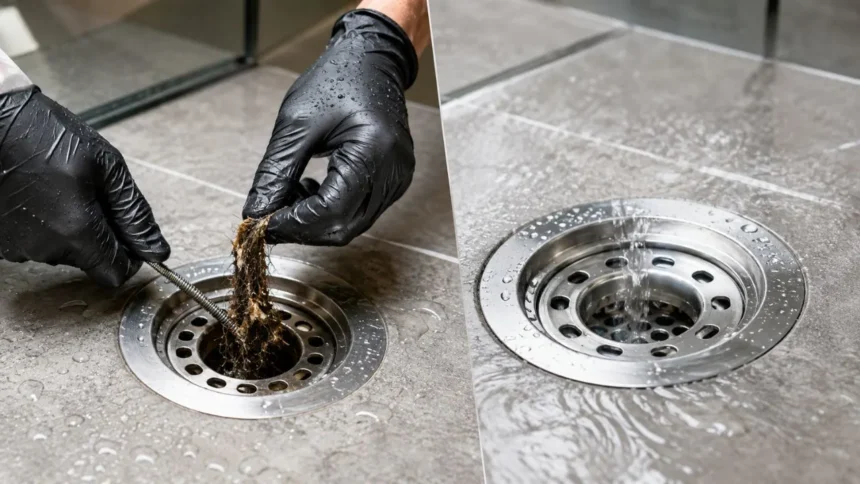
How to Clean a Shower Drain and Stop Clogs Fast
A slow-draining shower can quickly turn a relaxing routine into an unpleasant experience. Water begins collecting around your feet, unpleasant odors rise from the drain, and soap residue remains on the shower floor. Fortunately, most shower drain clogs can be cleared at home without complicated plumbing work. The key is choosing a method that removes the blockage instead of temporarily pushing it deeper into the pipe.
Hair is usually the main reason a shower drain becomes blocked, but it rarely works alone. Strands of hair combine with soap scum, body oils, shampoo residue, minerals, and dirt to create a sticky mass. As the buildup grows, water moves more slowly through the drain opening. Acting when drainage first slows can prevent the clog from becoming harder and more expensive to remove.
The fastest way to unclog a shower drain is usually to remove the drain cover and pull out the visible hair manually. A plastic drain snake, plunger, wet and dry vacuum, or enzyme cleaner can help when the blockage sits farther inside the pipe. Household ingredients may loosen light residue and reduce odors, but they cannot always dissolve a thick hair clog. Physical removal remains the most reliable starting point for most bathroom drainage problems.
This guide explains how to clean a shower drain safely using practical methods for different clog levels. You will learn how to remove trapped hair, break down soap buildup, eliminate drain odors, and prevent future blockages. The instructions also explain which popular cleaning methods may damage your pipes or create safety risks. With regular maintenance, you can keep shower water flowing freely and avoid frequent emergency plumbing calls.
Why Shower Drains Become Clogged
Loose hair is the most common cause of a clogged shower drain because it easily slips through standard drain covers. Once inside the pipe, the strands twist together and catch on rough surfaces, existing residue, and pipe joints. More hair becomes attached each time someone showers, gradually forming a dense obstruction. Long hair may create clogs faster, but short hair and pet hair can produce the same problem over time.
Soap scum makes hair blockages stronger because it creates a waxy coating around the collected strands. Traditional bar soap can react with minerals in hard water and leave behind stubborn deposits. Shampoo, conditioner, shaving cream, and body wash can also contribute to drain buildup. These products may appear to rinse away completely, but small amounts often settle along the pipe walls.
Body oils, dead skin cells, dirt, and cosmetic products add another layer to the developing clog. Thick conditioners, bath oils, hair masks, and exfoliating products may move slowly through narrow drainage pipes. Sand and outdoor dirt can settle inside the drain instead of washing away. When these materials combine, they create a sticky blockage that restricts water flow and produces unpleasant smells.
Mineral deposits may also reduce the internal diameter of the pipe, especially in homes with hard water. Calcium and magnesium buildup can create rough areas where hair and soap residue become trapped more easily. In older plumbing systems, corrosion or damaged pipes may contribute to repeated shower clogs. Understanding the likely cause helps you select a cleaning method that addresses the blockage effectively.
Signs Your Shower Drain Needs Cleaning
A slow-draining shower is usually the earliest warning that buildup is forming inside the drain. Water may initially take only a few extra seconds to disappear after the shower is turned off. As the obstruction grows, standing water begins collecting around the drain during use. Cleaning the drain at this stage is easier than waiting until water stops flowing completely.
Unpleasant drain odors are another common sign that organic material is trapped below the surface. Hair, skin cells, soap, and oils can remain damp inside the pipe and begin producing a musty smell. Bacteria may grow within the buildup and make the odor stronger after warm water runs. Removing the trapped material is more effective than covering the smell with fragrance or bleach.
Gurgling sounds can indicate that water and air are struggling to move through a partially blocked pipe. The sound may occur while you shower or shortly after the water is turned off. Occasional gurgling does not always confirm a serious blockage, but it should not be ignored when drainage is also slow. Persistent noises may point to a deeper plumbing or ventilation problem that requires professional inspection.
Water returning through another fixture can signal a blockage beyond the shower drain itself. For example, water may appear in the shower when the washing machine empties or the toilet is flushed. Multiple slow drains usually suggest that the obstruction is located in a shared branch or main sewer line. Home cleaning methods are unlikely to solve that type of problem safely or permanently.
Tools and Supplies You May Need
Begin with basic protective equipment, including waterproof gloves and safety glasses. Drain buildup may contain bacteria, sharp objects, chemical residue, or dirty standing water. Keep old towels nearby to protect the shower floor and absorb spills during cleaning. A small bucket or plastic bag is also useful for holding removed hair and debris.
A screwdriver may be necessary if the shower drain cover is secured with screws. Needle-nose pliers or tweezers can help you grip hair located just below the opening. A flexible plastic drain-cleaning tool is inexpensive and works well for shallow hair clogs. Avoid using valuable household tools that may become permanently dirty or damaged during the process.
For deeper obstructions, you may need a cup plunger, hand-operated drain auger, or wet and dry vacuum. A plunger creates pressure that can loosen material sitting inside the pipe. A drain auger reaches farther than a plastic hair-removal tool and can break through tougher blockages. A wet and dry vacuum may pull loose debris upward when the drain opening can be sealed properly.
Other useful supplies include dish soap, baking soda, white vinegar, hot tap water, and an enzyme-based drain cleaner. These products can help remove greasy residue, control odors, and maintain a recently cleared drain. They should not be treated as substitutes for removing a thick mass of hair. Always check whether a previous chemical drain product has been used before adding anything else.
Prepare the Shower Before Cleaning the Drain
Stop using the shower and allow any recently used cleaning products to rinse away completely. Open a window or run the bathroom exhaust fan to improve ventilation. Remove shampoo bottles, bath mats, and personal items from the surrounding area. A clear workspace reduces the risk of spills and makes it easier to handle dirty tools.
If standing water is covering the drain, remove as much of it as possible before beginning. Scoop the water into a bucket using a cup, or absorb smaller amounts with old towels. Leaving a little moisture is acceptable, but deep water makes it difficult to see and access the drain opening. Removing the water also helps plungers and vacuum attachments create a stronger seal.
Inspect the drain cover to determine how it is attached. Some covers lift out, some twist counterclockwise, and others are held in place with screws. Toe-touch and push-pull stoppers may need to be placed in the open position before removal. Never force the cover because bent fittings and stripped screws can make the repair more complicated.
Ask whether anyone has recently poured a commercial drain cleaner into the shower. Chemical residue may remain inside standing water or become trapped within the clog. Wear protective equipment and avoid plunging if a harsh chemical cleaner may splash back toward your skin or eyes. Never mix different drain cleaners or combine them with household cleaning products.
Step 1: Remove the Drain Cover and Visible Debris
Start by lifting or unscrewing the drain cover according to its design. Place screws in a cup so they do not roll into the shower or disappear down the pipe. If the cover is stuck, remove accumulated soap around its edges with warm water and a soft brush. Use steady pressure rather than sharp force that could crack or bend the fitting.
Shine a flashlight into the drain and look for visible hair near the opening. Use gloved fingers, tweezers, or needle-nose pliers to grip the blockage carefully. Pull upward slowly because the trapped hair may be longer and heavier than expected. Place all removed material directly into a plastic bag instead of dropping it into the toilet.
Continue removing hair until the drain opening appears clear and your tool no longer catches additional strands. Clean around the upper wall of the drain because sticky residue often remains attached to the sides. A narrow bottle brush can loosen soap scum without pushing the main clog farther downward. Wipe the opening with a disposable cloth once the solid debris has been removed.
Run warm water for approximately one minute to test the flow. If the water drains quickly without collecting, the visible hair was probably the main problem. Clean and reinstall the drain cover after confirming normal drainage. When water remains slow, continue with a plastic drain snake or another deeper-cleaning method.
Step 2: Use a Plastic Drain Snake for Hair Clogs
A flexible plastic drain snake is one of the easiest tools for removing a shallow shower hair clog. These tools usually have small hooks or barbs that catch hair as they move through the pipe. Insert the tool slowly through the drain opening until you feel resistance. Avoid forcing it aggressively because the plastic may bend, break, or become stuck.
Twist the tool gently while moving it slightly upward and downward. This motion helps the hooks collect strands wrapped around soap residue inside the drain. Pull the tool out slowly and keep it positioned over the drain to prevent dirty material from falling onto the floor. Remove the collected hair with a paper towel and place it in a waste bag.
Repeat the process several times from slightly different angles. A single insertion may remove only part of the blockage, especially when hair covers more than one side of the pipe. Continue until the snake returns with little or no additional debris. The amount removed can be surprising even when the drain opening originally looked clean.
Flush the drain with warm water after the physical blockage has been removed. Add a small amount of dish soap if greasy conditioner or body oil may be coating the pipe. Allow the water to run long enough to carry loosened residue beyond the nearby bend. Test the shower again before reinstalling the drain cover.
Step 3: Flush Away Soap Scum and Greasy Residue
After removing the hair, pour a small amount of grease-cutting dish soap directly into the drain. The soap can loosen oily residue from conditioners, body products, and natural skin oils. Allow it to sit for approximately ten minutes so it can coat the buildup. This method works best after solid debris has already been pulled from the pipe.
Follow the dish soap with very hot tap water poured gradually into the drain. Hot water can soften greasy deposits and help carry loose material through the plumbing system. Avoid pouring rapidly because overflowing water may spread dirty residue across the shower floor. Check that the water continues draining while you complete the flush.
Do not automatically use boiling water, particularly when your home contains PVC pipes, acrylic shower components, or delicate seals. Extremely high temperatures may soften some plastics or weaken connections over repeated use. Very hot tap water is generally sufficient for loosening ordinary soap residue. Older or uncertain plumbing systems should be treated with extra caution.
Repeat the warm-water flush once if the drainage has improved but remains slightly slow. Persistent resistance usually means hair or another solid object is still lodged deeper inside the line. Continuing to pour soap and water will not remove a compact obstruction. Move to plunging or a drain auger instead of repeatedly flooding the pipe.
Step 4: Try Baking Soda and Vinegar for Light Buildup
Baking soda and vinegar can freshen a shower drain and loosen a light layer of organic residue. Begin by pouring approximately half a cup of baking soda into the dry or mostly drained opening. Use a spoon or small funnel if the powder collects around the drain cover area. Allow the baking soda to settle into the upper section of the pipe.
Slowly add approximately half a cup of white vinegar. The ingredients will fizz as they react, which may help disturb soft debris near the drain opening. Cover the drain loosely with a stopper or damp cloth to keep some of the bubbling action inside the pipe. Leave the mixture for approximately fifteen to thirty minutes.
Flush the drain gradually with very hot tap water after the fizzing has stopped. This step helps wash away loosened residue and remaining baking soda. Test the drainage while the water is running and observe whether the flow has improved. Repeat cleaning is unnecessary when water continues backing up at the same rate.
This household method is better for drain maintenance and odor control than for removing a serious hair blockage. The visible fizz may appear powerful, but it cannot reliably dissolve a dense mass of tangled hair. Physical removal should remain the first choice for a slow shower drain. Never use vinegar after applying bleach or a commercial drain cleaner.
Step 5: Plunge a Stubborn Shower Drain
A plunger can loosen a blockage when hair-removal tools cannot reach it. Use a flat-bottomed cup plunger that can sit evenly over the shower drain opening. Add enough water to cover the lower edge of the rubber cup. Water helps transfer pressure more effectively than air during plunging.
Position the plunger directly over the drain and press downward to create a seal. Push and pull firmly several times without lifting the rim away from the shower floor. The goal is to move water back and forth inside the pipe and disturb the obstruction. Maintain controlled movements to reduce splashing and protect surrounding surfaces.
Lift the plunger after several strokes and watch how quickly the water drains. Remove any hair or debris that rises toward the opening instead of allowing it to return into the pipe. Repeat the process two or three times when each attempt produces noticeable improvement. Stop if plunging creates leaks, unusual sounds, or water movement in nearby fixtures.
Do not plunge a drain that may contain a strong chemical drain cleaner. Pressure can force corrosive liquid upward and cause severe skin or eye injuries. Plunging may also push an object deeper if the blockage was caused by a dropped cap, razor cover, or piece of jewelry. Use a retrieval tool or contact a plumber when a solid object is suspected.
Step 6: Use a Hand-Operated Drain Auger
A hand-operated drain auger reaches farther into the pipe than a short plastic drain snake. Feed the cable into the shower drain slowly while turning the handle clockwise. Continue until you meet resistance that feels different from a normal pipe bend. Do not assume every point of resistance is the clog because shower drains often contain tight curves.
Rotate the cable while applying gentle forward pressure. The auger tip may break through soft buildup, hook into hair, or move around the obstruction. Avoid forcing the cable because excessive pressure can scratch fittings or make the tool difficult to retrieve. Let the rotating action help the cable advance through the blockage.
Pull the cable back slowly while continuing to rotate the handle. Hair and sludge may return with the auger, so keep towels and a waste container nearby. Clean the cable as it leaves the drain to prevent debris from spreading across the bathroom. Repeat the process until the auger moves more freely through the affected section.
Flush the drain with warm water once the cable has been removed. Observe the flow for several minutes because partially broken clogs may shift and create another restriction. Clean and dry the auger before storing it to reduce corrosion and odors. Contact a plumber if the cable repeatedly stops at the same point without improving drainage.
Step 7: Use a Wet and Dry Vacuum Carefully
A wet and dry vacuum may pull a loose hair clog upward instead of pushing it deeper. Confirm that the vacuum is designed to collect liquids and install the correct wet-use filter or configuration. Remove standing water first if the vacuum tank has limited capacity. Never use an ordinary household vacuum near a wet shower.
Place the vacuum hose directly over the drain opening and create the tightest seal possible. A damp cloth wrapped around the hose may help close gaps between the attachment and shower floor. Set the vacuum to liquid collection and run it for short intervals. Strong suction may pull hair, sludge, or small objects toward the surface.
Turn off the machine before checking the hose or vacuum tank. Wear gloves when removing collected material because drain debris can contain bacteria and sharp fragments. Repeat the suction process only when the vacuum is working normally and the drain begins improving. Stop immediately if water approaches electrical connections or the vacuum produces unusual sounds.
This technique is most useful for shallow, movable blockages and accidentally dropped objects. It will not correct collapsed pipes, tree-root intrusion, heavy mineral deposits, or a distant main-line obstruction. Always follow the manufacturer’s instructions for wet operation and electrical safety. When a proper seal cannot be created, choose a drain auger or professional service instead.
Using an Enzyme Cleaner for Ongoing Drain Maintenance
Enzyme-based drain cleaners use bacteria or enzymes to break down organic material gradually. They are generally intended for hair, soap residue, oils, and other biodegradable buildup. Unlike harsh chemical openers, they usually work slowly and may need several hours to remain inside the pipe. They are most effective for maintenance or mildly slow drains rather than complete blockages.
Choose a product specifically labeled for bathroom and shower drains. Read the directions carefully because application amounts and waiting times vary between formulas. Many products work best when used at night, when the drain will remain undisturbed for several hours. Avoid running the shower until the recommended treatment period has ended.
Remove as much hair as possible before applying an enzyme product. A dense hair clog may prevent the cleaner from reaching the buildup coating the pipe walls. Starting with a physically clear drain allows the product to work more evenly. Regular monthly use may reduce the amount of organic residue that attaches to the plumbing.
Never combine an enzyme cleaner with bleach, acidic cleaners, or chemical drain openers. Other products may kill the beneficial bacteria or create dangerous reactions. Store drain treatments away from children and pets, even when the label describes them as natural. Follow the package instructions instead of increasing the dose in an attempt to make it work faster.
How to Remove Bad Smells From a Shower Drain
Drain odors often come from decomposing hair, soap, oils, and skin cells trapped near the opening. Begin by removing the drain cover and pulling out all visible organic material. Scrub the cover, drain rim, and accessible pipe walls with warm soapy water. Cleaning the source of the smell is more effective than pouring fragrance into the drain.
A biofilm may remain inside the upper pipe even after the larger clog has been removed. This slippery layer contains bacteria and residue that can create a persistent musty smell. Use a long, narrow cleaning brush to scrub surfaces that can be reached safely. Rinse the area thoroughly so the loosened film does not settle back into the drain.
An enzyme cleaner can help control odors by breaking down organic residue farther inside the pipe. Baking soda followed by vinegar may also freshen a lightly dirty drain, provided no incompatible chemical has been used. Allow the treatment enough contact time before flushing with warm water. Avoid relying on chlorine bleach because it may mask the smell without removing the underlying buildup.
A dry P-trap can allow sewer gases to enter through a shower that is rarely used. Run water for several minutes to refill the trap and create a protective water seal. Persistent sewer odors in a frequently used shower may indicate a damaged trap, loose connection, blocked vent, or plumbing leak. Arrange a professional inspection when cleaning does not eliminate the smell.
Drain-Cleaning Methods You Should Avoid
Avoid mixing household cleaners because the resulting gases or splashes can cause serious injuries. Bleach should never be combined with vinegar, ammonia, toilet cleaner, or an acidic drain product. Different commercial drain openers should not be used together either. Flush cautiously and seek professional guidance when you are unsure which product was previously added.
Frequent use of strong chemical drain cleaners can expose skin, eyes, and lungs to corrosive substances. These products may generate heat, damage certain pipes, and remain trapped behind a complete blockage. They can also create a hazard for plumbers who later open the drain. Mechanical removal or an enzyme cleaner is usually a safer first approach.
Do not push wire coat hangers or sharp metal objects forcefully into the drain. Improvised tools can scratch pipes, puncture flexible fittings, break inside the line, or push the clog farther away. They may also become caught around internal components and be difficult to retrieve. Use a purpose-built plastic tool or plumbing auger instead.
Avoid ignoring a repeatedly clogged shower after temporary cleaning appears to restore flow. Frequent blockages may be caused by pipe slope problems, mineral buildup, damaged plumbing, or a deeper shared-line obstruction. Repeatedly treating the opening will not correct those underlying issues. Professional diagnosis can prevent water damage and more expensive repairs later.
How to Prevent Shower Drain Clogs
Install a drain hair catcher that fits securely over or inside the shower opening. Choose a design with openings small enough to trap hair without slowing normal water flow. Empty the catcher after every few showers instead of waiting for a thick layer to develop. Wash it regularly because soap and conditioner can seal its openings.
Brush loose hair before entering the shower, especially after styling, detangling, or removing extensions. Place hair that collects on your hands against the shower wall during washing, then throw it into the bin afterward. Do not rinse visible clumps toward the drain. Small changes in routine can significantly reduce the amount entering your plumbing.
Rinse the shower drain with warm water after using thick conditioners, body oils, hair masks, or shaving products. Allow the water to run briefly after the product has disappeared from the shower floor. This extra rinse helps carry residue farther through the pipe before it cools and sticks. Avoid pouring leftover cosmetic products directly into the drain.
Clean the drain cover and remove visible hair at least once or twice each month. Homes with several people, long hair, pets, or hard water may require more frequent maintenance. Use an enzyme drain treatment occasionally when it is suitable for your plumbing system. Preventive cleaning is faster, cleaner, and less expensive than dealing with standing shower water.
Create a Simple Monthly Shower Drain Routine
During the first week of each month, lift the drain catcher and dispose of trapped hair. Wipe the drain cover with warm soapy water and clean residue from its openings. Check whether water disappears immediately when the shower runs. A noticeable delay is a sign that deeper cleaning should be completed before the drain becomes blocked.
Every few months, remove the cover and use a plastic drain snake to collect hair below the opening. This takes only a few minutes when the buildup is still small. Follow with warm water and a little dish soap to rinse away oily residue. Reinstall the cover securely so loose hair cannot enter around its edges.
Use an enzyme-based maintenance treatment according to the product directions when organic buildup is a regular problem. Schedule the application when nobody will need the shower for several hours. Record how often the drain becomes slow so you can adjust the cleaning frequency. Maintenance should be based on your household’s actual use rather than a fixed universal schedule.
Inspect the shower area for leaks, cracked seals, loose drain covers, and persistent smells during routine cleaning. Drainage problems are easier to correct when warning signs are noticed early. Keep a simple plastic hair-removal tool with your bathroom cleaning supplies. Having the right tool nearby makes it more likely that a small problem will be handled promptly.
When to Call a Professional Plumber
Call a plumber when the shower remains completely blocked after visible hair has been removed and a basic auger has been used. A deep obstruction may require professional cable equipment or a drain camera. Continuing to force tools through the line can damage fittings or make retrieval more difficult. Professional cleaning is particularly important when the location of the blockage is uncertain.
Multiple slow drains suggest that the problem may extend beyond the shower. Toilets that gurgle, sinks that back up, or water appearing in another fixture can indicate a shared-line blockage. A main sewer obstruction may allow contaminated water to enter the home. Stop using affected fixtures and arrange plumbing service as soon as possible.
Recurring clogs deserve professional attention even when home methods temporarily restore drainage. The pipe may contain heavy mineral scaling, damaged sections, poor slope, construction debris, or root intrusion. A camera inspection can identify conditions that cannot be seen from the drain opening. Correcting the cause is more effective than repeatedly treating the symptoms.
Seek immediate assistance when water leaks through walls, ceilings, or flooring near the shower. Damp materials can develop mold and structural damage when the source is not repaired. Sewer odors that remain after cleaning may also indicate a broken seal, venting issue, or failed trap. Plumbing problems involving hidden leaks should not be delayed.
Final Thoughts on Cleaning a Shower Drain
The most effective way to clean a shower drain is to begin with physical hair removal. Take off the cover, pull out visible debris, and use a flexible plastic drain snake when necessary. Flush the cleared drain with warm water to remove loose soap and oily residue. This simple process solves many slow-draining shower problems without harsh chemicals.
Baking soda, vinegar, dish soap, and enzyme products can support drain maintenance, but they have different limitations. Household mixtures may reduce light residue and odors, while enzyme cleaners work gradually on organic material. Neither option reliably replaces a tool when a thick hair clog is present. Select the method according to the actual type and severity of the blockage.
Safety should remain a priority throughout the cleaning process. Wear gloves, protect your eyes, ventilate the bathroom, and never combine cleaning chemicals. Avoid boiling water when the plumbing material is uncertain, and do not plunge a drain containing corrosive cleaner. Careful preparation protects both your household and the plumbing system.
Once the drain is flowing properly, prevention becomes much easier than repeated unclogging. Use a hair catcher, remove collected strands regularly, and clean the opening before water begins pooling. Pay attention to recurring clogs, sewer smells, and problems affecting multiple fixtures. Timely maintenance keeps the shower cleaner, reduces unpleasant odors, and helps prevent expensive plumbing repairs.
Frequently Asked Questions
What is the fastest way to unclog a shower drain?
Remove the drain cover and pull out visible hair using gloves, pliers, or a plastic drain snake. Most shower clogs improve quickly once the tangled hair and soap buildup are physically removed.
Can baking soda and vinegar dissolve hair in a shower drain?
Baking soda and vinegar may loosen light residue and reduce odors, but they do not reliably dissolve a thick hair clog. Remove the hair manually first, then use the mixture for light cleaning.
How often should I clean my shower drain?
Check and clean the drain cover once or twice each month. Households with long hair, several users, pets, or hard water may need to remove trapped hair more frequently.
Is it safe to pour boiling water down a shower drain?
Boiling water may damage certain plastic pipes, acrylic surfaces, seals, or older plumbing connections. Very hot tap water is a safer choice when you do not know the material or condition of your pipes.
Why does my shower drain keep clogging?
Repeated clogs may result from frequent hair buildup, hard-water deposits, damaged pipes, poor pipe slope, or a deeper plumbing blockage. A plumber should inspect the system when the clog repeatedly returns after proper cleaning.