

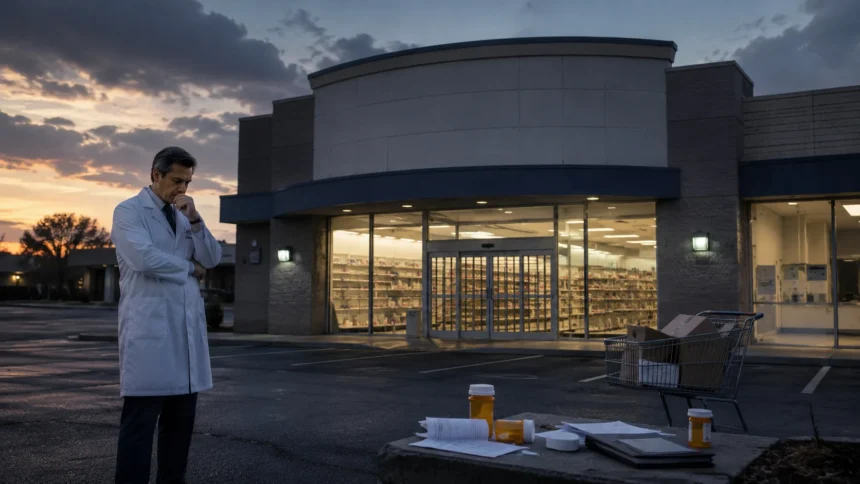
Did Rite Aid Go Out of Business? What Really Happened
If you recently searched for a nearby Rite Aid and discovered that the store had disappeared, you are not alone. One of America’s best-known drugstore chains went through years of financial trouble, two Chapter 11 bankruptcy cases, hundreds of store closures, and eventually the shutdown of its remaining traditional retail locations. The situation, however, is slightly more complicated than simply saying the Rite Aid name disappeared forever.
So, did Rite Aid go out of business? Yes, the Rite Aid retail pharmacy chain that operated physical drugstores across the United States closed its remaining stores in 2025 after filing for bankruptcy for a second time. Its pharmacy assets and prescription files were sold or transferred to companies including CVS, Walgreens, Kroger, Albertsons, and other buyers.
The original business had been struggling with billions of dollars in debt, shrinking pharmacy margins, operating losses, intense competition, opioid-related litigation, and changing shopping habits. Rite Aid tried to recover through restructuring and store closures, but its first bankruptcy did not create a sustainable enough business to prevent another financial crisis.
There is also an important 2026 update. The Rite Aid brand itself has not completely vanished. Rite Aid’s current website says Rite Aid LLC acquired certain assets from Rite Aid Corporation through bankruptcy proceedings on January 15, 2026, and the company now says pharmacy services are being rebuilt and will return. That distinction is important when understanding what happened to Rite Aid.
Did Rite Aid Go Out of Business Completely?
The traditional Rite Aid retail chain did effectively go out of business when its remaining drugstores closed during 2025. The physical pharmacy network that millions of customers associated with Rite Aid was dismantled, with prescription files transferred and selected locations acquired by competitors.
Rite Aid entered its second Chapter 11 bankruptcy in May 2025 while operating approximately 1,200 stores. The bankruptcy court later approved the sale of much of the company’s pharmacy business, allowing competing pharmacy operators to acquire prescription files and certain locations.
By October 2025, Rite Aid’s remaining traditional retail stores had closed. CVS subsequently completed its acquisition of prescription files from 626 former Rite Aid pharmacies and began operating 63 former Rite Aid and Bartell Drugs locations.
However, saying Rite Aid disappeared permanently would now be inaccurate. As of 2026, the Rite Aid website is active under Rite Aid LLC, and the company says it is rebuilding pharmacy services with a preventive-health focus. The old store chain closed, but the Rite Aid name and selected assets are being used in a new business direction.
What Happened to Rite Aid?
Rite Aid’s collapse was not the result of one sudden event. Its financial problems developed over many years as the company struggled to remain competitive while carrying substantial debt and operating a large network of expensive physical pharmacy locations.
The company initially filed for Chapter 11 bankruptcy protection in October 2023. That bankruptcy was intended to reduce debt, address legal liabilities, dispose of weaker assets, and close underperforming stores while keeping the remaining business operating.
Rite Aid eventually emerged from its first bankruptcy in 2024 after eliminating approximately $2 billion in debt. But the restructuring did not permanently resolve the pressures affecting the company’s underlying pharmacy business, and financial difficulties returned quickly.
On May 5, 2025, Rite Aid filed for Chapter 11 again. The second bankruptcy shifted the company’s strategy toward selling pharmacy assets and transferring prescriptions instead of attempting to preserve the entire store network.
Why Did Rite Aid Go Out of Business?
There was no single reason Rite Aid went out of business. Its collapse came from several interconnected problems, including high debt, declining profitability, tighter prescription margins, expensive store operations, opioid-related litigation, and increasing competition.
Debt reduced the company’s ability to invest aggressively in areas that might have improved its competitive position. At the same time, weaker store performance made it harder to generate the money needed to support debt payments and fund improvements.
Rite Aid was also operating in a challenging retail pharmacy market. Pharmacy chains face pressure on reimbursement for prescriptions while paying for pharmacists, technicians, stores, distribution networks, inventory, security, technology, and other operating expenses.
By its second bankruptcy, Rite Aid had more than $2 billion in debt and was struggling with declining drug-sale margins. These challenges ultimately made selling assets more practical than attempting another nationwide turnaround.
Rite Aid Had Too Much Debt
Debt became one of Rite Aid’s biggest long-term problems. Companies often borrow money to acquire businesses, expand operations, renovate stores, or finance other strategic initiatives, but debt becomes dangerous when earnings are not strong enough to comfortably support it.
Large interest and repayment obligations can limit how much money a retailer has available for innovation. Rite Aid needed to compete in areas such as digital pharmacy services, delivery, store experience, pricing, customer loyalty, and healthcare offerings while simultaneously managing its financial obligations.
This created a significant disadvantage when competing against larger businesses. Companies with stronger balance sheets can invest more aggressively when consumer behavior changes, while heavily indebted organizations may be forced to prioritize immediate financial survival.
Even Rite Aid’s first bankruptcy restructuring, which eliminated roughly $2 billion in debt, was not enough to produce a lasting recovery. Less than a year after emerging from Chapter 11, the company returned to bankruptcy protection.
Rite Aid Was Losing Money
Revenue alone does not determine whether a business is healthy. A retailer can generate billions of dollars in sales yet still struggle if the costs required to produce those sales are too high.
Rite Aid experienced substantial losses before its original bankruptcy. Financial losses made it increasingly difficult for the company to invest in stores, employees, digital technology, inventory, and other improvements while also meeting its existing financial obligations.
Repeated losses can create a damaging cycle for retailers. Financial weakness can lead to less investment, which can make stores less attractive or efficient, potentially reducing customer traffic and putting even greater pressure on financial performance.
Rite Aid attempted to break this cycle by restructuring debt and closing weaker locations. However, reducing expenses could not fully compensate for broader problems affecting the company’s profitability and competitive position.
Prescription Profits Were Getting Squeezed
Prescription medications bring customers into pharmacies, but dispensing prescriptions does not guarantee strong profits. Retail pharmacies operate within a complicated healthcare payment system involving insurance companies, pharmacy benefit managers, wholesalers, drug manufacturers, Medicare, Medicaid, and other payers.
A pharmacy may purchase a medication at one cost while receiving a different reimbursement amount for dispensing it. When reimbursement does not keep pace with medication and operating expenses, prescription profit margins become increasingly difficult to maintain.
These pressures affect much of the retail pharmacy industry rather than Rite Aid alone. Even larger pharmacy chains have closed stores and adjusted their business models as pharmacy economics have become more challenging.
Rite Aid was particularly vulnerable because shrinking drug margins came alongside its existing debt and financial problems. Reuters identified declining drug-sale margins as one of the challenges facing Rite Aid during its second bankruptcy.
Competition From CVS and Walgreens Hurt Rite Aid
Rite Aid competed directly with CVS and Walgreens for prescriptions, convenience purchases, health products, vaccinations, and other pharmacy services. Both competitors developed larger footprints and greater financial scale.
Scale can provide significant advantages in retail pharmacy. Large companies can spread administrative, logistics, technology, advertising, and distribution costs across thousands of locations while negotiating with suppliers using enormous purchasing volumes.
CVS also expanded far beyond traditional drugstores through businesses connected with health insurance, pharmacy benefit management, healthcare services, and other parts of the healthcare system. This gave the company a much broader business model than a traditional neighborhood pharmacy alone.
Rite Aid found itself competing against organizations with greater resources while managing its own financial difficulties. That made it harder to differentiate stores, modernize operations, and invest aggressively enough to regain momentum.
Walmart and Supermarkets Created More Competition
Rite Aid was not competing only against CVS and Walgreens. Walmart, supermarkets, warehouse retailers, independent pharmacies, and other businesses also provided customers with convenient places to fill prescriptions.
A shopper visiting Walmart or a supermarket could buy groceries, household products, health items, and prescriptions during the same trip. That convenience reduced the need to visit a separate traditional drugstore for everyday purchases.
Drugstores historically depended partly on customers entering for prescriptions and then purchasing additional products such as snacks, cosmetics, personal-care products, vitamins, and household essentials.
As consumers gained more shopping options, Rite Aid had to compete for both pharmacy customers and general retail purchases. Losing either type of traffic could weaken the economics of its physical store network.
Online Shopping Changed Consumer Behavior
The rapid growth of e-commerce created another challenge for traditional drugstores. Many products once purchased during a Rite Aid visit can now be ordered online and delivered directly to a customer’s home.
Amazon and other online retailers made it easier to buy vitamins, personal-care products, beauty products, household essentials, over-the-counter medications, and similar merchandise without visiting a physical pharmacy.
Customers also became more comfortable with online prescription management, automatic refills, mail-order medication, delivery services, and digital healthcare platforms. Convenience increasingly meant bringing healthcare products to customers rather than requiring customers to visit stores.
Rite Aid offered digital services of its own, but building a powerful omnichannel experience requires continuous investment. Financial constraints made it more difficult for the company to compete aggressively as retail increasingly shifted toward digital convenience.
Opioid Lawsuits Added More Financial Pressure
Rite Aid also faced significant legal challenges associated with the opioid crisis. The company was among several major pharmacy operators accused of improperly filling certain opioid prescriptions.
These cases created additional financial and operational uncertainty at a time when Rite Aid was already dealing with substantial debt and declining performance.
Legal liabilities can hurt struggling companies in several ways. They may increase legal expenses, create settlement obligations, damage reputation, distract management, and make lenders more cautious about providing additional capital.
Opioid litigation was therefore an important part of Rite Aid’s financial crisis, although it would be incorrect to say it was the only reason the company failed. Competition, debt, pharmacy economics, operating losses, and consumer changes were all significant pieces of the problem.
Rite Aid Had Too Many Underperforming Stores
Physical retail stores are expensive to operate. Rent, utilities, employee wages, inventory, security, maintenance, insurance, technology, and other expenses continue even when a location does not generate enough sales.
Rite Aid had locations that were no longer performing strongly enough to justify these costs. Closing weaker stores therefore became a central part of the company’s attempted turnaround.
The company closed hundreds of locations during and after its first bankruptcy. By May 2025, Rite Aid’s store count had fallen dramatically compared with just a few years earlier.
Removing underperforming stores lowered expenses, but it also reduced Rite Aid’s geographic reach and operating scale. The company eventually reached a point where continued downsizing could not create a sufficiently healthy nationwide business.
Why Couldn’t Rite Aid Just Close Unprofitable Stores?
Closing unprofitable stores sounds like a straightforward solution, but retail networks operate through scale. A smaller chain may have fewer loss-making stores, yet it also has less purchasing power, fewer customers, lower brand visibility, and fewer locations across which to spread corporate costs.
Store closures can also inconvenience loyal customers. When someone’s neighborhood pharmacy shuts down, that customer may transfer prescriptions to CVS, Walgreens, Walmart, a supermarket, or an independent pharmacy.
Once customers develop new pharmacy relationships, winning them back becomes difficult. This means closures can potentially reduce both costs and future revenue.
Rite Aid therefore faced a difficult situation. Keeping weak locations open consumed money, but repeatedly closing stores also shrank the business and weakened some of the advantages associated with operating a national pharmacy chain.
Rite Aid First Filed for Bankruptcy in 2023
Rite Aid’s first major bankruptcy filing occurred in October 2023. The company used Chapter 11 bankruptcy protection to reorganize its finances while continuing to operate many of its stores.
Chapter 11 does not automatically mean a business is closing permanently. Many companies use the process to reduce debt, renegotiate contracts, sell assets, close unprofitable operations, and emerge as healthier organizations.
That was Rite Aid’s original goal. The company closed stores, addressed debts and litigation, sold businesses and ultimately emerged from the restructuring as a privately owned company.
The first bankruptcy eliminated approximately $2 billion in debt, giving Rite Aid an opportunity to rebuild with a smaller store network. Unfortunately, its improved balance sheet could not overcome all of the challenges facing the remaining operation.
Rite Aid Filed for Bankruptcy Again in 2025
Rite Aid’s second bankruptcy became the turning point that ultimately ended its traditional retail pharmacy chain. On May 5, 2025, the company entered Chapter 11 again, less than a year after completing its previous restructuring.
A company returning to bankruptcy soon after restructuring is sometimes informally described as a “Chapter 22” situation because it has entered Chapter 11 twice. It typically suggests that the first restructuring could not resolve the underlying business challenges.
During the second case, Rite Aid moved rapidly to find buyers for its pharmacy assets rather than attempting another full-scale turnaround. The priority became transferring prescriptions and extracting value from remaining assets.
A bankruptcy court approved sales involving 13 buyers, with CVS emerging as the largest purchaser of prescription files and selected physical stores. Walgreens, Kroger, Albertsons, and other pharmacy operators also participated.
When Did Rite Aid Close Its Stores?
Rite Aid’s stores closed progressively rather than disappearing nationwide on a single day. Closures accelerated throughout 2025 after the second Chapter 11 filing and the decision to sell pharmacy assets.
Stores remained open temporarily in some markets so prescriptions could continue to be filled while customer records and pharmacy assets were transferred to new owners.
As the liquidation continued, additional Rite Aid locations shut their doors. By early October 2025, reports confirmed that the remaining traditional Rite Aid stores had closed.
Therefore, if someone asks, “Did Rite Aid go out of business in 2025?”, the clearest answer is yes for the original nationwide retail-store operation. The physical drugstore chain reached the end of its traditional business following the second bankruptcy.
What Happened to Rite Aid Prescriptions?
Prescription transfers became one of the most important parts of Rite Aid’s shutdown because millions of customers depended on the company for medications.
Instead of allowing prescription records to disappear when stores closed, Rite Aid sold or transferred many prescription files to other pharmacies. This helped customers continue receiving medications after their local Rite Aid ceased operating.
CVS eventually completed the acquisition of prescription files from 626 former Rite Aid pharmacies across 15 states. It also took over dozens of former Rite Aid and Bartell Drugs physical locations.
Rite Aid’s current website also provides assistance for people trying to determine where their prescriptions were transferred. The company says transfers generally went to nearby pharmacies such as CVS, Walgreens, or independent operators, depending on location.
Did CVS Buy Rite Aid?
CVS did not purchase the entire Rite Aid corporation and turn every Rite Aid into a CVS. Instead, it acquired a significant collection of Rite Aid’s pharmacy assets during the bankruptcy process.
The transaction included prescription files associated with hundreds of former Rite Aid pharmacies along with selected physical store locations. This made CVS one of the most important buyers involved in the liquidation.
Other businesses also purchased Rite Aid pharmacy assets, which is why former customers may have had prescriptions transferred to different companies depending on where they lived.
CVS later confirmed that it had completed its purchase of prescription files from 626 former Rite Aid locations and was operating 63 former Rite Aid and Bartell Drugs stores.
Did Walgreens Buy Rite Aid?
Walgreens also acquired some Rite Aid assets during the 2025 bankruptcy process, but it did not acquire the entire company.
Prescription files and pharmacy assets were divided among several buyers because Rite Aid’s remaining business was effectively being sold in pieces.
Walgreens had already had a complicated history with Rite Aid years earlier. A much larger proposed acquisition did not proceed as originally envisioned, although Walgreens ultimately purchased thousands of Rite Aid locations in an earlier transaction.
During the final 2025 liquidation, Walgreens again became one of several businesses acquiring pharmacy-related assets. The result was a fragmented sale rather than Rite Aid becoming part of one single competitor.
What Happened to Rite Aid Employees?
Rite Aid’s collapse also had a major human impact because the company employed pharmacists, pharmacy technicians, store managers, retail associates, distribution workers, corporate employees, and other professionals.
As locations shut down, many positions disappeared. Some employees may have found opportunities with companies purchasing pharmacies or prescription files, but store closures still created substantial disruption.
Pharmacists and pharmacy technicians were particularly important during the transition because customers needed continuity for essential medications and healthcare services.
The impact demonstrates why large retail bankruptcies extend well beyond financial statements. Employees, families, customers, suppliers, landlords, and entire communities can be affected when a major chain disappears.
What Happened to Rite Aid Customers?
Customers who relied on Rite Aid had to adjust quickly as local locations closed. Many needed to identify which competing pharmacy had received their prescription records.
For everyday merchandise, shoppers generally had numerous alternatives, including CVS, Walgreens, Walmart, supermarkets, dollar stores, independent pharmacies, and online retailers.
Prescription customers faced a more complicated transition because pharmacy relationships may involve recurring medications, insurance information, refill schedules, physician communications, and familiarity with particular pharmacists.
Rite Aid’s current website continues to provide information about prescription transfers and obtaining pharmacy-related records, reflecting the continuing needs of former customers even after the original stores closed.
Is Rite Aid Still in Business in 2026?
This is where the answer becomes more interesting. The old Rite Aid retail chain closed its remaining traditional stores in 2025, so consumers searching for the familiar neighborhood Rite Aid pharmacy generally will not find the old national store network.
However, the Rite Aid brand is active again in a different form. Rite Aid’s current privacy policy states that Rite Aid LLC acquired certain assets from Rite Aid Corporation through bankruptcy proceedings on January 15, 2026, including assets connected with the Rite Aid Rewards customer program.
More importantly, the current Rite Aid website says pharmacy services are returning. The company states that it is rebuilding pharmacy services and developing prescription services while focusing its current health offering on preventive care.
Therefore, as of August 2026, the best answer is nuanced: the former Rite Aid national drugstore business went out of business and closed its stores, but the Rite Aid brand has since been acquired and is being rebuilt under a new business operation.
Is Rite Aid Coming Back?
According to Rite Aid’s current official website, pharmacy services are being rebuilt. The company specifically says that Rite Aid pharmacy services are returning, although it has not provided a complete timetable for traditional prescription services.
This does not necessarily mean thousands of familiar Rite Aid neighborhood drugstores will suddenly reopen. A new owner can use an established brand in a significantly different way from the original company.
The current Rite Aid emphasizes preventive health services and says prescription services are being developed. This suggests the new operation may use a healthcare model that differs from the traditional nationwide drugstore chain that consumers previously knew.
Consumers should therefore distinguish between Rite Aid returning as a brand and the old Rite Aid store network returning. At present, the evidence supports the former, while the original nationwide retail chain remains closed.
Why Did Rite Aid’s First Turnaround Fail?
Rite Aid’s first bankruptcy significantly reduced debt, but financial restructuring cannot automatically repair a weak business model. A company still needs enough revenue, margins, customer demand, and operational efficiency to generate sustainable cash flow.
Rite Aid emerged into an industry where pharmacy profitability remained difficult. Competition was intense, customers had numerous alternatives, and the economics of operating large numbers of physical stores remained challenging.
The company was also smaller after closing many locations. While eliminating weak stores reduced costs, it also meant Rite Aid had less national scale than before.
Returning to bankruptcy within months of restructuring showed that the underlying business did not improve quickly enough. By the second filing, management pursued asset sales instead of attempting another lengthy traditional turnaround.
Was Rite Aid the Only Pharmacy Chain Struggling?
No. Rite Aid’s collapse occurred during a difficult period for traditional retail pharmacy chains. CVS and Walgreens have also announced significant store closures and changes to their operations.
Traditional pharmacy chains face pressure from reimbursement rates, staffing expenses, store operating costs, changing consumer behavior, online shopping, theft, and competition from big-box retailers and supermarkets.
However, Rite Aid entered this challenging environment with particularly serious financial weaknesses. Its debt and previous losses left the company with less room to adapt than larger competitors.
Rite Aid’s bankruptcy therefore reflects both company-specific problems and broader changes occurring throughout the retail pharmacy industry. The difference is that Rite Aid’s financial position ultimately became too weak to sustain its remaining national store network.
Did Amazon Put Rite Aid Out of Business?
Amazon contributed to the changing retail environment, but saying Amazon alone put Rite Aid out of business would oversimplify what happened.
Online shopping reduced the need for consumers to visit drugstores for household products, beauty items, supplements, toiletries, and other merchandise. Amazon’s convenience increased pressure on many brick-and-mortar retailers.
However, Rite Aid also competed with CVS, Walgreens, Walmart, Target, supermarkets, independent pharmacies, mail-order pharmacies, and numerous other businesses.
The company’s collapse resulted from a combination of debt, losses, legal liabilities, prescription-margin pressure, store economics, and competitive changes. Amazon was one competitive factor rather than the single cause.
Could Rite Aid Have Avoided Going Out of Business?
It is impossible to know whether a different strategy would definitely have saved Rite Aid. Business failures involving companies of this size usually develop over many years and involve numerous decisions and external conditions.
Lower debt might have given Rite Aid greater flexibility to invest in technology, renovate stores, improve customer experiences, expand healthcare services, or experiment with new pharmacy models.
The company might also have benefited from stronger differentiation. Competing directly against larger organizations can be difficult unless customers have a compelling reason to choose the smaller competitor.
By 2025, however, Rite Aid’s available options had become limited. Selling prescription files, locations, intellectual property, and other assets offered a practical way to preserve some value while transitioning pharmacy customers to other providers.
What Can Businesses Learn From Rite Aid?
One major lesson is that high sales do not necessarily mean a company is financially healthy. Revenue matters, but profitability, cash flow, debt, margins, and operating expenses ultimately determine whether a business can remain sustainable.
Another lesson concerns debt. Borrowing can support growth, but excessive leverage can become dangerous when an industry changes or profits decline.
Rite Aid also demonstrates the importance of adapting early to changing customer behavior. Digital commerce, delivery, convenient healthcare options, and integrated retail experiences increasingly influence where customers spend their money.
Finally, restructuring finances works best when the underlying business also becomes stronger. Reducing debt may create time for a turnaround, but long-term survival still requires a competitive and profitable operating model.
What Does Rite Aid’s Collapse Mean for the Pharmacy Industry?
Rite Aid’s disappearance dramatically reduced the number of major national drugstore chains operating in the United States. Customers increasingly rely on CVS, Walgreens, Walmart, supermarket pharmacies, independent pharmacies, and online services.
Fewer pharmacy locations can create accessibility concerns in certain communities. A pharmacy closure becomes particularly important when older adults or people with chronic health needs have limited transportation options.
The collapse also highlights the pressure traditional pharmacies face when reimbursement rates and operating expenses move in unfavorable directions. Selling more prescriptions does not automatically create greater profitability when margins remain thin.
Rite Aid’s experience may therefore be viewed as both an individual corporate failure and a warning about structural pressures affecting neighborhood pharmacy businesses more broadly.
Did Rite Aid Go Bankrupt or Simply Close?
Technically, Rite Aid went through bankruptcy proceedings before its traditional retail operations closed. Bankruptcy and business closure are related but different concepts.
The company first used Chapter 11 in 2023 to restructure rather than liquidate. It emerged from that proceeding and continued operating as a private business.
The second Chapter 11 filing in May 2025 had a very different outcome. Rite Aid pursued sales of pharmacy assets, prescription files, stores, inventory, and other property while winding down remaining retail operations.
Therefore, Rite Aid did not simply announce that it was closing one day. Its exit from traditional retail occurred through a structured bankruptcy and asset-sale process that unfolded over several months.
Did Rite Aid Fail Because People Stopped Shopping There?
Declining customer traffic played a role in the challenges facing traditional drugstores, but Rite Aid did not collapse simply because everyone stopped shopping there.
The company still served millions of customers when it entered its second bankruptcy. Reuters reported that Rite Aid was serving around 8 million pharmacy customers during the 2025 bankruptcy process.
The larger problem involved how much profit Rite Aid could generate from those customers after accounting for prescription reimbursements, operating expenses, debt, competition, and other liabilities.
A company can have millions of customers and still become financially unsustainable if each part of its economic model does not generate enough cash to cover expenses and obligations.
The Timeline of Rite Aid’s Collapse
Rite Aid’s decline stretched across many years, but 2023 became a critical turning point when the company filed its first Chapter 11 bankruptcy case.
The company restructured, closed hundreds of stores, reduced approximately $2 billion in debt, and emerged from bankruptcy during 2024 as a smaller private company.
Financial problems continued, leading Rite Aid to file for Chapter 11 again on May 5, 2025. Assets and prescription files were subsequently sold to numerous pharmacy operators, and remaining stores progressively closed.
By October 2025, the old nationwide retail operation had ended. Then, in January 2026, Rite Aid LLC acquired certain former Rite Aid assets, and the current business now says pharmacy services are being rebuilt.
Final Thoughts: Did Rite Aid Go Out of Business?
So, did Rite Aid go out of business? Yes—the Rite Aid pharmacy chain that operated hundreds and previously thousands of physical stores closed its remaining traditional retail locations in 2025 after its second Chapter 11 bankruptcy.
The company’s downfall resulted from a combination of heavy debt, financial losses, declining prescription margins, opioid-related litigation, costly physical stores, changing shopping behavior, and strong competition from CVS, Walgreens, Walmart, online retailers, and other pharmacy providers.
However, there is an important distinction for anyone searching this question today. Rite Aid as a brand did not disappear permanently. Certain assets were acquired by Rite Aid LLC in January 2026, and its official website now says pharmacy services are being rebuilt.
That means the most accurate answer in 2026 is: the old Rite Aid retail pharmacy chain went out of business, but the Rite Aid name is being revived under a new operation. Whether the new Rite Aid eventually resembles the neighborhood pharmacy chain customers remember will depend on how its developing healthcare and pharmacy strategy evolves.
Frequently Asked Questions
Did Rite Aid officially go out of business?
Yes. Rite Aid’s former nationwide retail pharmacy operation closed its remaining stores in 2025 following its second Chapter 11 bankruptcy. The Rite Aid brand is now being reused under a new operation.
Is Rite Aid coming back in 2026?
Rite Aid’s current official website says pharmacy services are returning and prescription services are being developed. However, this does not mean the old nationwide Rite Aid store network has reopened.
Why did Rite Aid go bankrupt?
Rite Aid struggled with high debt, declining pharmacy margins, financial losses, opioid-related litigation, expensive store operations, and intense retail competition.
Who took over Rite Aid prescriptions?
Prescription files were sold or transferred to several pharmacy operators, including CVS, Walgreens, Kroger, Albertsons, and others. CVS ultimately acquired files from 626 former Rite Aid pharmacies.
When did Rite Aid close its stores?
Rite Aid progressively closed stores throughout 2025 after filing for bankruptcy again in May. Its remaining traditional retail stores were closed by October 2025.